Ruka hadi kwenye maudhui kuu
OpenAI

Msingi imara zaidi wa kumbukumbu ya ChatGPT

Kuboresha uunganishaji wa kumbukumbu katika ChatGPT ili kuboresha upya, mwendelezo na ufaafu.

Inapakia…

Leo tunaanza kusambaza mfumo wenye uwezo zaidi na unaoweza kupanuka wa kuunganisha kumbukumbu, uliotengenezwa kushughulikia changamoto za kupitwa na wakati, usahihi, na uwezo wa kupanuka tunazoziona kumbukumbu inapotumika kwa mamia ya mamilioni ya watumiaji na vipindi vya miaka mingi katika ChatGPT.

Kumbukumbu ndiyo husaidia ChatGPT kujifunza mapendeleo, miradi, na vikwazo vyako, na kuruhusu mazungumzo ya baadaye kuanza kwa muktadha wa pamoja badala ya kuanzia mwanzo.

Katika miaka miwili iliyopita, kumbukumbu imekua na kuwa sehemu muhimu ya matumizi ya ChatGPT, ikiisaidia ChatGPT kuelewa muktadha wako vizuri zaidi ili iweze kukusaidia kutimiza malengo muhimu kadiri muda unavyopita. Hili ni jambo kuu katika kuifanya ChatGPT iwe na manufaa zaidi: kukujua, kukusaidia, na kukufanyia mengi zaidi.

Sasisho hili linapatikana kwa watumiaji wa Plus na Pro nchini Marekani leo, na litasambazwa kwa nchi za ziada na kwa watumiaji wa Free na Go katika wiki zijazo.

Jinsi kumbukumbu ilivyobadilika

Kumbukumbu ilizinduliwa kwa mara ya kwanza Aprili 2024 (pia ikijulikana kama kumbukumbu zilizohifadhiwa). Kipengele hiki kilikuwezesha kuiomba ChatGPT ikumbuke taarifa na kuzibeba hadi kwenye mazungumzo ya baadaye.
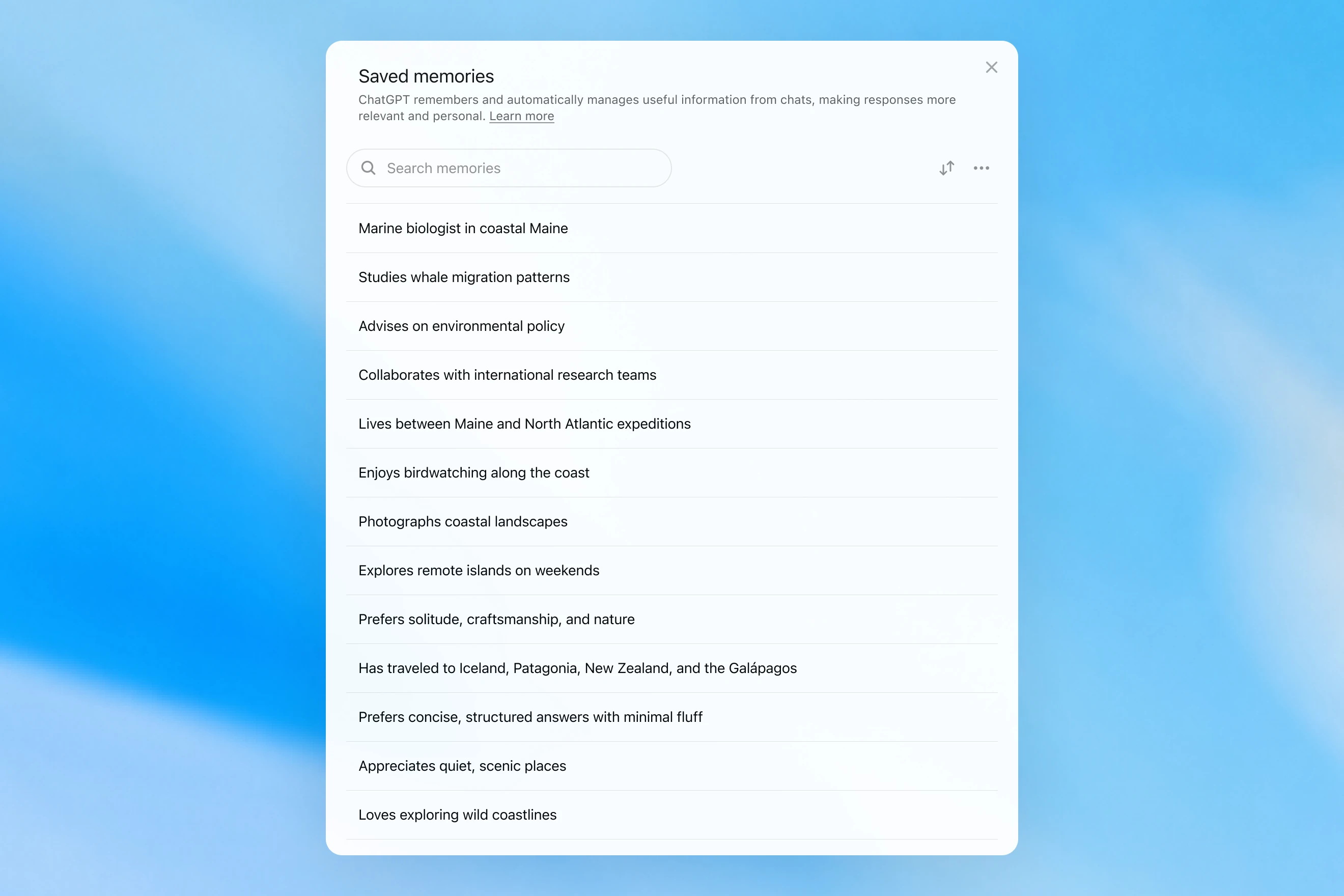
Saved memories modal showing a searchable list of personal details, including work, interests, travel, and response preferences.

Kumbukumbu zilizohifadhiwa ziliandikwa tu wakati wa mazungumzo na zilitegemea vidokezo thabiti kuamua wakati wa kuanzisha kumbukumbu, kama vile agizo la “kumbuka ninasafiri kwenda Singapore Julai.” Kiutendaji, kuingiliana na mfumo huu kungeweza kuhisi kama kuzungumza na mtu aliyeandika vidokezo vichache, lakini bado akasahau kila kitu ambacho hakikuandikwa. Kumbukumbu zilizohifadhiwa pia huelekea kupitwa na wakati kadiri muda unavyopita na hatimaye kuwa si sahihi au zisizofaa.

Mnamo Aprili 2025, tulisasisha kumbukumbu ya ChatGPT kwa kuupa muundo uwezo wa kurejelea muktadha wa mazungumzo nje ya orodha ya kumbukumbu zilizohifadhiwa; hili lilifanywa kwa kuanzisha toleo la kwanza la dreaming—mbinu ya ChatGPT ya kiotomatiki kuratibu kumbukumbu chinichini kwa kurejelea historia ya mazungumzo.
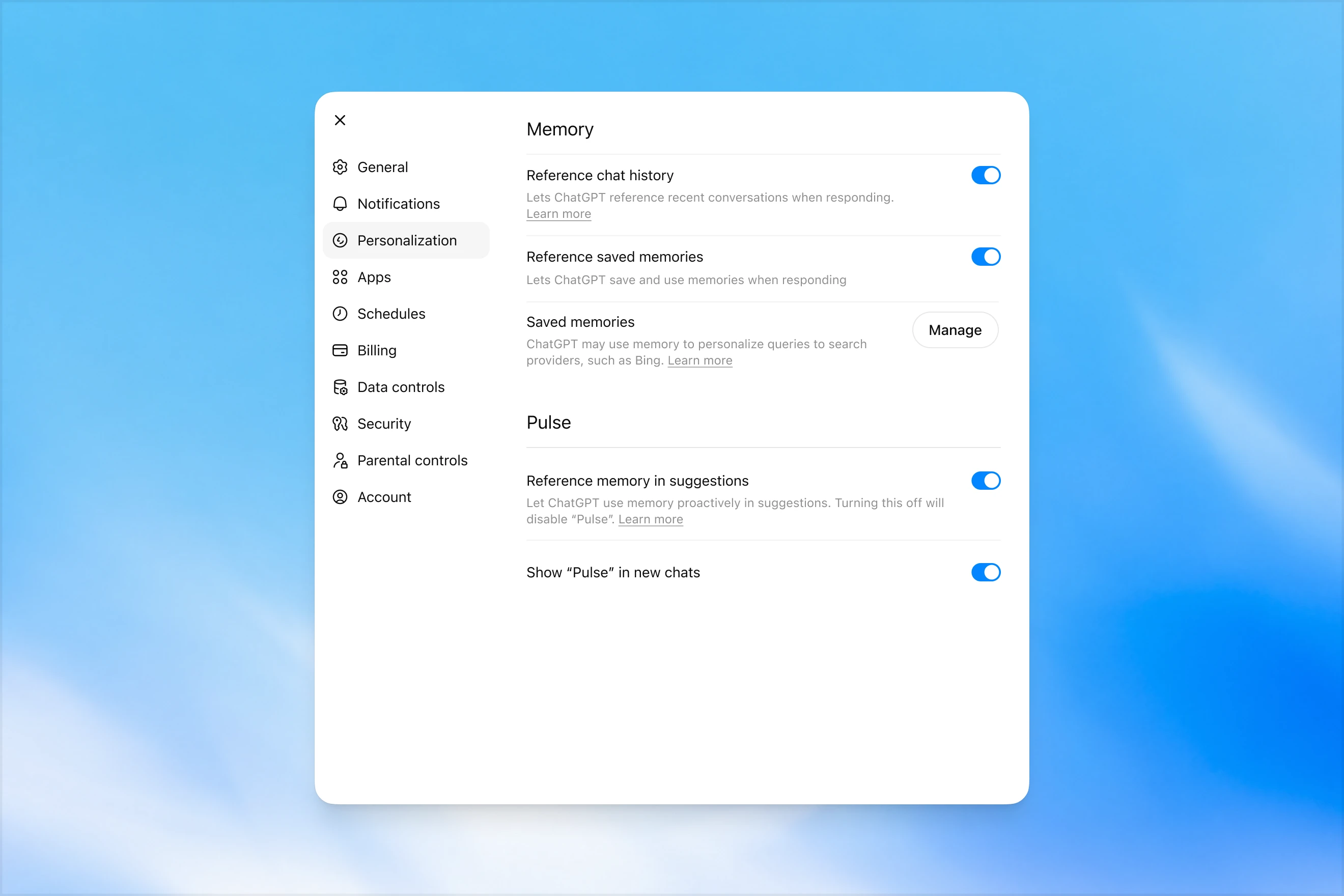
Memory settings page in ChatGPT showing options to reference chat history, use saved memories, manage saved memories, and enable Pulse memory suggestions.

Tofauti na kumbukumbu zilizohifadhiwa, dreaming hutumia mchakato wa chinichini unaoiruhusu ChatGPT kujifunza kutoka mazungumzo mengi na kuunganisha hali ya kumbukumbu ya ChatGPT ili daima kutoa muktadha mpya zaidi na unaofaa zaidi kwa mazungumzo yako. Dreaming pia hurahisisha kumbukumbu kujumuisha muktadha unaojitokeza kiasili katika mazungumzo, bila kutegemea maombi ya wazi ya kukumbuka kitu fulani.

Katika mwaka uliopita, dreaming iliongeza nguvu kumbukumbu zilizohifadhiwa ili kuunda maboresho makubwa katika uwezo wa ChatGPT kubinafsisha majibu na kupunguza kupitwa na wakati kwa kumbukumbu zilizohifadhiwa. Hata hivyo, kihistoria haikuwahi kutosha kama mfumo wa kumbukumbu unaojitegemea.

Leo, tunazindua usanifu wa kumbukumbu wenye uwezo mkubwa zaidi na unaotumia kompyuta kwa ufanisi zaidi, uliojengwa juu ya dreaming.

Kumbukumbu zinazounganishwa na dreaming zinaweza kukaguliwa kupitia muhtasari wake unaoonekana kwenye ukurasa wa muhtasari wa kumbukumbu. Kutoka kwenye muhtasari wa kumbukumbu, unaweza kuona haraka mambo muhimu ambayo ChatGPT inajua kukuhusu, kuongeza au kusasisha taarifa kukuhusu, na kutoa maagizo kuhusu mada ambazo ChatGPT inapaswa kuibua na wakati gani. Ikiwa unataka kuchunguza eneo fulani kwa undani ili kujifunza zaidi, zungumza tu na muundo.
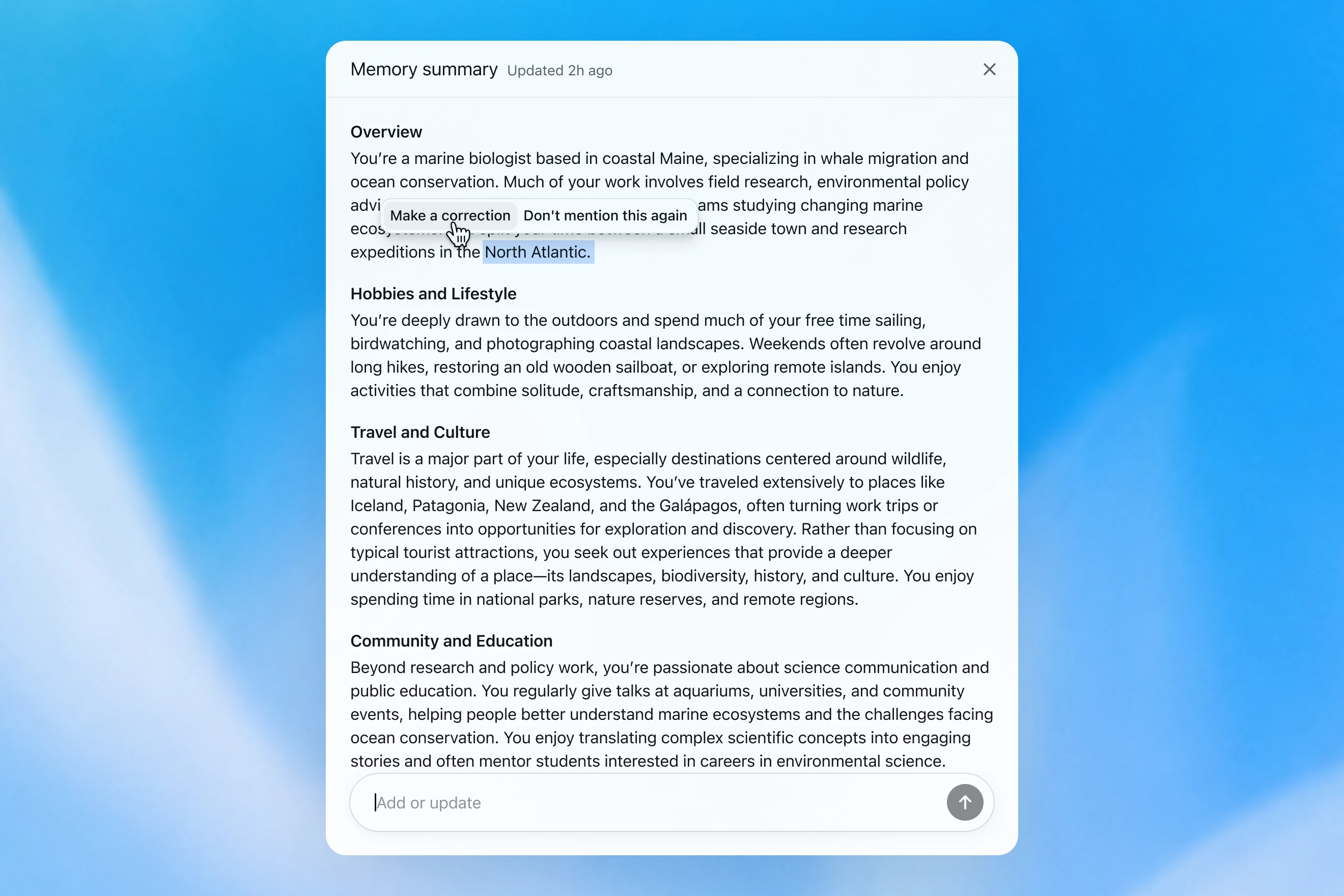
Memory summary modal showing a personalized overview of a user’s work, hobbies, travel interests, and community involvement, with options to correct or dismiss specific details.

Jinsi tunavyotathmini kumbukumbu

Tunapofikiria jinsi “kumbukumbu nzuri” inavyoonekana katika ChatGPT, mambo machache huja akilini:

  1. Beba muktadha wenye manufaa mbele: Unaiambia ChatGPT jambo mara moja, nayo inakumbuka taarifa hiyo katika mazungumzo yako yanayofuata.
  2. Fuata mapendeleo na vikwazo: Ukieleza pendeleo (k.m., wewe ni mla mboga), basi ChatGPT inapaswa kuchukua hatua zinazoendana na pendeleo hilo kuanzia hapo.
  3. Endelea kuwa ya sasa kadiri muda unavyopita: Kumbukumbu inapaswa kuzingatia kupita kwa muda. Fikiria “Mtumiaji anapanga sherehe yake ya siku ya kuzaliwa Jumamosi ijayo”; hatimaye, Jumapili hufika.

Tunaweza kutathmini jinsi kumbukumbu ya ChatGPT Plus na Pro imeboreshwa kadiri muda unavyopita kuhusiana na kila moja ya malengo matatu ya kumbukumbu hapo juu. Tunafanya hili kwa kila moja ya:

  1. 2024: Kumbukumbu zilizohifadhiwa
  2. 2025: Kumbukumbu zilizohifadhiwa + Dreaming V0
  3. 2026: Dreaming V3

Kubeba muktadha mbele

Unapoanza mazungumzo mapya na ChatGPT, huhitaji kujitambulisha tena kuanzia mwanzo. ChatGPT inaweza kukuokolea muda na kujenga juu ya muktadha wa awali, hasa kwa miradi changamano inayoendelea kwa muda mrefu.

Kwa mfano, fikiria unatumia ChatGPT kununua vifaa vipya vya kamera vinavyooana na kamera yako ya sasa. Ikiwa uliwahi kujadili mpangilio wako wa kamera na ChatGPT hapo awali, unaweza kuuliza bidhaa zinazoendana na “mpangilio wangu wa upigaji picha” na kupata mapendekezo yaliyobinafsishwa yanayokidhi mahitaji yako.

GPT-5.2 Instant

What would I need to buy to use TTL for my underwater photography setup?

To use TTL flash underwater, you need a compatible chain from camera → housing/trigger → cable → strobe. What you buy depends mostly on whether your setup uses fiber-optic TTL or electrical TTL.

Basic shopping checklist

  • TTL-capable underwater strobe
    Look for strobes that support your TTL type, such as Inon S-TTL, Sea & Sea DS-TTL, Ikelite DS TTL, or compatible Backscatter/Nauticam systems. TTL has to be supported by the strobe, not just the camera.
  • TTL trigger or TTL converter
    This is the key piece. It translates your camera’s flash metering into something the underwater strobe can understand. Examples include Nauticam optical TTL converters, Sea & Sea TTL converters, Backscatter Smart Control optical TTL triggers, or Ikelite DS Link TTL converters, depending on housing and camera brand. Backscatter notes that Nauticam optical TTL converters can work with fiber-optic-connected Inon and Sea & Sea TTL strobes, while Ikelite’s DS Link converters are made around Ikelite DS strobes and electrical sync setups. (Backscatter.com(fungua katika dirisha jipya))
  • Connection cable
    For fiber optic TTL, buy one fiber optic cable per strobe. Ikelite’s fiber-optic guide says each strobe needs its own light path, converter/adapter, and cord. (Ikelite(fungua katika dirisha jipya))
    For
    electrical TTL, buy the correct sync cord, such as Ikelite-style, Nikonos 5-pin, or housing-specific bulkhead cable.
  • Housing compatibility parts
    You may need a hot-shoe adapter, bulkhead, fiber optic window/adapter, or housing-specific TTL board. Many TTL triggers mount inside the housing on the camera hot shoe.
  • Strobe arms, clamps, tray, and mounting hardware
    TTL controls exposure, but you still need to physically mount and aim the strobes.
  • Batteries and spares
    Bring strobe batteries, trigger batteries if required, spare fiber optic cables or sync cord O-rings, and silicone grease for serviceable O-rings.

Which route should you choose?

Fiber optic TTL is usually easiest if your housing has optical ports or can use the camera’s pop-up flash/LED trigger. It is common with compact, mirrorless, Nauticam, Sea & Sea, AOI, and Olympus/OM TG-style setups.

Electrical TTL is often best if you use Ikelite DS strobes or an Ikelite-style housing/bulkhead. Ikelite says its DS Link TTL converters are faster and more reliable than fiber-optic TTL triggers, and they do not require batteries. (Backscatter.com(fungua katika dirisha jipya))

The compatibility rule

You need all three to match:

camera brand/protocol + housing/trigger type + strobe TTL system

For example:

  • Sony camera + Nauticam housing + optical TTL trigger + Inon/Sea & Sea-compatible fiber optic strobe
  • Nikon/Canon/Sony camera + Ikelite housing/bulkhead + Ikelite DS Link TTL converter + Ikelite DS strobe
  • Compact camera with built-in flash + fiber optic cable + S-TTL/DS-TTL-capable strobe

So the practical answer is: buy a TTL-compatible strobe, the correct TTL trigger/converter for your camera and housing, and the right fiber optic or electrical sync cable. The exact part numbers depend on your camera, housing, and strobe model.

Muundo hutoa jibu la jumla linalomwacha mtumiaji afanye mwenyewe ukaguzi changamano wa uoanifu.

GPT-5.3 Instant

What would I need to buy to use TTL for my underwater photography setup?

I’ll verify this against your actual setup: Sony A1 II in Nauticam NA-A1II, with Backscatter Mini Flash 3 and Inon Z-330 strobes. The key question is whether you want TTL with the Mini Flash 3, the Z-330s, or both.

For your setupSony A1 II + Nauticam NA-A1II + Backscatter Mini Flash 3 + Inon Z-330 — there are two different TTL paths:

Best buy for Mini Flash 3 TTL

Buy:

Backscatter Smart Control TTL LED Nauticam Flash Trigger for Sony
SKU: BS-TR-SN2

Backscatter lists it as custom-designed for Nauticam full-frame Sony housings, TTL-compatible with Mini Flash 3, and the NA-A1II housing page offers it as the “Backscatter Smart Control TTL Flash Trigger” option. (Backscatter.com(fungua katika dirisha jipya))

You’d use normal optical fiber cables from the housing to the Mini Flash 3. On the MF-3, you’d use SC or SC Macro mode; Backscatter says SC / SC Macro are the TTL modes for Mini Flash 3, with SC Macro specifically tuned for close macro work. (Backscatter.com(fungua katika dirisha jipya))

For Inon Z-330 TTL

For the Inon Z-330, the relevant unit is:

UW Technics 11075-HSS TTL Converter for Sony / Nauticam

UW Technics explicitly lists Inon Z-330 as a compatible TTL strobe and supports optical TTL output. (UWTechnics(fungua katika dirisha jipya))

But I would not buy this for Mini Flash 3 TTL. Backscatter’s own UW Technics listing says Backscatter strobes are manual / HSS only on that converter, while the Backscatter Smart Control trigger is the one listed for Sony TTL with the Mini Flash 3. (Backscatter.com(fungua katika dirisha jipya))

Practical recommendation

Since you shoot macro and have the Mini Flash 3, I’d buy the Backscatter Smart Control TTL LED Nauticam Flash Trigger for Sony — BS-TR-SN2.

The catch: there probably is no single trigger that gives true TTL for both the Mini Flash 3 and Inon Z-330 at the same time. The Backscatter trigger is the right TTL solution for the MF-3; the UW Technics converter is the right TTL solution for the Z-330. So choose based on which strobe you actually want TTL for.

For your use case, I’d prioritize Mini Flash 3 TTL / SC Macro and treat the Z-330s as manual when needed.

Muundo hukumbuka mpangilio wa kamera wa mtumiaji na kupendekeza bidhaa inayoendana nao.

GPT‑5.2 Instant hatimaye hujibu swali, lakini katika jaribio la kueleza mipaka yake ya usalama, huanza na utangulizi mrefu kuhusu kile ambacho haiwezi kusaidia nacho. GPT‑5.3 Instant, kwa upande mwingine, huingia moja kwa moja kwenye jibu.

Tunaweza kuunda tathmini kutokana na mifano inayofanana na hii ambapo muundo unaombwa kujibu dokeza linalohitaji ukumbuke taarifa za kweli kuhusu mtumiaji. Kisha muundo hutuzwa ikiwa unajibu kwa njia inayotumia kwa usahihi muktadha husika. Katika tathmini hii, mfumo mpya unaotegemea dreaming unaboresha uwezo wa muundo kukumbuka ukweli unaofaa.

Kufuata mapendeleo

Kumbukumbu pia husaidia ChatGPT kujibu kwa njia zinazoendana vizuri zaidi na mapendeleo na vikwazo vyako.

Fikiria kwamba unapanga safari kwenda Singapore. Miezi miwili kabla ya safari yako, unaiomba ChatGPT ikusaidie kupanga ratiba ya safari. ChatGPT tayari inajua kutokana na mipango ya awali ya safari kwamba unapenda upigaji picha wa wanyamapori, unapendelea hoteli zenye kiyoyozi chenye nguvu, na unapenda chakula cha jioni cha utulivu kuliko baa iliyojaa watu.

GPT-5.2 Instant
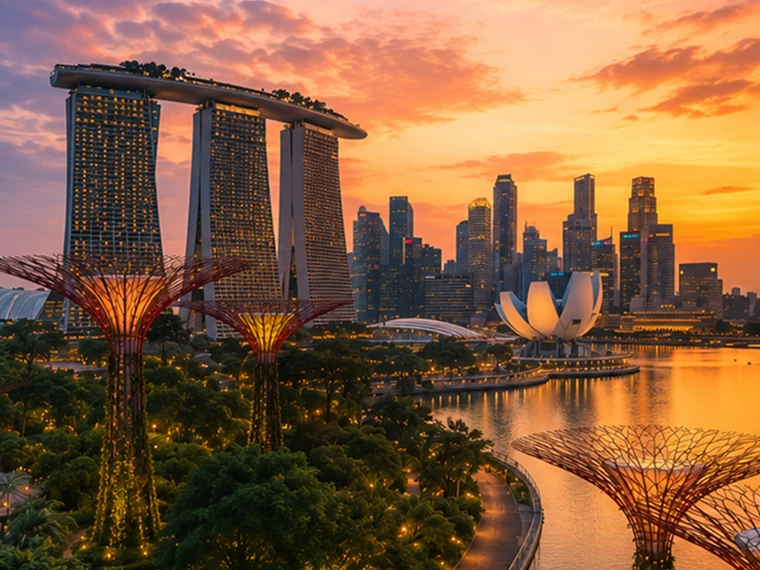
Help me plan a trip to Singapore. I'm going to be there for a work trip in July and will have a few days free at the end.

Great add-on city for a work trip: Singapore is compact, safe, excellent for solo exploring, and easy to do in 2–4 free days. July is hot and humid; expect daytime highs around 31–33°C / 88–91°F, warm nights, and sudden rain, so plan outdoor time early morning or after 5 p.m. and keep midday for museums, malls, cafés, or hotel downtime. Singapore’s official weather service notes typical daily highs of 31–33°C and lows of 23–25°C. (Singapore Weather Service(fungua katika dirisha jipya))

memory-preferences-without

A strong 3-day plan

Day 1: Marina Bay, Gardens, and skyline

Start late afternoon at Marina Bay and walk the waterfront: Merlion Park, Helix Bridge, ArtScience Museum exterior, then into Gardens by the Bay. Book Cloud Forest, Flower Dome, and either the OCBC Skyway or Supertree Observatory if views matter to you. Gardens by the Bay lists Cloud Forest and Flower Dome as open daily 9 a.m.–9 p.m.; Supertree Observatory is also listed as 9 a.m.–9 p.m. with last admission at 8:30 p.m., but check maintenance closures before booking. (Gardens by the Bay(fungua katika dirisha jipya))

Evening: stay for the Supertree light show area, then dinner at Lau Pa Sat for an easy first-night hawker experience near the CBD. It has 80+ stalls and local staples like satay, laksa, nasi lemak, bak kut teh, kaya toast, and char kway teow. (Laupasat(fungua katika dirisha jipya))

Day 2: Culture neighborhoods and food

Morning: Chinatown. Visit Buddha Tooth Relic Temple, walk the shophouse streets, and eat at Maxwell Food Centre or Chinatown Complex Food Centre. Visit Singapore lists Maxwell, Chinatown Complex, Old Airport Road, Tiong Bahru Market, Newton, and others among popular hawker centres. (Visit Singapore(fungua katika dirisha jipya))

Afternoon: Kampong Glam and Haji Lane for Sultan Mosque, murals, boutiques, and cafés. Then head to Little India around golden hour for temples, flower garlands, Tekka Centre, and dinner.

Evening: either cocktails around Ann Siang / Club Street, or keep it low-key with a night walk along the Singapore River: Boat Quay to Clarke Quay to Robertson Quay.

Day 3: Nature or beach day

Pick one based on your energy.

For nature: do Singapore Botanic Gardens early, then the National Orchid Garden, followed by lunch in Dempsey Hill or Tiong Bahru. This is the best “green Singapore” day without leaving the city.

For beach/resort mode: go to Sentosa. Choose the southern beaches, Fort Siloso Skywalk, or a beach club. I would skip trying to do every Sentosa attraction unless you love theme parks.

For local food focus: do Tiong Bahru Market for breakfast, National Gallery Singapore midday, then Old Airport Road Food Centre for dinner. The official events page also shows exhibitions and cultural events, so it is worth checking once your exact July dates are fixed. (Visit Singapore(fungua katika dirisha jipya))

Best places to stay after the work part

Marina Bay / CBD is easiest if you want polished, walkable, skyline-heavy Singapore and minimal transit.

Chinatown / Telok Ayer / Tanjong Pagar is my top pick for a few free days: great food, MRT access, heritage streets, cocktail bars, and close to work districts.

Bugis / Kampong Glam is better if you want boutique hotels, cafés, street art, and a slightly more relaxed neighborhood feel.

Orchard is convenient for shopping and rainy-day malls, but less atmospheric.

What to book ahead

Book Gardens by the Bay conservatories/Skyway, any special restaurants, and possibly a cocktail bar. For hawker centres, do not over-plan; just go hungry, carry tissues or wet wipes, and be ready to share tables.

July packing notes

Bring breathable work clothes, comfortable walking shoes, a small umbrella, and a light layer for aggressive air-conditioning. I would also plan one “rain-flexible” indoor block each day, because showers can arrive suddenly even when the forecast looks fine.

My suggested balance: Day 1 Marina Bay/Gardens, Day 2 Chinatown–Kampong Glam–Little India, Day 3 Botanic Gardens or Sentosa. That gives you the Singapore highlights without turning your post-work break into another work project.

Muundo hutoa jibu la jumla ambalo ni la kitalii zaidi, halisaidii katika kuhifadhi hoteli, na kwa kiasi kikubwa hupuuza maslahi ya mtumiaji.

GPT-5.3 Instant
Help me plan a trip to Singapore. I'm going to be there for a work trip in July and will have a few days free at the end.

I’ll build this around your known constraints: a few free days after work, hot/humid July weather, wildlife/photography/nature bias, strong AC needs for sleep, and good but not overly social dining. I’ll verify current July logistics and then give a practical short itinerary rather than a generic Singapore list.

memory-preferences-with

Here’s how I’d structure it: 2–3 free days, mostly nature / wildlife / photography, with heat-managed mornings and AC breaks. July is hot and humid: Singapore’s July long-term stats are about 31.4°C / 88.5°F average daily max, 25.4°C / 77.7°F min, 146.6 mm rain, and 14 rain days, so outdoor plans should be early morning or evening, not midday. (National Environment Agency(fungua katika dirisha jipya))

Best plan for 3 free days

Day 1 — Gardens by the Bay + Marina Bay, low-friction

Morning: Cloud Forest + Flower Dome. This is the obvious “touristy” pick, but it fits you well because it’s visually interesting, good for photography, and climate-controlled. Gardens by the Bay lists Cloud Forest and Flower Dome-type attractions running 9:00am–9:00pm, and Cloud Forest currently has the Jurassic World experience listed as ongoing. (Gardens by the Bay(fungua katika dirisha jipya))

Late afternoon / evening: Supertree Grove + Borealis / light show. Gardens currently lists Borealis every Sat, Sun & Mon, 8:00–8:30pm at Supertree Grove, so try to align this with one of those nights. (Gardens by the Bay(fungua katika dirisha jipya))

Dinner: do something easy nearby: Marina Bay / Tanjong Pagar / Telok Ayer. For you, I’d prioritize reservation-based restaurants with real tables over hawker centers on the first night, because you dislike cramped solo seating.

Day 2 — Mandai wildlife day

Morning to afternoon: Bird Paradise + River Wonders. Bird Paradise is probably the best fit photographically; River Wonders is less “wildlife photography” and more controlled exhibits, but it pairs well logistically. River Wonders is listed as daily 9:00am–6:00pm, last entry 5:00pm. (Mandai Wildlife Reserve(fungua katika dirisha jipya))

Evening: Night Safari. This is the rare Singapore attraction that is genuinely better at night and avoids the worst heat. Night Safari is listed as daily 6:00pm–12:00am, last entry 11:15pm, with tram plus walking trails and over 900 nocturnal animals. (Mandai Wildlife Reserve(fungua katika dirisha jipya))

This is a full day. I would not add Singapore Zoo unless you have 4 free days; Mandai can become exhausting fast.

Day 3 — Nature reserve / macro-ish walking + food

Early morning: Singapore Botanic Gardens or MacRitchie / Windsor Nature Park. For a few free days, Botanic Gardens is the safer pick: easier transport, less sweaty, better bailout options, and more consistent casual photography. MacRitchie / Windsor is better if you want more actual forest, but it is hotter, sweatier, and less predictable.

Midday: AC break.

Late afternoon: Joo Chiat / Katong or Chinatown / Telok Ayer for walking, architecture, coffee, and dinner. This gives you a different texture from Marina Bay without turning the day into a logistics project.

My ranking for you

  1. Cloud Forest / Gardens by the Bay — best combination of photogenic, iconic, heat-managed.
  2. Bird Paradise + Night Safari — best wildlife-focused day.
  3. Botanic Gardens early morning — best low-stress outdoor nature.
  4. Joo Chiat / Katong — best neighborhood walk.
  5. Hawker centers — worth doing, but not ideal for your seating preferences unless timed off-peak.

What I’d avoid or deprioritize

I would skip Sentosa unless you specifically want beach/resort stuff. I would also skip a packed “greatest hits” day of Merlion / Orchard / Little India / Chinatown / Clarke Quay; it’s inefficient and hot. For you, the trip will be better if each day has one strong anchor plus one easy evening plan.

Hotel / sleep note

Since this is a work trip, your hotel may be fixed. If you can choose or extend at the same hotel, the hard gate is still AC. Singapore hotels are generally AC-heavy, but your requirement is unusually strict.

One thing I need to make this concrete

Send the exact free dates and whether your work hotel is fixed. Then I’d turn this into a day-by-day plan with restaurant targets and a hotel/AC callout.

Muundo hutoa jibu lililobinafsishwa kulingana na maslahi ya mtumiaji katika upigaji picha wa wanyamapori, milo ya jioni tulivu, na vipaumbele vyake anapohifadhi hoteli.

GPT‑5.2 Instant hatimaye hujibu swali, lakini katika jaribio la kueleza mipaka yake ya usalama, huanza na utangulizi mrefu kuhusu kile ambacho haiwezi kusaidia nacho. GPT‑5.3 Instant, kwa upande mwingine, huingia moja kwa moja kwenye jibu.

Mapendeleo yanaweza kuwa ya aina kadhaa:

  1. Maagizo kuhusu jinsi ChatGPT inavyopaswa kujibu (“usimtaje Stan tena”).
  2. Mapendeleo au vikwazo vyako binafsi (“Mimi ni mla mboga”)
  3. Mapendeleo yasiyo ya moja kwa moja yanayounda kile kinachokufaa (“Ninaishi karibu na San Francisco” → chaguo za eneo hilo zinapaswa kubinafsishwa kulingana na eneo hili)

Katika kuendeleza mfumo mpya wa kumbukumbu, tuliboresha uwezo wa ChatGPT kutumia mapendeleo husika kutoka mazungumzo ya zamani. Tukifuata mfano wa “Mimi ni mla mboga” hapo juu, tunaweza kutathmini ikiwa muundo unatumia kumbukumbu kwa usahihi kutoa chaguo za chakula zinazofaa wala mboga mtumiaji mla mboga anapoomba mapendekezo ya maandalizi ya milo.

Kuendelea kuwa ya sasa kadiri muda unavyopita

Muda hausimami mazungumzo yako yanapoisha.

Mifumo ya jadi ya kumbukumbu inaweza kupitwa na wakati. Kwa mfano, unaiambia ChatGPT “Niko Singapore na ninahitaji pendekezo la chakula cha jioni cha leo usiku.” Kisha muda unapita, safari yako inaisha, na unashangaa kwa nini ChatGPT bado inadhani uko Singapore.

Kwa dreaming, kumbukumbu husasishwa kiotomatiki kadiri muda unavyopita, na kuruhusu ChatGPT kurekebisha kumbukumbu yake kutoka “Unaenda Singapore Julai” hadi “Ulienda Singapore Julai 2026” safari inapoisha. Kisha, unapokuwa umerudi nyumbani, ChatGPT inaweza tena kutoa mapendekezo yaliyobinafsishwa kulingana na eneo lako la nyumbani na saa za eneo lako.

GPT-5.2 Instant

Help me find something for take-out tonight that's still open.

It’s about 5:19 AM Sunday in Singapore, so your safest take-out/delivery bets are 24-hour places.

Best bets right now:

  1. McDelivery / McDonald’s Singapore — easiest islandwide option; McDonald’s says McDelivery is available 24 hours, 7 days a week. Breakfast menu should be on now. (McDonald's Singapore(fungua katika dirisha jipya))
  2. Srisun Express — good for prata, Indian Muslim food, local comfort food; their site says they’re halal-certified and open 24/7. (Sri Sun Express(fungua katika dirisha jipya))
  3. 89.7 Supper Club — good if you’re near Changi Village or Geylang East; their outlets page says both locations are open 24 hours, 7 days a week. (89.7 Supper Club(fungua katika dirisha jipya))
  4. 126 Dim Sum Wen Dao Shi — worth checking on GrabFood/foodpanda if you’re in the East; a 2025 guide says it runs till 5:30 AM on weekdays and round-the-clock on weekends. Since it’s Sunday morning, it may still be available. (Eatbook(fungua katika dirisha jipya))
  5. Prata around Geylang / Serangoon / Bedok / Jalan Kayu — look in GrabFood or Google Maps for “prata open now”; guides list multiple 24-hour prata/supper spots, including Mufiz Prata Corner and RK Eating House. (Eatbook(fungua katika dirisha jipya))

For the fastest path: open GrabFood / foodpanda / Deliveroo, set filter to Open now, then search “prata,” “McDonald’s,” “Srisun,” “89.7,” “dim sum,” or “nasi lemak.” If you tell me your neighborhood or nearest MRT, I’ll narrow it to specific nearby places.

Muundo unadhani mtumiaji bado yuko Singapore.

GPT-5.3 Instant

Help me find something for take-out tonight that's still open.

I’ll use Portola Valley / Ladera as the starting point and prioritize places that are plausibly open for takeout tonight, then narrow to low-friction options rather than a huge list.

For tonight, Saturday May 30, near Ladera / Portola Valley, I’d start here:

  1. Alpine Inn — safest casual pickup option. Open Saturday until 9:30 pm and has Order Takeout on its site. Good for burgers / tavern food. (Rossotti's Alpine Inn(fungua katika dirisha jipya))
  2. Taverna Portola Valley — nearby at Ladera Country Shopper; open daily, Saturday dinner until 9:00 pm. Better if you want Greek / Mediterranean. (TAVERNA Portola Valley(fungua katika dirisha jipya))
  3. Portola Bistro — also nearby; Saturday dinner until 9:30 pm. Good option for Italian / Mediterranean / pizza-ish dinner. (Portola Bistro -(fungua katika dirisha jipya))
  4. Amigos Grill — Mexican, very close in Ladera Country Shopper. Official site says call to order at 650-851-3997; DoorDash / order.online lists pickup/delivery ordering until 8:40 pm. (Amigos Grill(fungua katika dirisha jipya))
  5. State of Mind Slice House, Palo Alto — best fallback if you want pizza and can drive farther; Friday–Saturday hours are 11 am–10 pm. (State of Mind Slice House(fungua katika dirisha jipya))

My pick: Alpine Inn for easiest local takeout, Taverna if you want something less heavy, State of Mind if it’s later and you want the most reliable post-9 pm option.

Muundo hutoa majibu yanayofaa eneo la nyumbani la mtumiaji.

GPT‑5.2 Instant hatimaye hujibu swali, lakini katika jaribio la kueleza mipaka yake ya usalama, huanza na utangulizi mrefu kuhusu kile ambacho haiwezi kusaidia nacho. GPT‑5.3 Instant, kwa upande mwingine, huingia moja kwa moja kwenye jibu.

Katika tathmini zetu za kumbukumbu, tunapima ikiwa ChatGPT inaweza kujibu kwa usahihi madokeza ambapo kupita kwa muda kunaathiri kwa kiasi kikubwa jibu au pendekezo sahihi. Dreaming huleta ongezeko kubwa katika eneo hili:

Msingi unaoweza kupanuka zaidi kwa siku zijazo

Katika OpenAI, dhamira yetu ni kuhakikisha kwamba akili unde ya jumla inanufaisha binadamu wote.

Ingawa kumbukumbu inayotegemea dreaming imekuwa ikipatikana kwa watumiaji wa Plus na Pro kwa muda, ni sasa tu tunaweza kuwapa watumiaji wa Free toleo linalofikia kiwango chetu cha ubora na linalowezekana kuhudumiwa kwa kiwango kikubwa. Maboresho ya hivi karibuni yalipunguza takriban mara 5 nguvu za kompyuta zinazohitajika kutoa dreaming kwa watumiaji wa Free, na kufanya iwezekane kuanza kusambaza dreaming kwa watumiaji wa Free katika wiki zijazo na kuongeza uwezo wa kumbukumbu kwa watumiaji wa Plus na Pro.

Tukitazama mbele, dreaming sasa hutupatia msingi wa kumbukumbu wa pamoja kwa watumiaji wote. Sasisho hili linawakilisha mfumo wetu wa kumbukumbu wenye uwezo zaidi kufikia sasa, na tutaendelea kuuboresha.

Ili kujifunza zaidi kuhusu toleo hili na vidhibiti vya mtumiaji vya kumbukumbu, tembelea Maswali Yanayoulizwa Sana kuhusu Kumbukumbu(fungua katika dirisha jipya) yetu.


Mwandishi

OpenAI