Portando Codex e ChatGPT for Work a milioni di persone in tutto il mondo, abbiamo imparato cosa serve davvero per far funzionare bene gli agenti a esecuzione prolungata. Gli agenti utili hanno bisogno di una potente infrastruttura che gestisca il contesto, utilizzi gli strumenti in modo efficiente e coordini i sottoagenti. Hanno inoltre bisogno di sistemi che ne garantiscano il funzionamento affidabile per giorni e di ambienti in cui possano lavorare con i file, eseguire codice e salvare risultati intermedi.
Oggi presentiamo in beta pubblica l’API Agents(si apre in una nuova finestra), che offre agli sviluppatori, tramite un’API semplice e flessibile, la stessa infrastruttura alla base di Codex.
Con l’API Agents puoi creare un agente pronto per la produzione con una sola chiamata API, specificando attività, modello, strumenti e ambiente:
OpenAI ospita e gestisce l’infrastruttura. Puoi scegliere l’ambiente di calcolo dell’agente: una sandbox gestita da OpenAI, la tua infrastruttura o uno dei nostri partner per le sandbox. L’API Agents offre solide fondamenta per creare agenti basati sulla nostra infrastruttura ottimizzata, così puoi concentrarti sugli strumenti, sulle conoscenze e sui flussi di lavoro che rendono unico il tuo agente.
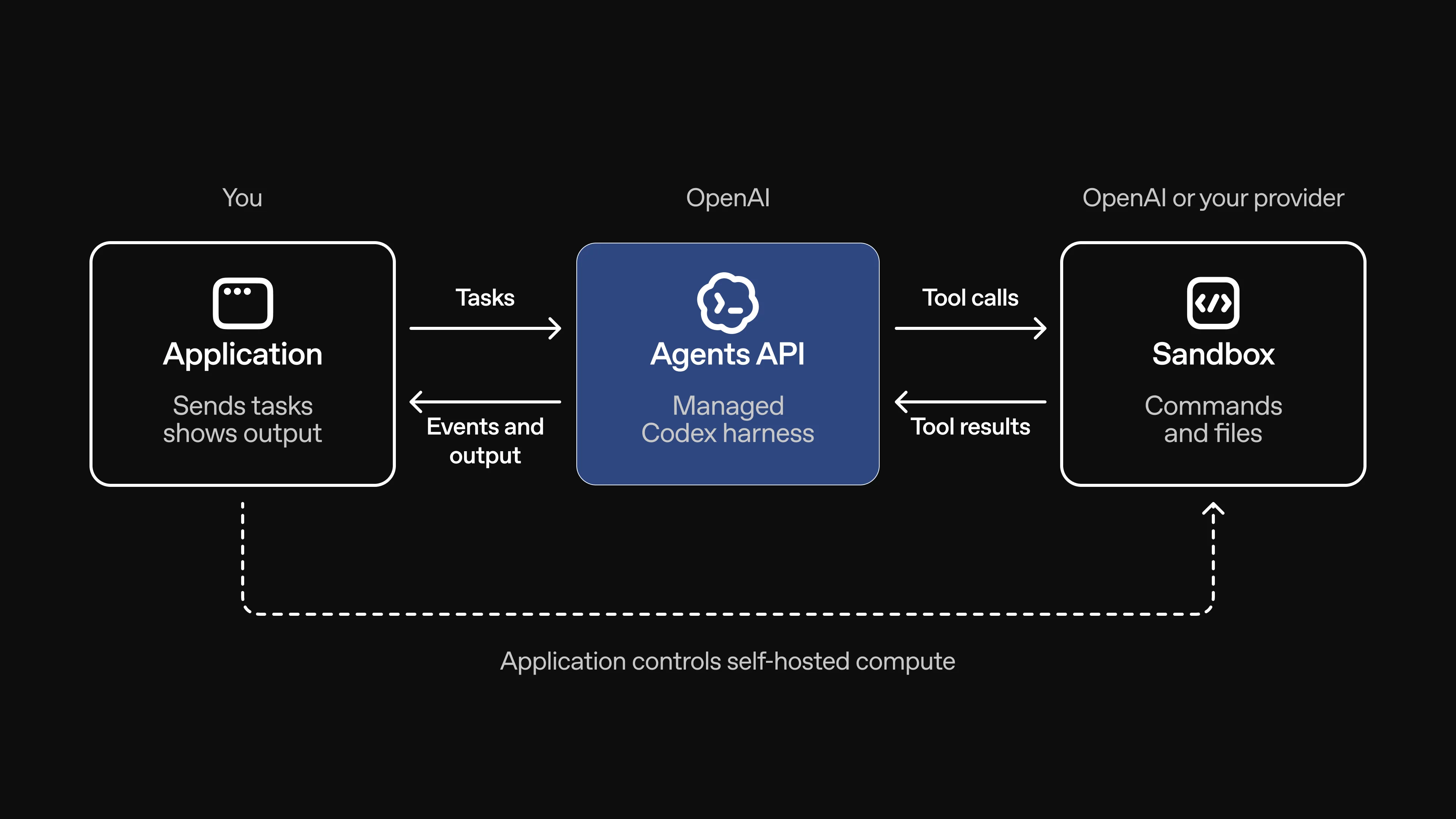
L’API Agents offre ai tuoi agenti la stessa infrastruttura alla base di Codex.
Carichi di lavoro diversi richiedono opzioni diverse per calcolo, archiviazione e distribuzione. L’API Agents ti consente di scegliere la sandbox più adatta alla tua applicazione.
Stiamo collaborando con fornitori dell’ecosistema(si apre in una nuova finestra), tra cui Blaxel, Cloudflare, Daytona, DigitalOcean, E2B, Modal, Oracle, Runloop e Vercel, per offrire integrazioni di alto livello per diverse esigenze:
Ambienti completamente gestiti o distribuzioni nella tua VPC
Meccanismi specifici per l’archiviazione di file e segreti
Diverse configurazioni di CPU, GPU e memoria, con profili di prestazioni, avvio a freddo e costi adatti al flusso di lavoro della tua azienda.
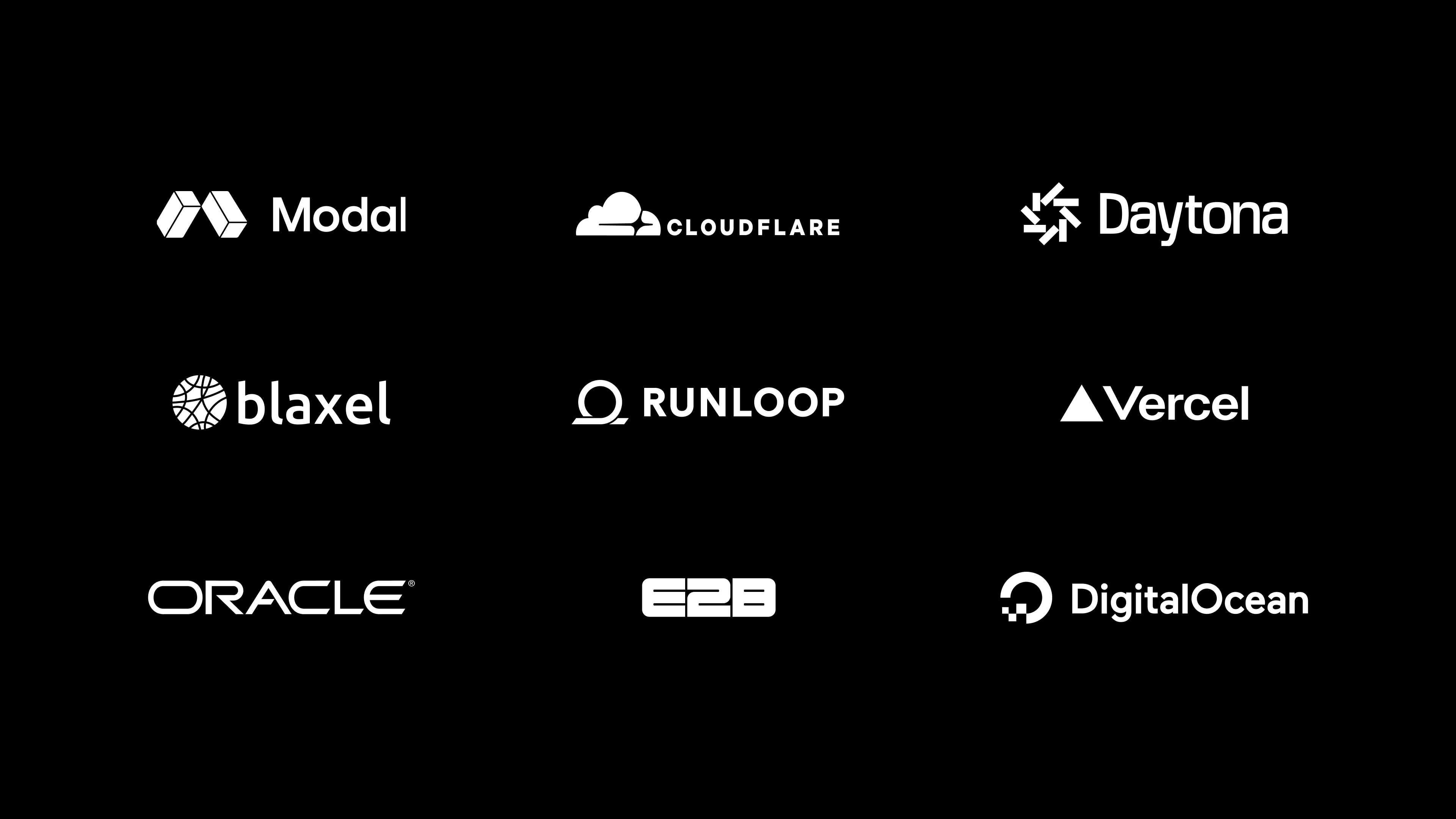
L’API Agents offre integrazioni di alto livello con i più noti fornitori dell’ecosistema.
Per gli sviluppatori che vogliono iniziare rapidamente e scalare in modo efficiente, presentiamo anche la sandbox ospitata da OpenAI(si apre in una nuova finestra). Utilizza la stessa infrastruttura di sandboxing alla base di Codex e ChatGPT.
OpenAI effettua il provisioning e gestisce la sandbox, offrendo al tuo agente un ambiente sicuro e ad alte prestazioni in cui eseguire codice, lavorare con i file e produrre artefatti. Queste sandbox possono essere configurate in modo flessibile con file, pacchetti, skill e plugin, così da fornire all’agente ciò che gli serve per completare l’attività.
Sfruttare le nuove funzionalità dei modelli spesso richiede di rielaborare l’infrastruttura, sottraendo tempo prezioso al miglioramento dell’applicazione. A ogni lancio di un modello, l’API Agents offre un accesso con controllo delle versioni a queste funzionalità. Gestiamo e miglioriamo costantemente l’infrastruttura insieme ai nostri modelli, aiutando i tuoi agenti a ottenere prestazioni migliori a ogni aggiornamento. Tra i recenti miglioramenti all’infrastruttura figurano, ad esempio:
Per supportare modelli che lavorano per ore, abbiamo sviluppato un sistema di gestione del contesto che aiuta gli agenti a conservare le informazioni rilevanti durante sessioni più lunghe. Quando una sessione si avvicina al limite di contesto, l’API Agents compatta automaticamente(si apre in una nuova finestra) il contesto precedente, conservando le informazioni necessarie all’agente per continuare. Gli sviluppatori possono creare flussi di lavoro che si estendono su più finestre di contesto senza dover implementare una propria logica di compattamento.
L’API Agents aiuta gli agenti a trovare gli strumenti giusti e a usarli in modo efficiente. La ricerca degli strumenti(si apre in una nuova finestra) carica al bisogno le definizioni pertinenti, contribuendo a ridurre l’utilizzo di token e i costi senza invalidare la cache del modello. Una volta resi disponibili gli strumenti, la chiamata programmatica degli strumenti(si apre in una nuova finestra) consente agli agenti di eseguire chiamate in parallelo, concatenare operazioni correlate e filtrare o combinare i risultati nel codice. Possono così elaborare grandi volumi di dati riportando nel contesto solo i risultati pertinenti. L’API Agents supporta MCP, funzioni personalizzate e strumenti integrati come la ricerca sul web.
Grazie al supporto multi-agente(si apre in una nuova finestra), l’API Agents può suddividere le attività complesse in parti indipendenti e delegarle a sottoagenti che lavorano in parallelo. Ogni sottoagente mantiene il proprio contesto, che lo aiuta a concentrarsi sull’incarico, mentre l’agente principale coordina il lavoro e riunisce i risultati. Questo può velocizzare le attività di ricerca, analisi e programmazione che traggono vantaggio dal lavoro in parallelo, senza richiedere la creazione di un sistema di orchestrazione.
L’API Agents si basa sull’infrastruttura open source di Codex e offre agli sviluppatori visibilità sulla logica principale che coordina le chiamate al modello, gli strumenti e il contesto. Con l’API Agents, OpenAI gestisce e mantiene questa infrastruttura, mentre gli sviluppatori possono esaminarne la base di codice pubblica(si apre in una nuova finestra) e imparare da essa.
L'API Agents è disponibile in beta pubblica da oggi per tutti gli sviluppatori. Non sono previsti costi aggiuntivi per l'utilizzo dell'API Agents: paghi semplicemente i token e gli strumenti utilizzati dai tuoi agenti, come indicato nella nostra pagina delle tariffe(si apre in una nuova finestra).
Esplora la panoramica dell’API Agents(si apre in una nuova finestra) per saperne di più oppure segui il quickstart(si apre in una nuova finestra) per iniziare e integrare nei tuoi agenti l’infrastruttura alla base di Codex.
Durante la beta pubblica, apporteremo rapidamente miglioramenti sulla base del tuo feedback mentre lavoriamo verso la disponibilità generale. Facci sapere cosa funziona, dove riscontri difficoltà e di cosa hai bisogno per creare ed eseguire i tuoi agenti in produzione.