Ugrás a fő tartalomra
OpenAI

2026. június 4.

KutatásokTermékKiadás

Erősebb alap a ChatGPT Memóriához

A memóriaszintézis fejlesztése a ChatGPT‑ben a frissesség, a folytonosság és a relevancia optimalizálásához.

Betöltés…

Ma megkezdjük egy nagyobb képességű és skálázhatóbb memóriaszintetizáló rendszer bevezetését, amelyet azért fejlesztettünk, hogy kezelje az elavulással, a helyességgel és a skálázhatósággal kapcsolatos kihívásokat, amelyeket akkor látunk, amikor a Memóriát a ChatGPT több százmillió felhasználójára és többéves időtávokra alkalmazzuk.

A Memória segít a ChatGPT‑nek megtanulni a preferenciáidat, projektjeidet és korlátaidat, így a jövőbeli beszélgetések nem nulláról, hanem közös kontextusból indulhatnak.

Az elmúlt két évben a memória a ChatGPT‑élmény kritikus részévé vált: segít a ChatGPT‑nek jobban megérteni a kontextusodat, hogy idővel értelmes célok elérésében támogathasson. Ez kulcsfontosságú ahhoz, hogy a ChatGPT hasznosabb legyen: ismerjen téged, segítsen neked, és többet tegyen érted.

Ez a frissítés ma elérhető a Plus és Pro felhasználók számára az Egyesült Államokban, és a következő hetekben további országokban, valamint a Free és Go felhasználók számára is bevezetjük.

Hogyan fejlődött a Memória

A Memória először 2024 áprilisában indult el (más néven mentett emlékek). A funkció lehetővé tette, hogy megkérd a ChatGPT‑t információk megjegyzésére és azok továbbvitelére a jövőbeli csevegésekbe.
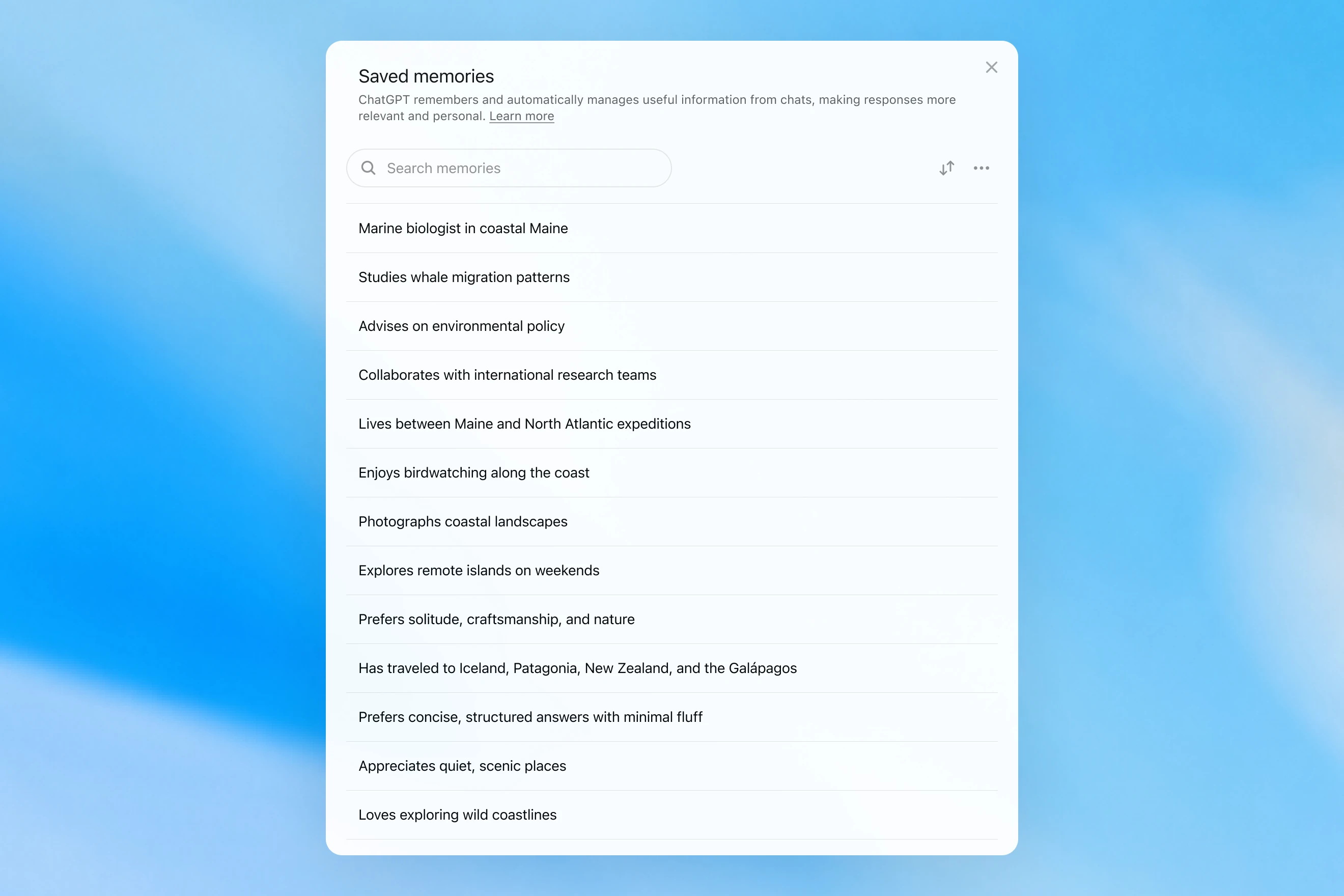
Saved memories modal showing a searchable list of personal details, including work, interests, travel, and response preferences.

A mentett emlékek csak a beszélgetés során íródtak, és erős jelzésekre támaszkodtak annak eldöntéséhez, mikor aktiválódjon a memória, például egy olyan utasításra, hogy „jegyezd meg, hogy júliusban Szingapúrba utazom”. A gyakorlatban a rendszerrel való interakció olyan érzést kelthetett, mintha valakivel beszélnél, aki készített néhány jegyzetet, de továbbra is elfelejtett mindent, amit nem írtak le. A mentett emlékek idővel hajlamosak elavulni, és végül pontatlanná vagy irrelevánssá válni.

2025 áprilisában frissítettük a ChatGPT memóriáját azzal, hogy a modell képessé vált a mentett emlékek listáján kívüli csevegési kontextusra is hivatkozni; ezt a dreaming első verziójának bevezetésével értük el — ez egy módszer arra, hogy a ChatGPT a csevegési előzményekre hivatkozva automatikusan gondozza a memóriákat a háttérben.
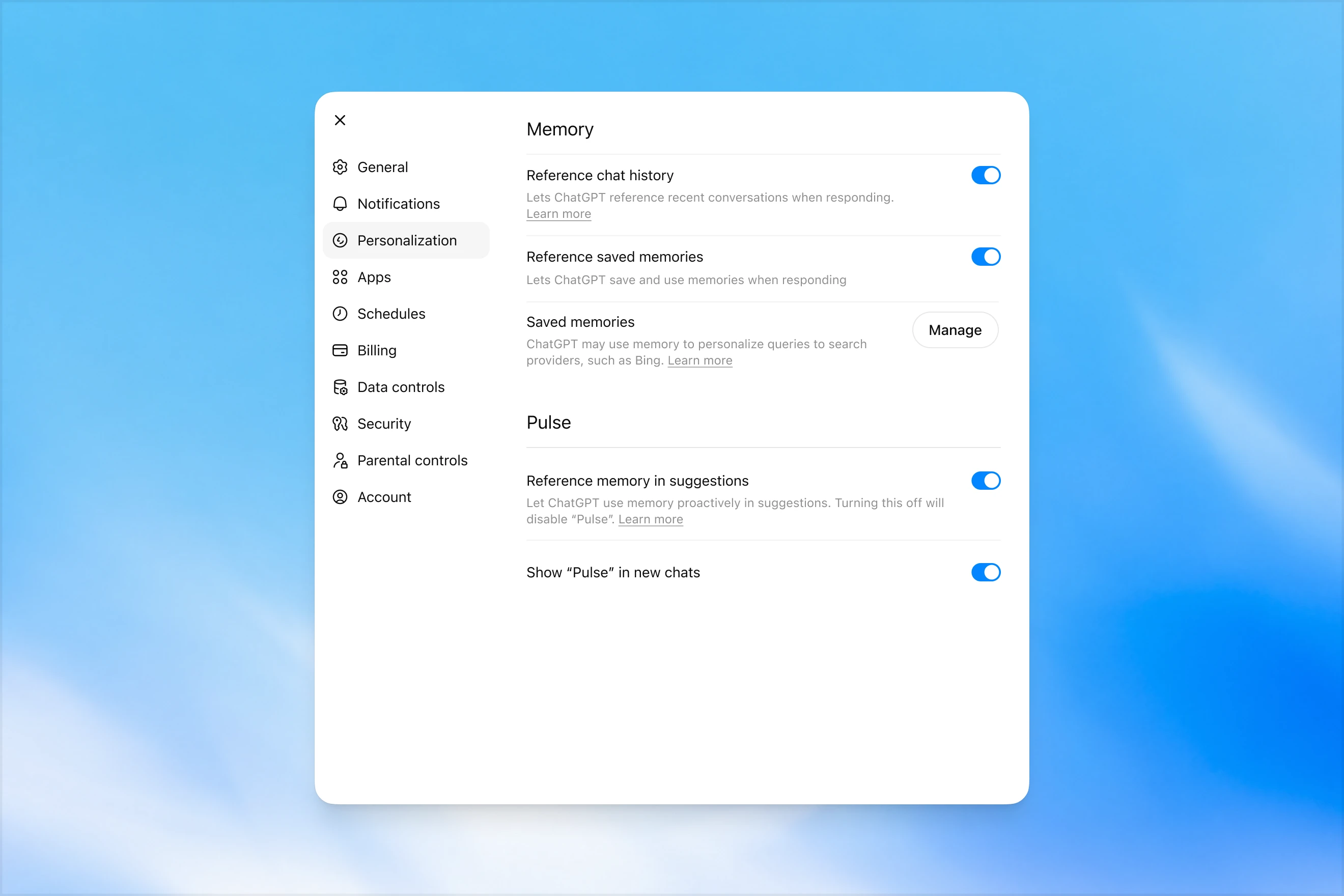
Memory settings page in ChatGPT showing options to reference chat history, use saved memories, manage saved memories, and enable Pulse memory suggestions.

A mentett emlékekkel szemben a dreaming egy háttérfolyamatot használ, amely lehetővé teszi, hogy a ChatGPT sok beszélgetésből tanuljon, és szintetizálja a ChatGPT memóriaállapotát, hogy mindig a legfrissebb és legrelevánsabb kontextust biztosítsa a beszélgetéseidhez. A dreaming azt is megkönnyíti, hogy a memória olyan kontextust is tartalmazzon, amely természetesen merül fel a beszélgetésben, anélkül hogy kifejezett kérésekre támaszkodna valaminek a megjegyzéséhez.

Az elmúlt évben a dreaming kiegészítette a mentett emlékeket, ugrásszerűen javítva a ChatGPT válaszainak személyre szabását, és ellensúlyozva a mentett emlékek elavulását. Önmagában álló memóriarendszerként azonban korábban soha nem volt elegendő.

Ma egy lényegesen nagyobb képességű és számítási szempontból hatékonyabb memóriaarchitektúrát vezetünk be, amely a dreamingre épül.

A dreaming által szintetizált emlékek áttekinthetők egy róluk készült összefoglalóban, amely a memória-összefoglaló oldalon látható. A memória-összefoglalóból gyorsan áttekintheted, mit tud rólad a ChatGPT, hozzáadhatsz vagy frissíthetsz magaddal kapcsolatos információkat, és megadhatod, milyen témákat és mikor hozzon fel a ChatGPT. Ha egy adott területen mélyebbre szeretnél ásni, csak csevegj a modellel.
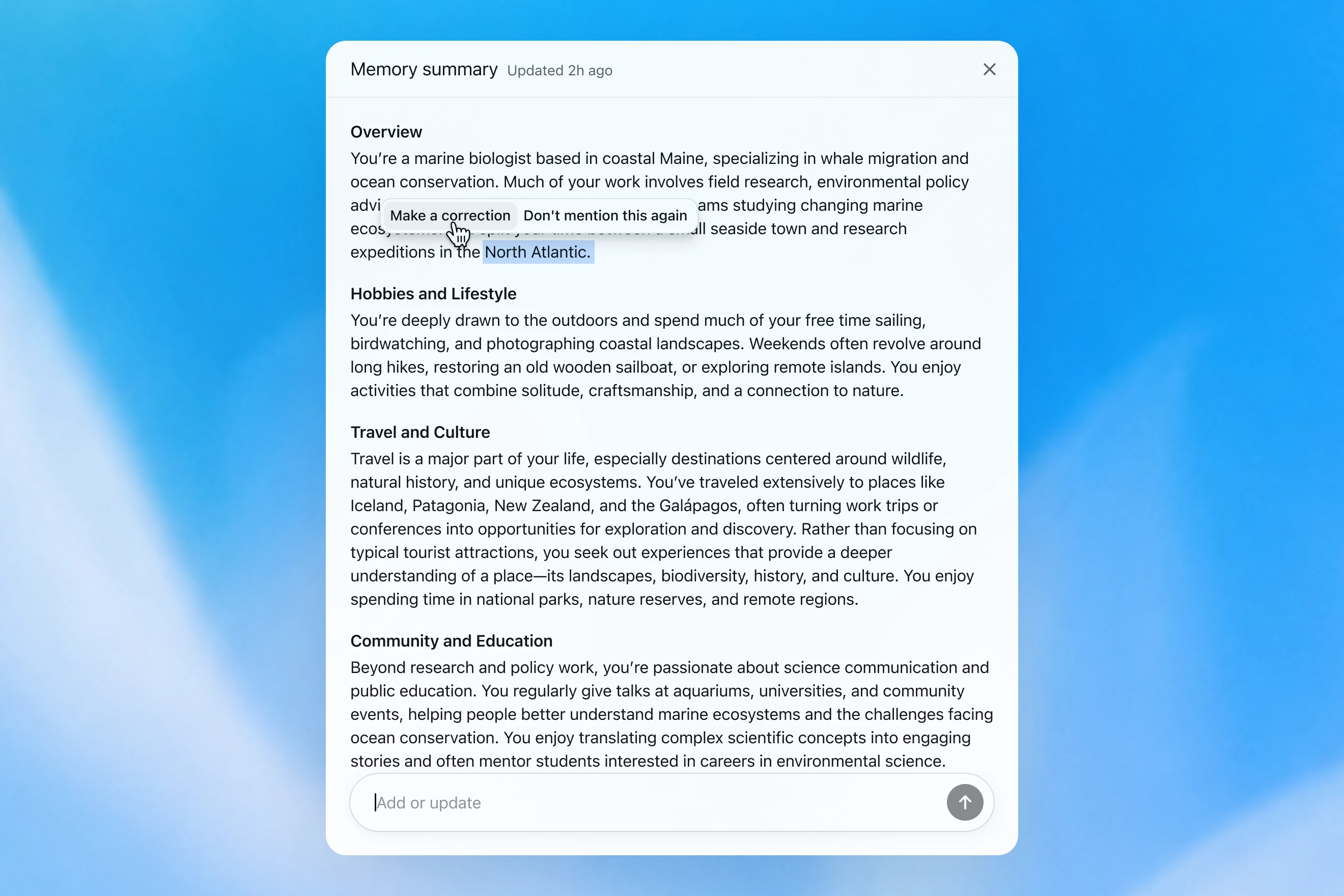
Memory summary modal showing a personalized overview of a user’s work, hobbies, travel interests, and community involvement, with options to correct or dismiss specific details.

Hogyan értékeljük a memóriát

Amikor azon gondolkodunk, hogyan néz ki a „jó memória” a ChatGPT‑ben, néhány dolog jut eszünkbe:

  1. Hasznos kontextus továbbvitele: Egyszer elmondasz valamit a ChatGPT‑nek, és az megjegyzi ezt az információt a későbbi csevegéseidhez.
  2. Preferenciák és korlátok követése: Ha leírsz egy preferenciát (pl. vegetáriánus vagy), akkor a ChatGPT‑nek a továbbiakban ezzel a preferenciával összhangban kell cselekednie.
  3. Naprakészség az idő múlásával: A Memóriának figyelembe kell vennie az idő múlását. Képzeld el: „A felhasználó jövő szombatra tervezi a születésnapi buliját”; végül eljön a vasárnap.

Értékelni tudjuk, hogyan javult idővel a ChatGPT Plus és Pro memóriája a fenti három memóriacél mindegyike szempontjából. Ezt az alábbiak mindegyikére elvégezzük:

  1. 2024: Mentett emlékek
  2. 2025: Mentett emlékek + Dreaming V0
  3. 2026: Dreaming V3

Kontextus továbbvitele

Amikor új csevegést indítasz a ChatGPT‑vel, nem kell az elejéről bemutatkoznod. A ChatGPT időt takaríthat meg neked, és a korábbi kontextusra építhet, különösen összetett, hosszú távú projektek esetén.

Például képzeld el, hogy a ChatGPT‑t új fényképezőgép-felszerelés vásárlásához használod, amely kompatibilis a jelenlegi fényképezőgépeddel. Ha korábban már megbeszélted a fényképezőgép-összeállításodat a ChatGPT‑vel, kérhetsz olyan termékeket, amelyek kompatibilisek „a fotós felszerelésemmel”, és az igényeidhez igazított ajánlásokat kaphatsz.

GPT-5.2 Instant

What would I need to buy to use TTL for my underwater photography setup?

To use TTL flash underwater, you need a compatible chain from camera → housing/trigger → cable → strobe. What you buy depends mostly on whether your setup uses fiber-optic TTL or electrical TTL.

Basic shopping checklist

  • TTL-capable underwater strobe
    Look for strobes that support your TTL type, such as Inon S-TTL, Sea & Sea DS-TTL, Ikelite DS TTL, or compatible Backscatter/Nauticam systems. TTL has to be supported by the strobe, not just the camera.
  • TTL trigger or TTL converter
    This is the key piece. It translates your camera’s flash metering into something the underwater strobe can understand. Examples include Nauticam optical TTL converters, Sea & Sea TTL converters, Backscatter Smart Control optical TTL triggers, or Ikelite DS Link TTL converters, depending on housing and camera brand. Backscatter notes that Nauticam optical TTL converters can work with fiber-optic-connected Inon and Sea & Sea TTL strobes, while Ikelite’s DS Link converters are made around Ikelite DS strobes and electrical sync setups. (Backscatter.com(új ablakban nyílik meg))
  • Connection cable
    For fiber optic TTL, buy one fiber optic cable per strobe. Ikelite’s fiber-optic guide says each strobe needs its own light path, converter/adapter, and cord. (Ikelite(új ablakban nyílik meg))
    For
    electrical TTL, buy the correct sync cord, such as Ikelite-style, Nikonos 5-pin, or housing-specific bulkhead cable.
  • Housing compatibility parts
    You may need a hot-shoe adapter, bulkhead, fiber optic window/adapter, or housing-specific TTL board. Many TTL triggers mount inside the housing on the camera hot shoe.
  • Strobe arms, clamps, tray, and mounting hardware
    TTL controls exposure, but you still need to physically mount and aim the strobes.
  • Batteries and spares
    Bring strobe batteries, trigger batteries if required, spare fiber optic cables or sync cord O-rings, and silicone grease for serviceable O-rings.

Which route should you choose?

Fiber optic TTL is usually easiest if your housing has optical ports or can use the camera’s pop-up flash/LED trigger. It is common with compact, mirrorless, Nauticam, Sea & Sea, AOI, and Olympus/OM TG-style setups.

Electrical TTL is often best if you use Ikelite DS strobes or an Ikelite-style housing/bulkhead. Ikelite says its DS Link TTL converters are faster and more reliable than fiber-optic TTL triggers, and they do not require batteries. (Backscatter.com(új ablakban nyílik meg))

The compatibility rule

You need all three to match:

camera brand/protocol + housing/trigger type + strobe TTL system

For example:

  • Sony camera + Nauticam housing + optical TTL trigger + Inon/Sea & Sea-compatible fiber optic strobe
  • Nikon/Canon/Sony camera + Ikelite housing/bulkhead + Ikelite DS Link TTL converter + Ikelite DS strobe
  • Compact camera with built-in flash + fiber optic cable + S-TTL/DS-TTL-capable strobe

So the practical answer is: buy a TTL-compatible strobe, the correct TTL trigger/converter for your camera and housing, and the right fiber optic or electrical sync cable. The exact part numbers depend on your camera, housing, and strobe model.

A modell általános választ ad, és a felhasználóra hagyja a bonyolult kompatibilitási ellenőrzések elvégzését.

GPT-5.3 Instant

What would I need to buy to use TTL for my underwater photography setup?

I’ll verify this against your actual setup: Sony A1 II in Nauticam NA-A1II, with Backscatter Mini Flash 3 and Inon Z-330 strobes. The key question is whether you want TTL with the Mini Flash 3, the Z-330s, or both.

For your setupSony A1 II + Nauticam NA-A1II + Backscatter Mini Flash 3 + Inon Z-330 — there are two different TTL paths:

Best buy for Mini Flash 3 TTL

Buy:

Backscatter Smart Control TTL LED Nauticam Flash Trigger for Sony
SKU: BS-TR-SN2

Backscatter lists it as custom-designed for Nauticam full-frame Sony housings, TTL-compatible with Mini Flash 3, and the NA-A1II housing page offers it as the “Backscatter Smart Control TTL Flash Trigger” option. (Backscatter.com(új ablakban nyílik meg))

You’d use normal optical fiber cables from the housing to the Mini Flash 3. On the MF-3, you’d use SC or SC Macro mode; Backscatter says SC / SC Macro are the TTL modes for Mini Flash 3, with SC Macro specifically tuned for close macro work. (Backscatter.com(új ablakban nyílik meg))

For Inon Z-330 TTL

For the Inon Z-330, the relevant unit is:

UW Technics 11075-HSS TTL Converter for Sony / Nauticam

UW Technics explicitly lists Inon Z-330 as a compatible TTL strobe and supports optical TTL output. (UWTechnics(új ablakban nyílik meg))

But I would not buy this for Mini Flash 3 TTL. Backscatter’s own UW Technics listing says Backscatter strobes are manual / HSS only on that converter, while the Backscatter Smart Control trigger is the one listed for Sony TTL with the Mini Flash 3. (Backscatter.com(új ablakban nyílik meg))

Practical recommendation

Since you shoot macro and have the Mini Flash 3, I’d buy the Backscatter Smart Control TTL LED Nauticam Flash Trigger for Sony — BS-TR-SN2.

The catch: there probably is no single trigger that gives true TTL for both the Mini Flash 3 and Inon Z-330 at the same time. The Backscatter trigger is the right TTL solution for the MF-3; the UW Technics converter is the right TTL solution for the Z-330. So choose based on which strobe you actually want TTL for.

For your use case, I’d prioritize Mini Flash 3 TTL / SC Macro and treat the Z-330s as manual when needed.

A modell emlékszik a felhasználó fényképezőgép-összeállítására, és kompatibilis terméket ajánl.

A GPT‑5.2 Instant végül megválaszolja a kérdést, de a biztonsági korlátainak ismertetésére tett kísérletében egy hosszú bevezetővel indít arról, hogy miben nem tud segíteni. A GPT‑5.3 Instant ezzel szemben rögtön a válaszra tér.

Az ehhez hasonló példákból összeállíthatunk egy kiértékelést, amelyben a modellt arra kérjük, válaszoljon egy olyan utasításra, amelyhez fel kell idéznie a felhasználóról szóló tényszerű információkat. A modell ezután jutalmat kap, ha úgy válaszol, hogy helyesen használja a releváns kontextust. Ebben az értékelésben az új, dreaming-alapú rendszer javítja a modell képességét a releváns tények felidézésére.

Preferenciák követése

A Memória abban is segít a ChatGPT‑nek, hogy a preferenciáidhoz és korlátaidhoz jobban illeszkedő módon válaszoljon.

Képzeld el, hogy utazást tervezel Szingapúrba. Két hónappal az utazásod előtt megkéred a ChatGPT‑t, hogy segítsen az útitervben. A ChatGPT a korábbi utazástervezésekből már tudja, hogy szereted a vadfotózást, az erős légkondicionálóval rendelkező szállodákat részesíted előnyben, és egy zsúfolt bár helyett inkább egy csendes vacsorát élvezel.

GPT-5.2 Instant
Help me plan a trip to Singapore. I'm going to be there for a work trip in July and will have a few days free at the end.

Great add-on city for a work trip: Singapore is compact, safe, excellent for solo exploring, and easy to do in 2–4 free days. July is hot and humid; expect daytime highs around 31–33°C / 88–91°F, warm nights, and sudden rain, so plan outdoor time early morning or after 5 p.m. and keep midday for museums, malls, cafés, or hotel downtime. Singapore’s official weather service notes typical daily highs of 31–33°C and lows of 23–25°C. (Singapore Weather Service(új ablakban nyílik meg))

memory-preferences-without

A strong 3-day plan

Day 1: Marina Bay, Gardens, and skyline

Start late afternoon at Marina Bay and walk the waterfront: Merlion Park, Helix Bridge, ArtScience Museum exterior, then into Gardens by the Bay. Book Cloud Forest, Flower Dome, and either the OCBC Skyway or Supertree Observatory if views matter to you. Gardens by the Bay lists Cloud Forest and Flower Dome as open daily 9 a.m.–9 p.m.; Supertree Observatory is also listed as 9 a.m.–9 p.m. with last admission at 8:30 p.m., but check maintenance closures before booking. (Gardens by the Bay(új ablakban nyílik meg))

Evening: stay for the Supertree light show area, then dinner at Lau Pa Sat for an easy first-night hawker experience near the CBD. It has 80+ stalls and local staples like satay, laksa, nasi lemak, bak kut teh, kaya toast, and char kway teow. (Laupasat(új ablakban nyílik meg))

Day 2: Culture neighborhoods and food

Morning: Chinatown. Visit Buddha Tooth Relic Temple, walk the shophouse streets, and eat at Maxwell Food Centre or Chinatown Complex Food Centre. Visit Singapore lists Maxwell, Chinatown Complex, Old Airport Road, Tiong Bahru Market, Newton, and others among popular hawker centres. (Visit Singapore(új ablakban nyílik meg))

Afternoon: Kampong Glam and Haji Lane for Sultan Mosque, murals, boutiques, and cafés. Then head to Little India around golden hour for temples, flower garlands, Tekka Centre, and dinner.

Evening: either cocktails around Ann Siang / Club Street, or keep it low-key with a night walk along the Singapore River: Boat Quay to Clarke Quay to Robertson Quay.

Day 3: Nature or beach day

Pick one based on your energy.

For nature: do Singapore Botanic Gardens early, then the National Orchid Garden, followed by lunch in Dempsey Hill or Tiong Bahru. This is the best “green Singapore” day without leaving the city.

For beach/resort mode: go to Sentosa. Choose the southern beaches, Fort Siloso Skywalk, or a beach club. I would skip trying to do every Sentosa attraction unless you love theme parks.

For local food focus: do Tiong Bahru Market for breakfast, National Gallery Singapore midday, then Old Airport Road Food Centre for dinner. The official events page also shows exhibitions and cultural events, so it is worth checking once your exact July dates are fixed. (Visit Singapore(új ablakban nyílik meg))

Best places to stay after the work part

Marina Bay / CBD is easiest if you want polished, walkable, skyline-heavy Singapore and minimal transit.

Chinatown / Telok Ayer / Tanjong Pagar is my top pick for a few free days: great food, MRT access, heritage streets, cocktail bars, and close to work districts.

Bugis / Kampong Glam is better if you want boutique hotels, cafés, street art, and a slightly more relaxed neighborhood feel.

Orchard is convenient for shopping and rainy-day malls, but less atmospheric.

What to book ahead

Book Gardens by the Bay conservatories/Skyway, any special restaurants, and possibly a cocktail bar. For hawker centres, do not over-plan; just go hungry, carry tissues or wet wipes, and be ready to share tables.

July packing notes

Bring breathable work clothes, comfortable walking shoes, a small umbrella, and a light layer for aggressive air-conditioning. I would also plan one “rain-flexible” indoor block each day, because showers can arrive suddenly even when the forecast looks fine.

My suggested balance: Day 1 Marina Bay/Gardens, Day 2 Chinatown–Kampong Glam–Little India, Day 3 Botanic Gardens or Sentosa. That gives you the Singapore highlights without turning your post-work break into another work project.

A modell általános, inkább turistás választ ad, nem segít a szállodafoglalásban, és nagyrészt figyelmen kívül hagyja a felhasználó érdeklődési köreit.

GPT-5.3 Instant
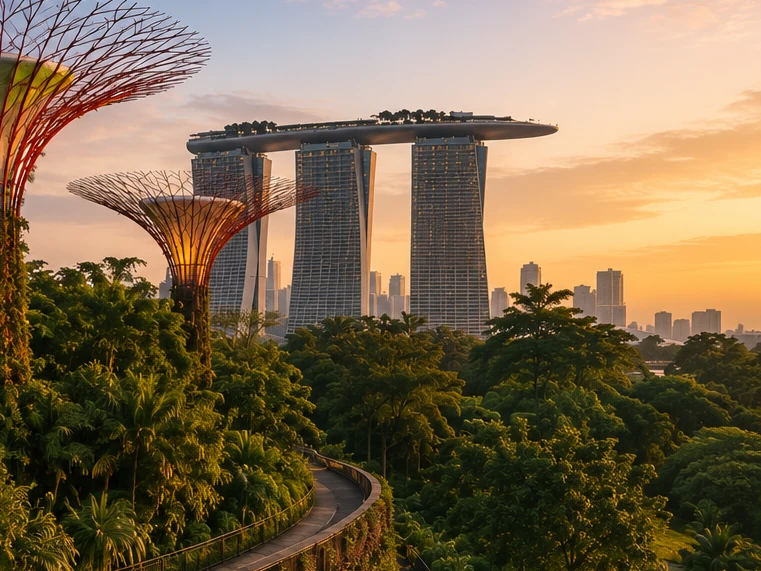
Help me plan a trip to Singapore. I'm going to be there for a work trip in July and will have a few days free at the end.

I’ll build this around your known constraints: a few free days after work, hot/humid July weather, wildlife/photography/nature bias, strong AC needs for sleep, and good but not overly social dining. I’ll verify current July logistics and then give a practical short itinerary rather than a generic Singapore list.

memory-preferences-with

Here’s how I’d structure it: 2–3 free days, mostly nature / wildlife / photography, with heat-managed mornings and AC breaks. July is hot and humid: Singapore’s July long-term stats are about 31.4°C / 88.5°F average daily max, 25.4°C / 77.7°F min, 146.6 mm rain, and 14 rain days, so outdoor plans should be early morning or evening, not midday. (National Environment Agency(új ablakban nyílik meg))

Best plan for 3 free days

Day 1 — Gardens by the Bay + Marina Bay, low-friction

Morning: Cloud Forest + Flower Dome. This is the obvious “touristy” pick, but it fits you well because it’s visually interesting, good for photography, and climate-controlled. Gardens by the Bay lists Cloud Forest and Flower Dome-type attractions running 9:00am–9:00pm, and Cloud Forest currently has the Jurassic World experience listed as ongoing. (Gardens by the Bay(új ablakban nyílik meg))

Late afternoon / evening: Supertree Grove + Borealis / light show. Gardens currently lists Borealis every Sat, Sun & Mon, 8:00–8:30pm at Supertree Grove, so try to align this with one of those nights. (Gardens by the Bay(új ablakban nyílik meg))

Dinner: do something easy nearby: Marina Bay / Tanjong Pagar / Telok Ayer. For you, I’d prioritize reservation-based restaurants with real tables over hawker centers on the first night, because you dislike cramped solo seating.

Day 2 — Mandai wildlife day

Morning to afternoon: Bird Paradise + River Wonders. Bird Paradise is probably the best fit photographically; River Wonders is less “wildlife photography” and more controlled exhibits, but it pairs well logistically. River Wonders is listed as daily 9:00am–6:00pm, last entry 5:00pm. (Mandai Wildlife Reserve(új ablakban nyílik meg))

Evening: Night Safari. This is the rare Singapore attraction that is genuinely better at night and avoids the worst heat. Night Safari is listed as daily 6:00pm–12:00am, last entry 11:15pm, with tram plus walking trails and over 900 nocturnal animals. (Mandai Wildlife Reserve(új ablakban nyílik meg))

This is a full day. I would not add Singapore Zoo unless you have 4 free days; Mandai can become exhausting fast.

Day 3 — Nature reserve / macro-ish walking + food

Early morning: Singapore Botanic Gardens or MacRitchie / Windsor Nature Park. For a few free days, Botanic Gardens is the safer pick: easier transport, less sweaty, better bailout options, and more consistent casual photography. MacRitchie / Windsor is better if you want more actual forest, but it is hotter, sweatier, and less predictable.

Midday: AC break.

Late afternoon: Joo Chiat / Katong or Chinatown / Telok Ayer for walking, architecture, coffee, and dinner. This gives you a different texture from Marina Bay without turning the day into a logistics project.

My ranking for you

  1. Cloud Forest / Gardens by the Bay — best combination of photogenic, iconic, heat-managed.
  2. Bird Paradise + Night Safari — best wildlife-focused day.
  3. Botanic Gardens early morning — best low-stress outdoor nature.
  4. Joo Chiat / Katong — best neighborhood walk.
  5. Hawker centers — worth doing, but not ideal for your seating preferences unless timed off-peak.

What I’d avoid or deprioritize

I would skip Sentosa unless you specifically want beach/resort stuff. I would also skip a packed “greatest hits” day of Merlion / Orchard / Little India / Chinatown / Clarke Quay; it’s inefficient and hot. For you, the trip will be better if each day has one strong anchor plus one easy evening plan.

Hotel / sleep note

Since this is a work trip, your hotel may be fixed. If you can choose or extend at the same hotel, the hard gate is still AC. Singapore hotels are generally AC-heavy, but your requirement is unusually strict.

One thing I need to make this concrete

Send the exact free dates and whether your work hotel is fixed. Then I’d turn this into a day-by-day plan with restaurant targets and a hotel/AC callout.

A modell olyan választ ad, amely személyre szabottan illeszkedik a felhasználó vadfotózás iránti érdeklődéséhez, a csendes vacsorákhoz és a szállodafoglalási prioritásaihoz.

A GPT‑5.2 Instant végül megválaszolja a kérdést, de a biztonsági korlátainak ismertetésére tett kísérletében egy hosszú bevezetővel indít arról, hogy miben nem tud segíteni. A GPT‑5.3 Instant ezzel szemben rögtön a válaszra tér.

A preferenciák többféle formát ölthetnek:

  1. Utasítások arra, hogyan válaszoljon a ChatGPT („ne hozd fel újra Stant”).
  2. Személyes preferenciáid vagy korlátaid („vegetáriánus vagyok”)
  3. Implicit preferenciák, amelyek alakítják, mi releváns számodra („San Francisco közelében élek” → a helyi lehetőségeket ehhez a területhez kell igazítani)

Az új memóriarendszer fejlesztése során javítottuk a ChatGPT képességét arra, hogy alkalmazza a korábbi beszélgetésekből származó releváns preferenciákat. A fenti „vegetáriánus vagyok” példát követve értékelhetjük, hogy a modell helyesen használja-e a memóriát vegetáriánusbarát étkezési lehetőségek létrehozásához, amikor egy vegetáriánus felhasználó étel-előkészítési javaslatokat kér.

Naprakészség az idő múlásával

Az idő nem áll meg, amikor a csevegésed véget ér.

A hagyományos memóriarendszerek elavulhatnak. Például azt mondod a ChatGPT‑nek: „Szingapúrban vagyok, és ma estére vacsoraajánlásra van szükségem.” Aztán telik az idő, véget ér az utazásod, és azon tűnődsz, miért gondolja még mindig a ChatGPT, hogy Szingapúrban vagy.

A dreaminggel az emlékek az idő múlásával automatikusan frissülnek, így a ChatGPT módosíthatja a memóriáját erről: „Júliusban Szingapúrba mész”, erre: „2026 júliusában Szingapúrban jártál”, amikor az utazás véget ér. Ezután, amikor hazatérsz, a ChatGPT ismét olyan ajánlásokat tud adni, amelyek az otthoni helyzetedhez és időzónádhoz igazodnak.

GPT-5.2 Instant

Help me find something for take-out tonight that's still open.

It’s about 5:19 AM Sunday in Singapore, so your safest take-out/delivery bets are 24-hour places.

Best bets right now:

  1. McDelivery / McDonald’s Singapore — easiest islandwide option; McDonald’s says McDelivery is available 24 hours, 7 days a week. Breakfast menu should be on now. (McDonald's Singapore(új ablakban nyílik meg))
  2. Srisun Express — good for prata, Indian Muslim food, local comfort food; their site says they’re halal-certified and open 24/7. (Sri Sun Express(új ablakban nyílik meg))
  3. 89.7 Supper Club — good if you’re near Changi Village or Geylang East; their outlets page says both locations are open 24 hours, 7 days a week. (89.7 Supper Club(új ablakban nyílik meg))
  4. 126 Dim Sum Wen Dao Shi — worth checking on GrabFood/foodpanda if you’re in the East; a 2025 guide says it runs till 5:30 AM on weekdays and round-the-clock on weekends. Since it’s Sunday morning, it may still be available. (Eatbook(új ablakban nyílik meg))
  5. Prata around Geylang / Serangoon / Bedok / Jalan Kayu — look in GrabFood or Google Maps for “prata open now”; guides list multiple 24-hour prata/supper spots, including Mufiz Prata Corner and RK Eating House. (Eatbook(új ablakban nyílik meg))

For the fastest path: open GrabFood / foodpanda / Deliveroo, set filter to Open now, then search “prata,” “McDonald’s,” “Srisun,” “89.7,” “dim sum,” or “nasi lemak.” If you tell me your neighborhood or nearest MRT, I’ll narrow it to specific nearby places.

A modell azt hiszi, hogy a felhasználó még mindig Szingapúrban van.

GPT-5.3 Instant

Help me find something for take-out tonight that's still open.

I’ll use Portola Valley / Ladera as the starting point and prioritize places that are plausibly open for takeout tonight, then narrow to low-friction options rather than a huge list.

For tonight, Saturday May 30, near Ladera / Portola Valley, I’d start here:

  1. Alpine Inn — safest casual pickup option. Open Saturday until 9:30 pm and has Order Takeout on its site. Good for burgers / tavern food. (Rossotti's Alpine Inn(új ablakban nyílik meg))
  2. Taverna Portola Valley — nearby at Ladera Country Shopper; open daily, Saturday dinner until 9:00 pm. Better if you want Greek / Mediterranean. (TAVERNA Portola Valley(új ablakban nyílik meg))
  3. Portola Bistro — also nearby; Saturday dinner until 9:30 pm. Good option for Italian / Mediterranean / pizza-ish dinner. (Portola Bistro -(új ablakban nyílik meg))
  4. Amigos Grill — Mexican, very close in Ladera Country Shopper. Official site says call to order at 650-851-3997; DoorDash / order.online lists pickup/delivery ordering until 8:40 pm. (Amigos Grill(új ablakban nyílik meg))
  5. State of Mind Slice House, Palo Alto — best fallback if you want pizza and can drive farther; Friday–Saturday hours are 11 am–10 pm. (State of Mind Slice House(új ablakban nyílik meg))

My pick: Alpine Inn for easiest local takeout, Taverna if you want something less heavy, State of Mind if it’s later and you want the most reliable post-9 pm option.

A modell a felhasználó otthoni helyéhez releváns válaszokat ad.

A GPT‑5.2 Instant végül megválaszolja a kérdést, de a biztonsági korlátainak ismertetésére tett kísérletében egy hosszú bevezetővel indít arról, hogy miben nem tud segíteni. A GPT‑5.3 Instant ezzel szemben rögtön a válaszra tér.

Memóriaértékeléseinkben azt mérjük, hogy a ChatGPT helyesen tud-e válaszolni olyan utasításokra, amelyeknél az idő múlása érdemben befolyásolja a helyes választ vagy ajánlást. A dreaming jelentős javulást hoz ezen a területen:

Skálázhatóbb alap a jövő számára

Az OpenAI-nál az a küldetésünk, hogy biztosítsuk: a mesterséges általános intelligencia az egész emberiség javát szolgálja.

Bár a dreaming-alapú memória már egy ideje elérhető a Plus és Pro felhasználók számára, csak most tudunk a Free felhasználóknak olyan verziót kínálni, amely megfelel a minőségi mércénknek, és nagy léptékben is praktikusan kiszolgálható. A legutóbbi fejlesztések körülbelül ötszörösére csökkentették a Free felhasználók dreaminggel való kiszolgálásához szükséges számítási kapacitást, így lehetővé vált, hogy a következő hetekben megkezdjük a dreaming bevezetését a Free felhasználók számára, és növeljük a Plus és Pro felhasználók memóriakapacitását.

Előre tekintve a dreaming mostantól közös memóriaalapot biztosít számunkra minden felhasználóhoz. Ez a frissítés az eddigi legnagyobb képességű memóriarendszerünket jelenti, és tovább fogjuk fejleszteni.

Ha többet szeretnél megtudni erről a kiadásról és a Memória felhasználói vezérlőiről, keresd fel a Memória GYIK(új ablakban nyílik meg) oldalunkat.


Szerző

OpenAI