We’re expanding Daybreak to help democratize patching vulnerable software at machine speed. For example, we’ve applied our models to discover and generate patches for critical vulnerabilities in major browsers, network infrastructure, and operating systems such as FreeBSD and the Linux kernel. To scale the impact of these capabilities:
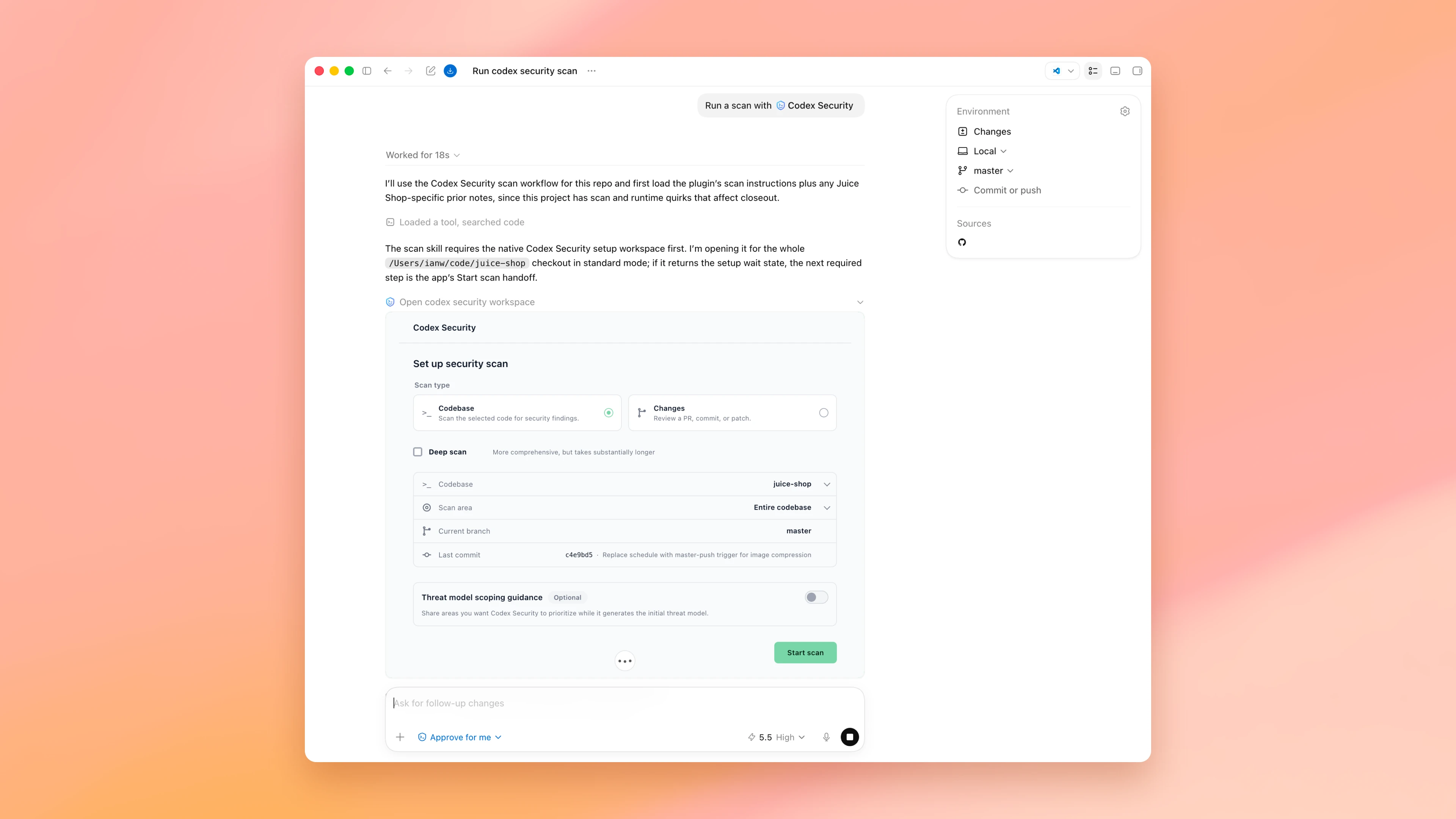
Codex Security: We’re launching an update to the Codex Security plugin, which implements what we’ve learned from internal and customer usage of our models into a solution to accelerate the process of discovering and patching vulnerabilities in existing systems as well as automatically preventing new vulnerabilities from ever reaching production.
GPT‑5.5‑Cyber: Following an initial permissive-only preview, we’re launching the full version of GPT‑5.5‑Cyber through our continued limited release to trusted defenders. This model sets new state-of-the-art performance on CyberGym, reaching 85.6% compared with 81.8% for GPT‑5.5.
Daybreak Cyber Partner Program: Enabling security partners to scale the benefits to more organizations through our most capable models with trusted access in their products and services.
Patch the Planet: an initiative founded with Trail of Bits in collaboration with HackerOne, Calif, researchers, and maintainers to help widely used open-source projects move from findings to fixes.
More than 30 open-source projects have committed to participate, with initial participants including cURL, Go, Python, Sigstore, and pyca/cryptography.
With Patch the Planet, we are working with researchers, maintainers, enterprises, and partners to make powerful cyber capability available to defenders with appropriate access, governance, and human oversight. Hear from Clint and Dan about this here(נפתח בחלון חדש).
AI has changed the physics of cybersecurity. Frontier AI models have been increasingly accelerating vulnerability discovery. The bottleneck historically has been finding vulnerabilities, but now defenders are overwhelmed with the number of vulnerabilities found. Instead, the bottleneck is now patching vulnerabilities.
For years, finding serious vulnerabilities required rare expertise, time, and deep familiarity with complex systems. Now, models can navigate large codebases, reason through attack paths, validate hypotheses, and surface security issues that might otherwise stay hidden. Defenders absolutely need access to these capabilities, and also need tools to fix what we can now find, before attackers do.
Vulnerability reports, on their own, do not protect anyone. The value comes from validating the issue, understanding its impact, developing and testing a patch, coordinating disclosure, and helping teams deploy the fix. We are investing alongside our partners to improve these latter steps, in order to turbocharge defenders and convert model capability into real-world risk reduction.
Frontier defensive capabilities should not be concentrated in the hands of a few. Software touches all aspects of life, from critical infrastructure to business applications and government networks. As AI changes the pace of vulnerability discovery, defenders everywhere need democratized access to these models to find, fix, and protect their infrastructure before attackers can identify and abuse these flaws.
Daybreak brings together the frontier cyber capabilities OpenAI’s models, Trusted Access for Cyber, Codex Security workflows, and ecosystem partners to help approved defenders validate vulnerabilities, prioritize risk, generate and test fixes, and produce evidence inside existing security and development workflows. Our goal is to provide organizations the tools they need to stay secure even as the cyberthreat landscape continues to accelerate.
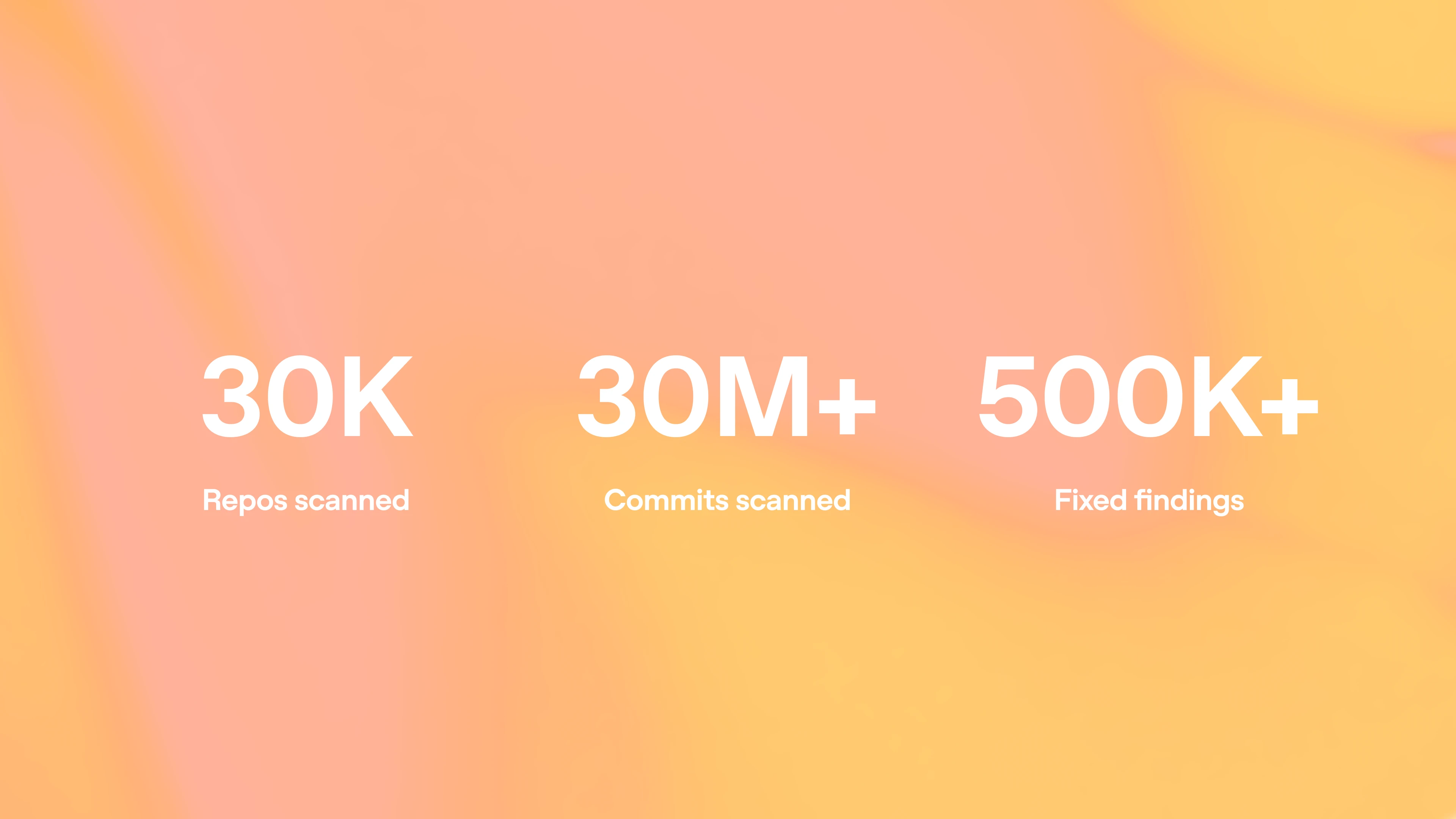
Since launching Codex Security cloud in research preview in March, it has scanned over 30 million commits across more than 30,000 codebases; human reviewers have manually marked more than 70,000 findings as fixed, and over 500,000 findings have automatically been determined to be fixed.
This is the scale at which patching must now happen.
We built Codex Security around a simple premise: put the equivalent of a security engineer next to every software developer by integrating directly into Codex. Rather than just generating alerts, Codex Security will understand your team’s code and its threat model (or generate one if it doesn’t exist), identify plausible vulnerabilities, determine whether affected code is reachable, gather evidence to provide validation steps, develop a targeted patch, and verify the result. Humans remain in control of which findings to investigate, which changes to apply, and what information to share.
Today, we’re releasing an update to the Codex Security plugin that enables out-of-the-box defensive security workflows. Developers can run deep scans or review recent changes, generate reports with severity, affected code locations, validation evidence, and remediation guidance, trace attack paths, build threat models, validate findings, and generate codebase-specific patches for review.
The plugin can also triage and validate existing findings from scanners, advisories, bug-bounty reports, or ticketing systems, then automate patch generation at scale to quickly close a backlog of vulnerabilities. When Codex Security completes a scan, it can also export to an existing vulnerability management system or integrate into tools with SARIF files, CodeQL queries, and more. The plugin makes these capabilities much more accessible to support automated pipelines with Codex CLI or integrate into developer workflows in the Codex app.
We are releasing an update to GPT‑5.5‑Cyber, our model that is both more permissive and more capable for advanced, authorized cybersecurity work.
Our initial preview of GPT‑5.5‑Cyber was designed primarily to reduce unnecessary refusals in specialized workflows. This update goes further. It is our strongest model yet for finding and helping patch software vulnerabilities, while retaining GPT‑5.5’s general-purpose intelligence and ability to work across long, complex tasks.
The model can sustain deeper analysis across large codebases: identifying security-relevant components, tracing whether vulnerable code is reachable, validating likely issues in controlled environments, developing and testing patches, and preparing evidence for human review. The goal is to help defenders move through the full remediation loop—not simply produce more findings.
On CyberGym, which measures whether an agent can reproduce known vulnerabilities in software environments, the updated GPT‑5.5‑Cyber reached 85.6% in single-model evaluations, compared with 81.8% for GPT‑5.5. This is the highest CyberGym score we have measured from a single model.
GPT‑5.5‑Cyber also outperformed GPT‑5.5 on two demanding real-world security benchmarks: 39.5% versus 25.95% on ExploitGym, which tests whether agents can turn known vulnerabilities into working exploits that achieve unauthorized code execution. On SEC-bench Pro, which evaluates long-horizon vulnerability discovery and proof-of-concept generation across complex software targets, GPT‑5.5‑Cyber reached 69.8%, compared with 63.1% for GPT‑5.5.
Benchmarks are only one part of the story. What matters in practice is whether a model can find real vulnerabilities, distinguish actionable issues from noise, and help defenders land fixes safely. We are continuing to evaluate the model’s performance on complex repositories and real remediation workflows as coordinated disclosures conclude.
We’ve had ongoing dialogue with the U.S. government about our cyber approach, including today’s announcements and on our preparation for upcoming model releases. That includes continued collaboration with the Center for AI Standards and Innovation (CAISI) on pre-deployment testing for GPT‑5.5 and 5.5-Cyber, and work with the Office of the National Cyber Director (ONCD) and Office of Science and Technology Policy (OSTP) on implementation of the recent Executive Order(נפתח בחלון חדש) and associated industry standards.
For most defenders, GPT‑5.5 with Trusted Access for Cyber and Codex Security remains the right starting point. GPT‑5.5‑Cyber is intended for verified defenders whose authorized work requires our most advanced cyber capabilities and more permissive behavior, paired with stronger verification, monitoring, scoped controls, and review. Across early Daybreak work, GPT‑5.5 and Codex Security have helped defenders identify and validate vulnerabilities in widely used systems, including Firefox, V8, Safari, OpenBSD, FreeBSD, and HTTP/2 implementations.
כחלק מההרחבה הזו, אנחנו משיקים גם את תוכנית השותפים בסייבר של OpenAI Daybreak עם ספקים מובילים של תוכנות ושירותי אבטחה. במסגרת התוכנית, השותפים המשתתפים יוכלו להשתמש ב-GPT‑5.5 עם Trusted Access for Cyber — המודל העיקרי שלנו לרוב תהליכי העבודה בתחום הגנת הסייבר — במוצרי האבטחה ובשירותי האבטחה שהם מספקים ללקוחות. כך הלקוחות שלהם יוכלו ליהנות מיכולות ההגנה של המודל ולחזק את עמידות התוכנה שלהם, בעוד שהגישה הישירה למודל תישאר בידי השותפים המשתתפים.
בנוסף, נשתף פעולה עם שותפי התוכנית כדי להמשיך לחזק את אמצעי ההגנה, הניטור והתקנים למניעת שימוש לרעה, הנחוצים להטמעה אחראית של היכולות האלה בכל קהילת האבטחה. אנחנו משיקים את התוכנית עם קבוצה ראשונית של שותפים, ומתכננים להרחיב אותה לארגונים נוספים בחודשים הקרובים.
Patch the Planet היא יוזמה שנועדה לעזור למתחזקי פרויקטים לעבור מממצאים לתיקונים. במסגרת היוזמה, שהוקמה עם Trail of Bits ובשיתוף HackerOne ו-Calif, אנחנו מממנים חוקרי אבטחה מומחים ומעמידים לרשותם את Codex Security ואת המודלים המתקדמים שלנו, כדי שיעבדו ישירות עם מתחזקי פרויקטים בקוד פתוח.
תוכנות קוד פתוח מפעילות מוצרים, שירותים ציבוריים, כלי פיתוח ותשתיות קריטיות במגוון מגזרים. חולשה בספריית תקשורת שנמצאת בשימוש נרחב יכולה להשפיע על אלפי מערכות התלויות בה. ובכל זאת, רבים מהפרויקטים האלה מתוחזקים בידי צוותים קטנים מאוד, עם זמן ומימון מוגבלים. (נפתח בחלון חדש)מחקר של קרן לינוקס והרווארד(נפתח בחלון חדש) מצא שב-94 אחוז מהפרויקטים הנפוצים שנבדקו, פחות מעשרה מפתחים היו אחראים ליותר מ-90 אחוז מהקוד שנוסף בשנה.
הבינה המלאכותית מאפשרת למצוא ולתקן יותר חולשות בפחות זמן, אך גם יוצרת עבודה נוספת למתחזקים: עליהם לעבור על אלפי דוחות, שרבים מהם באיכות נמוכה ומדווחים בטעות על חולשות. אסור להשאיר את המתחזקים עם יותר דוחות, בלי להגדיל את יכולתם לתקן את הבעיות המדווחות. לכן, במרכז היוזמה Patch the Planet עומדת בדיקת אבטחה אנושית של מומחים.
כל שיתוף פעולה מתחיל בהתייעצות בין חוקרי האבטחה שלנו לבין המתחזקים שהם מסייעים להם. המתחזקים מגדירים את סדרי העדיפויות שלהם, את העדפותיהם ואת תהליכי הגילוי המקובלים אצלם. לאחר מכן, חוקרי האבטחה של Patch the Planet מנהלים את העבודה מקצה לקצה — מאמתים חולשות ותיקונים ומסירים כפילויות לפני שהם מגיעים למתחזקים. כך הם מפחיתים משמעותית את העומס על המתחזקים ומזרזים את הטיפול בחולשות.
הפרויקטים המשתתפים מקבלים ChatGPT Pro, גישה מותנית ל-Codex Security וקרדיטים לשימוש ב-API לצורך פיתוח ליבה, אוטומציה של עבודת התחזוקה ותהליכי שחרור גרסאות.
בספרינט הראשוני, שנמשך חמישה ימים וכלל כמה פרויקטים, זוהו מאות בעיות לבדיקה, מוזגו עשרות תיקונים ותיקונים נוספים עדיין בעבודה. בנוסף, נבנו תהליכי עבודה לשימוש חוזר לבדיקות fuzzing, לניתוח וריאנטים, לבדיקות דיפרנציאליות ולבדיקות מבוססות מפרט. אפשר לקרוא עוד בבלוג של Trail of Bits כאן(נפתח בחלון חדש).
חשוב למצוא חולשות, אבל מה שמגן על העולם הוא שילוב התיקון בפועל — ולשם כך נדרשים שיתוף פעולה ותמיכה של הקהילה.
אנחנו משתפים פעולה באופן הדוק גם עם ממשלות ומוסדות ברחבי העולם, כדי לשפר את יכולות הגנת הסייבר שלהם ולהגן על תשתיות קריטיות. אנחנו עובדים בשיתוף פעולה הדוק עם ממשלת ארצות הברית ועם הסוכנויות הפדרליות הרלוונטיות, כחלק מההיערכות למודלי בינה מלאכותית בעלי יכולות סייבר הולכות וגדלות. בחודש האחרון כבר יצרנו שותפויות במסגרת Trusted Access for Cyber עם אוסטרליה, קנדה, צרפת, גרמניה, יפן, קוריאה הדרומית ומוסדות של האיחוד האירופי, כמו ENISA. בנוסף, יש לנו שותפות הולכת ומתרחבת, המבוססת על אמון, עם ממשלת בריטניה בתחומי הסייבר, הבדיקות וההערכה ובתחומים נוספים בעלי עניין משותף.
אנחנו מתכננים לעבוד ישירות עם מפעילי תשתיות קריטיות העומדים בתנאי הזכאות, ובהן רשתות ממשלתיות, כדי לפתח אמצעי הגנה המותאמים למערכות שהם מפעילים. מטרת העבודה הזו היא להפוך בינה מלאכותית מתקדמת למועילה יותר עבור גורמי הגנה, ובה בעת להקשות על גורמים זדוניים לגרום נזק בעולם האמיתי.
נעבוד גם עם לקוחות ארגוניים ושותפים מהימנים כדי לשלב הקשר רחב יותר ומזהים של המערכות הספציפיות שהם מפעילים או מגינים עליהן. כך נחזק את אמצעי הגנת הסייבר שלנו ואת היכולת למנוע פעילות סייבר מזיקה הנוגעת לשירותים קריטיים.
Daybreak משלבת מודלים, את Codex Security, את Patch the Planet, חוקרים מומחים, מתחזקים, שותפי אבטחה, מפעילי תשתיות קריטיות ובקרות גישה מהימנות, כדי לעזור לאנשי הגנת הסייבר להתמודד עם האתגר.
ארגונים במגזר הציבורי והפרטי יכולים לעבוד עם OpenAI Daybreak כדי לזהות, לאמת ולתקן חולשות בתוכנות שהם מפתחים ושעליהן הם מסתמכים. מפתחים ומתחזקים יכולים להפעיל את Codex Security על קוד שבבעלותם, לבדוק את הממצאים ולסייע בשילוב תיקונים. שותפים ואנשי מקצוע בתחום האבטחה יכולים להשתמש במודלי החזית שלנו כדי לחזק את כלי ההגנה שלהם ולהביא את היכולות האלה במהירות לארגונים נוספים.
המטרה היא להתקדם מעבר לשימוש במודלים כדי למצוא עוד חולשות, אל עולם של תוכנה בטוחה יותר וחוסן סייבר.