OpenAI

4 ביוני 2026

מחקרמוצרהשקה

חלימה: זיכרון טוב יותר ל-ChatGPT שעוזר יותר

שיפור האופן שבו ChatGPT משלב מידע לזיכרונות, כדי לחזק את העדכניות, ההמשכיות והרלוונטיות.

בטעינה…

היום אנחנו מתחילים להשיק בהדרגה מערכת בעלת יכולות משופרות ליצירת זיכרונות משולבים, שאפשר להפעיל בקנה מידה רחב יותר. המערכת פותחה כדי להתמודד עם האתגרים שזיהינו בשמירה על עדכניות, נכונות ויכולת התרחבות, כאשר הזיכרון משמש מאות מיליוני משתמשים ב-ChatGPT לאורך שנים.

הזיכרון עוזר ל-ChatGPT להכיר את ההעדפות, הפרויקטים והאילוצים שלכם, כך ששיחות עתידיות יוכלו להתחיל מהקשר משותף, ולא מאפס.

בשנתיים האחרונות הפך הזיכרון לחלק מרכזי בחוויית השימוש ב-ChatGPT. הוא עוזר ל-ChatGPT להבין טוב יותר את ההקשר שלכם, כדי שיוכל לעזור לכם להשיג מטרות משמעותיות לאורך זמן. זהו מרכיב מרכזי בהפיכת ChatGPT לשימושי יותר: להכיר אתכם, לעזור לכם ולעשות יותר למענכם.

העדכון זמין מהיום למשתמשי Plus ו-Pro בארה״ב, ובשבועות הקרובים יושק בהדרגה במדינות נוספות ולמשתמשי Free ו-Go.

איך התפתח הזיכרון

הזיכרון הושק לראשונה באפריל 2024 (ומוכר גם בשם ״זיכרונות שמורים״). התכונה אפשרה לכם לבקש מ-ChatGPT לזכור מידע ולהשתמש בו בשיחות עתידיות.
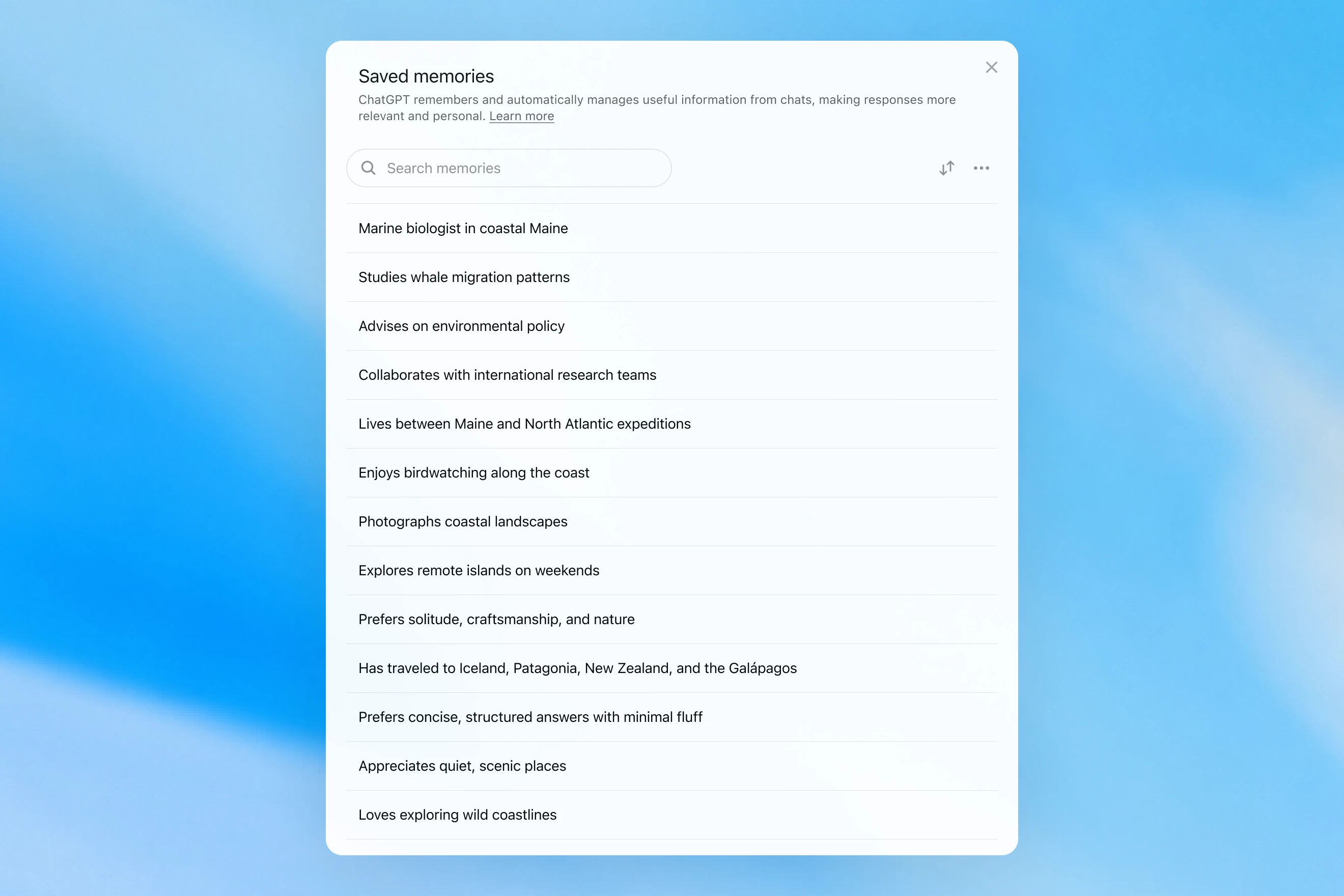
חלונית הזיכרונות השמורים מציגה רשימת פרטים אישיים עם אפשרות חיפוש, ובה מידע על עבודה, תחומי עניין, נסיעות והעדפות לגבי התשובות.

זיכרונות שמורים נכתבו רק במהלך השיחה, והמערכת הסתמכה על סימנים ברורים כדי להחליט מתי לשמור זיכרון, כמו ההנחיה ״תזכור שאני נוסע לסינגפור ביולי״. בפועל, האינטראקציה עם המערכת הייתה יכולה להרגיש כמו שיחה עם מישהו שרשם לעצמו כמה הערות, אבל עדיין שכח את כל מה שלא נרשם. זיכרונות שמורים גם נוטים להתיישן עם הזמן, ובסופו של דבר להפוך לשגויים או ללא רלוונטיים.

באפריל 2025 עדכנו את הזיכרון של ChatGPT והענקנו למודל יכולת להיעזר בהקשר משיחות גם מחוץ לרשימת הזיכרונות השמורים. לשם כך הצגנו את הגרסה הראשונה של חלימה — שיטה שמאפשרת ל-ChatGPT לבחור ולארגן זיכרונות ברקע באופן אוטומטי, על סמך היסטוריית השיחות.
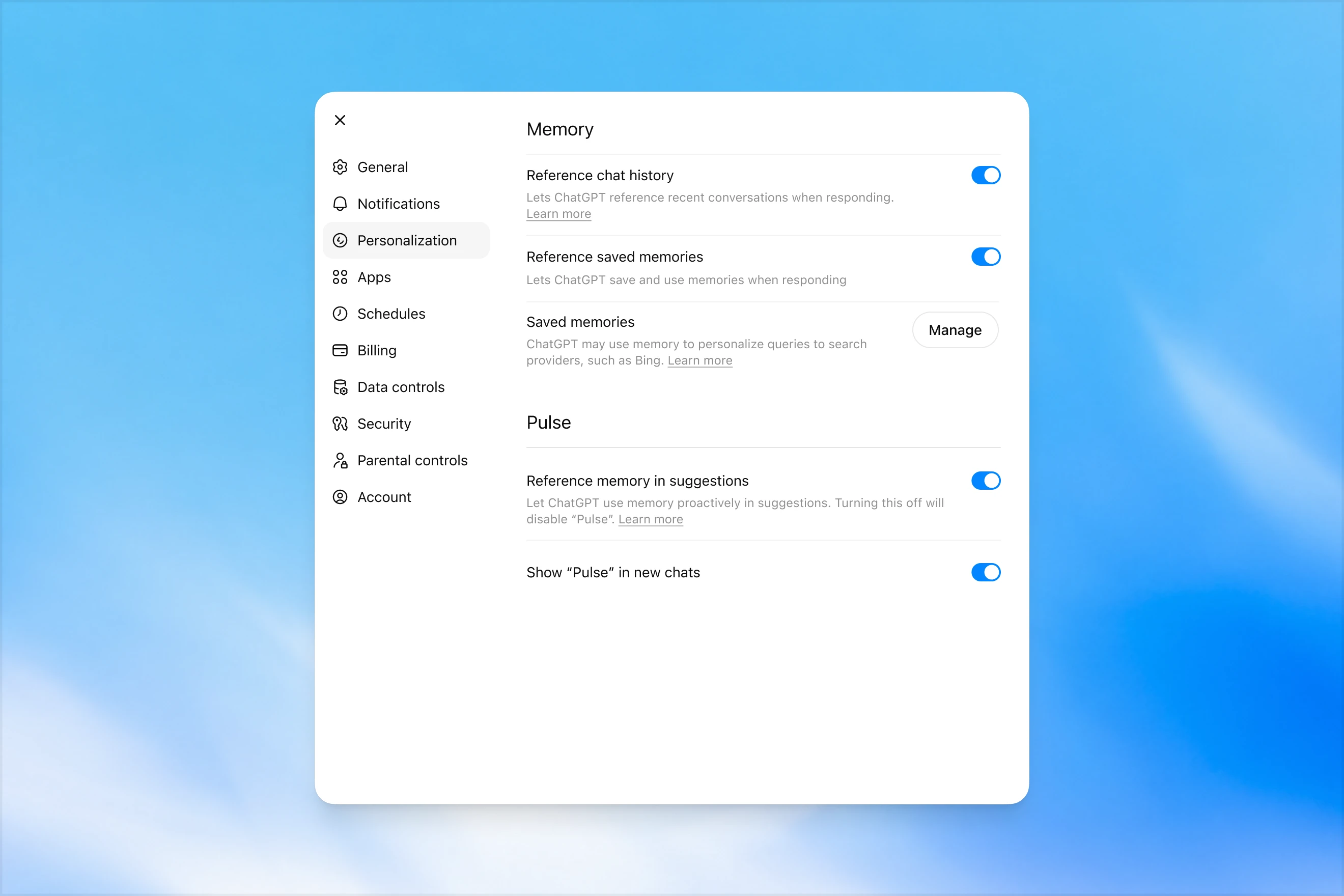
עמוד הגדרות הזיכרון ב-ChatGPT מציג אפשרויות להיעזר בהיסטוריית השיחות, להשתמש בזיכרונות שמורים, לנהל זיכרונות שמורים ולהפעיל הצעות זיכרון של Pulse.

בניגוד לזיכרונות שמורים, חלימה משתמשת בתהליך רקע שמאפשר ל-ChatGPT ללמוד משיחות רבות ולשלב את המידע שבזיכרון שלו, כדי לספק תמיד את ההקשר העדכני והרלוונטי ביותר לשיחות שלכם. חלימה גם מקלה על הכללת הקשר שעולה באופן טבעי בשיחה בזיכרון, בלי להסתמך על בקשות מפורשות לזכור משהו.

בשנה האחרונה, חלימה השלימה את הזיכרונות השמורים והביאה לקפיצת מדרגה ביכולת של ChatGPT להתאים תשובות אישית ולצמצם את ההשפעה של התיישנות הזיכרונות השמורים. עם זאת, עד כה היא לא הספיקה כדי לשמש מערכת זיכרון עצמאית.

היום אנחנו משיקים ארכיטקטורת זיכרון המבוססת על חלימה, עם יכולות משופרות משמעותית וניצול יעיל יותר של משאבי חישוב.

אפשר לעיין בזיכרונות שנוצרים בתהליך החלימה דרך הסיכום שלהם, המוצג בעמוד סיכום הזיכרון. בסיכום הזיכרון תוכלו לראות במהירות את עיקרי הדברים ש-ChatGPT יודע עליכם, להוסיף או לעדכן מידע על עצמכם, ולתת הנחיות לגבי הנושאים ש-ChatGPT צריך להעלות ומתי. אם תרצו להעמיק בתחום מסוים ולגלות עוד, פשוט שוחחו עם המודל.
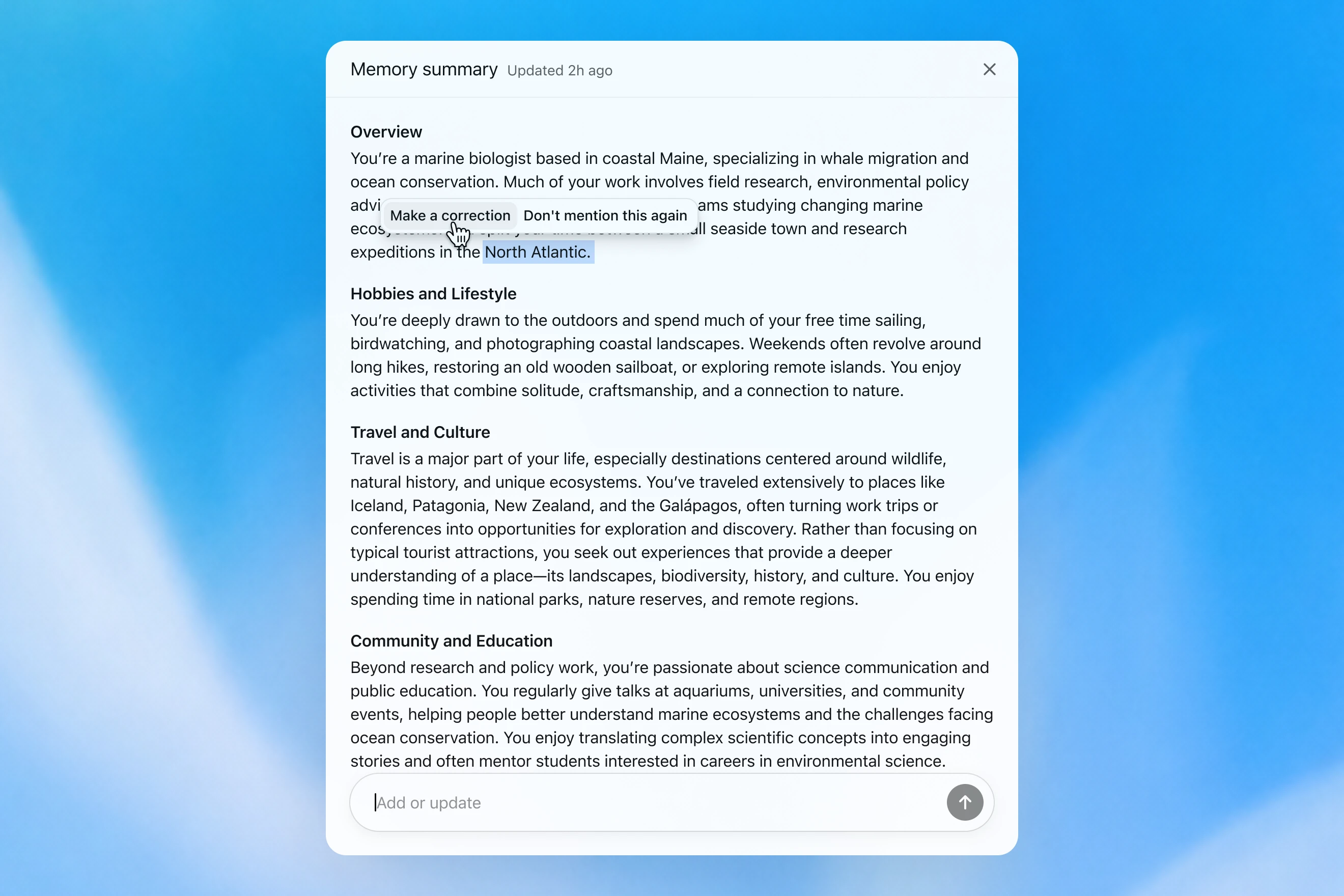
חלונית סיכום הזיכרון מציגה סקירה אישית של העבודה, התחביבים, תחומי העניין בנסיעות והמעורבות הקהילתית של המשתמש, עם אפשרויות לתקן או להסיר פרטים מסוימים.

איך אנחנו מעריכים את הזיכרון

כשאנחנו חושבים מהו ״זיכרון טוב״ ב-ChatGPT, עולות כמה תכונות חשובות:

  1. שימור הקשר שימושי להמשך: אתם מספרים ל-ChatGPT משהו פעם אחת, והוא זוכר את המידע בשיחות הבאות שלכם.

  2. התחשבות בהעדפות ובאילוצים: אם אתם מציינים העדפה (למשל, שאתם צמחונים), ChatGPT צריך לפעול בהתאם לה גם בהמשך.

  3. שמירה על עדכניות לאורך זמן: הזיכרון צריך להביא בחשבון את הזמן שחולף. למשל, ״המשתמש מתכנן את מסיבת יום ההולדת שלו לשבת הבאה״ — בסופו של דבר, יום ראשון מגיע.

אנחנו יכולים להעריך כיצד השתפר לאורך זמן הזיכרון ב-ChatGPT Plus וב-Pro ביחס לכל אחת משלוש המטרות האלה. אנחנו עושים זאת עבור כל אחת מהמערכות הבאות:

  1. 2024: זיכרונות שמורים

  2. 2025: זיכרונות שמורים + חלימה V0

  3. 2026: חלימה V3

שימור הקשר להמשך

כשאתם מתחילים שיחה חדשה עם ChatGPT, אין צורך להציג את עצמכם מחדש. ChatGPT יכול לחסוך לכם זמן ולהתבסס על הקשר קודם, במיוחד בפרויקטים מורכבים ומתמשכים.

נניח, למשל, שאתם נעזרים ב-ChatGPT כדי לקנות ציוד צילום חדש שמתאים למצלמה הנוכחית שלכם. אם שוחחתם בעבר עם ChatGPT על ציוד הצילום שלכם, תוכלו לבקש מוצרים שמתאימים ל״ציוד הצילום שלי״ ולקבל המלצות מותאמות לצרכים שלכם.

ללא זיכרון

What would I need to buy to use TTL for my underwater photography setup?

To use TTL flash underwater, you need a compatible chain from camera → housing/trigger → cable → strobe. What you buy depends mostly on whether your setup uses fiber-optic TTL or electrical TTL.

Basic shopping checklist

  • TTL-capable underwater strobe
    Look for strobes that support your TTL type, such as Inon S-TTL, Sea & Sea DS-TTL, Ikelite DS TTL, or compatible Backscatter/Nauticam systems. TTL has to be supported by the strobe, not just the camera.

  • TTL trigger or TTL converter
    This is the key piece. It translates your camera’s flash metering into something the underwater strobe can understand. Examples include Nauticam optical TTL converters, Sea & Sea TTL converters, Backscatter Smart Control optical TTL triggers, or Ikelite DS Link TTL converters, depending on housing and camera brand. Backscatter notes that Nauticam optical TTL converters can work with fiber-optic-connected Inon and Sea & Sea TTL strobes, while Ikelite’s DS Link converters are made around Ikelite DS strobes and electrical sync setups. (Backscatter.com⁠(נפתח בחלון חדש))

  • Connection cable
    For fiber optic TTL, buy one fiber optic cable per strobe. Ikelite’s fiber-optic guide says each strobe needs its own light path, converter/adapter, and cord. (Ikelite⁠(נפתח בחלון חדש))
    For
    electrical TTL, buy the correct sync cord, such as Ikelite-style, Nikonos 5-pin, or housing-specific bulkhead cable.

  • Housing compatibility parts
    You may need a hot-shoe adapter, bulkhead, fiber optic window/adapter, or housing-specific TTL board. Many TTL triggers mount inside the housing on the camera hot shoe.

  • Strobe arms, clamps, tray, and mounting hardware
    TTL controls exposure, but you still need to physically mount and aim the strobes.

  • Batteries and spares
    Bring strobe batteries, trigger batteries if required, spare fiber optic cables or sync cord O-rings, and silicone grease for serviceable O-rings.

Which route should you choose?

Fiber optic TTL is usually easiest if your housing has optical ports or can use the camera’s pop-up flash/LED trigger. It is common with compact, mirrorless, Nauticam, Sea & Sea, AOI, and Olympus/OM TG-style setups.

Electrical TTL is often best if you use Ikelite DS strobes or an Ikelite-style housing/bulkhead. Ikelite says its DS Link TTL converters are faster and more reliable than fiber-optic TTL triggers, and they do not require batteries. (Backscatter.com⁠(נפתח בחלון חדש))

The compatibility rule

You need all three to match:

camera brand/protocol + housing/trigger type + strobe TTL system

For example:

  • Sony camera + Nauticam housing + optical TTL trigger + Inon/Sea & Sea-compatible fiber optic strobe

  • Nikon/Canon/Sony camera + Ikelite housing/bulkhead + Ikelite DS Link TTL converter + Ikelite DS strobe

  • Compact camera with built-in flash + fiber optic cable + S-TTL/DS-TTL-capable strobe

So the practical answer is: buy a TTL-compatible strobe, the correct TTL trigger/converter for your camera and housing, and the right fiber optic or electrical sync cable. The exact part numbers depend on your camera, housing, and strobe model.

המודל מספק תשובה כללית ומשאיר למשתמש לבצע בעצמו בדיקות תאימות מורכבות.

עם זיכרון

What would I need to buy to use TTL for my underwater photography setup?

I’ll verify this against your actual setup: Sony A1 II in Nauticam NA-A1II, with Backscatter Mini Flash 3 and Inon Z-330 strobes. The key question is whether you want TTL with the Mini Flash 3, the Z-330s, or both.

For your setup — Sony A1 II + Nauticam NA-A1II + Backscatter Mini Flash 3 + Inon Z-330 — there are two different TTL paths:

Best buy for Mini Flash 3 TTL

Buy:

Backscatter Smart Control TTL LED Nauticam Flash Trigger for Sony
SKU: BS-TR-SN2

Backscatter lists it as custom-designed for Nauticam full-frame Sony housings, TTL-compatible with Mini Flash 3, and the NA-A1II housing page offers it as the “Backscatter Smart Control TTL Flash Trigger” option. (Backscatter.com⁠(נפתח בחלון חדש))

You’d use normal optical fiber cables from the housing to the Mini Flash 3. On the MF-3, you’d use SC or SC Macro mode; Backscatter says SC / SC Macro are the TTL modes for Mini Flash 3, with SC Macro specifically tuned for close macro work. (Backscatter.com⁠(נפתח בחלון חדש))

For Inon Z-330 TTL

For the Inon Z-330, the relevant unit is:

UW Technics 11075-HSS TTL Converter for Sony / Nauticam

UW Technics explicitly lists Inon Z-330 as a compatible TTL strobe and supports optical TTL output. (UWTechnics⁠(נפתח בחלון חדש))

But I would not buy this for Mini Flash 3 TTL. Backscatter’s own UW Technics listing says Backscatter strobes are manual / HSS only on that converter, while the Backscatter Smart Control trigger is the one listed for Sony TTL with the Mini Flash 3. (Backscatter.com⁠(נפתח בחלון חדש))

Practical recommendation

Since you shoot macro and have the Mini Flash 3, I’d buy the Backscatter Smart Control TTL LED Nauticam Flash Trigger for Sony — BS-TR-SN2.

The catch: there probably is no single trigger that gives true TTL for both the Mini Flash 3 and Inon Z-330 at the same time. The Backscatter trigger is the right TTL solution for the MF-3; the UW Technics converter is the right TTL solution for the Z-330. So choose based on which strobe you actually want TTL for.

For your use case, I’d prioritize Mini Flash 3 TTL / SC Macro and treat the Z-330s as manual when needed.

המודל זוכר את ציוד הצילום של המשתמש וממליץ על מוצר תואם.

אנחנו יכולים לבנות מבחן הערכה מדוגמאות דומות, שבו המודל מתבקש להשיב לפרומפט שדורש ממנו להיזכר במידע עובדתי על המשתמש. לאחר מכן המודל מקבל תגמול אם התשובה שלו משתמשת נכון בהקשר הרלוונטי. במבחן הזה, המערכת החדשה המבוססת על חלימה משפרת את יכולתו של המודל להיזכר בעובדות רלוונטיות.

התחשבות בהעדפות

הזיכרון גם עוזר ל-ChatGPT להשיב באופן שמתאים יותר להעדפות ולאילוצים שלכם.

נניח שאתם מתכננים נסיעה לסינגפור. חודשיים לפני הנסיעה, אתם מבקשים מ-ChatGPT עזרה בתכנון המסלול. ChatGPT כבר יודע מתכנון נסיעות קודמות שאתם אוהבים לצלם חיות בר, מעדיפים מלונות עם מיזוג חזק ונהנים מארוחת ערב שקטה יותר מאשר מבר צפוף.

ללא זיכרון
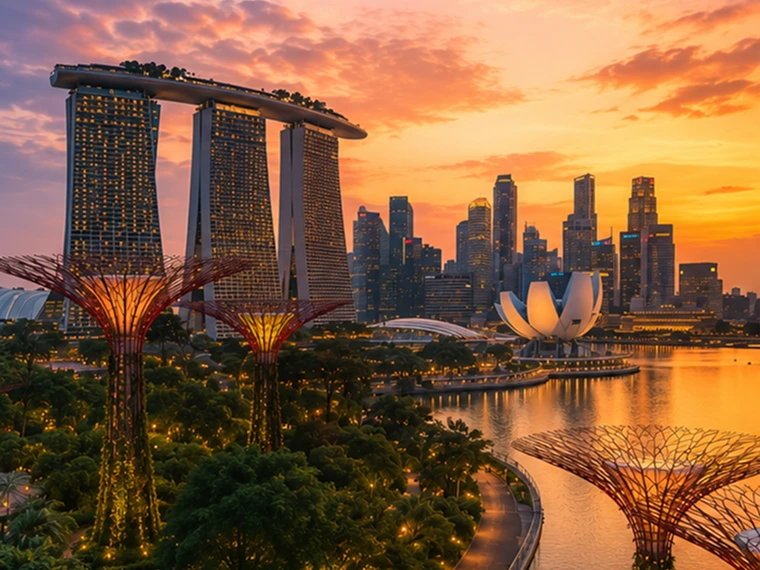
Help me plan a trip to Singapore. I’m going to be there for a work trip in July and will have a few days free at the end.

Great add-on city for a work trip: Singapore is compact, safe, excellent for solo exploring, and easy to do in 2–4 free days. July is hot and humid; expect daytime highs around 31–33°C / 88–91°F, warm nights, and sudden rain, so plan outdoor time early morning or after 5 p.m. and keep midday for museums, malls, cafés, or hotel downtime. Singapore’s official weather service notes typical daily highs of 31–33°C and lows of 23–25°C. (Singapore Weather Service⁠(נפתח בחלון חדש))

memory-preferences-without

A strong 3-day plan

Day 1: Marina Bay, Gardens, and skyline

Start late afternoon at Marina Bay and walk the waterfront: Merlion Park, Helix Bridge, ArtScience Museum exterior, then into Gardens by the Bay. Book Cloud Forest, Flower Dome, and either the OCBC Skyway or Supertree Observatory if views matter to you. Gardens by the Bay lists Cloud Forest and Flower Dome as open daily 9 a.m.–9 p.m.; Supertree Observatory is also listed as 9 a.m.–9 p.m. with last admission at 8:30 p.m., but check maintenance closures before booking. (Gardens by the Bay⁠(נפתח בחלון חדש))

Evening: stay for the Supertree light show area, then dinner at Lau Pa Sat for an easy first-night hawker experience near the CBD. It has 80+ stalls and local staples like satay, laksa, nasi lemak, bak kut teh, kaya toast, and char kway teow. (Laupasat⁠(נפתח בחלון חדש))

Day 2: Culture neighborhoods and food

Morning: Chinatown. Visit Buddha Tooth Relic Temple, walk the shophouse streets, and eat at Maxwell Food Centre or Chinatown Complex Food Centre. Visit Singapore lists Maxwell, Chinatown Complex, Old Airport Road, Tiong Bahru Market, Newton, and others among popular hawker centres. (Visit Singapore⁠(נפתח בחלון חדש))

Afternoon: Kampong Glam and Haji Lane for Sultan Mosque, murals, boutiques, and cafés. Then head to Little India around golden hour for temples, flower garlands, Tekka Centre, and dinner.

Evening: either cocktails around Ann Siang / Club Street, or keep it low-key with a night walk along the Singapore River: Boat Quay to Clarke Quay to Robertson Quay.

Day 3: Nature or beach day

Pick one based on your energy.

For nature: do Singapore Botanic Gardens early, then the National Orchid Garden, followed by lunch in Dempsey Hill or Tiong Bahru. This is the best “green Singapore” day without leaving the city.

For beach/resort mode: go to Sentosa. Choose the southern beaches, Fort Siloso Skywalk, or a beach club. I would skip trying to do every Sentosa attraction unless you love theme parks.

For local food focus: do Tiong Bahru Market for breakfast, National Gallery Singapore midday, then Old Airport Road Food Centre for dinner. The official events page also shows exhibitions and cultural events, so it is worth checking once your exact July dates are fixed. (Visit Singapore⁠(נפתח בחלון חדש))

Best places to stay after the work part

Marina Bay / CBD is easiest if you want polished, walkable, skyline-heavy Singapore and minimal transit.

Chinatown / Telok Ayer / Tanjong Pagar is my top pick for a few free days: great food, MRT access, heritage streets, cocktail bars, and close to work districts.

Bugis / Kampong Glam is better if you want boutique hotels, cafés, street art, and a slightly more relaxed neighborhood feel.

Orchard is convenient for shopping and rainy-day malls, but less atmospheric.

What to book ahead

Book Gardens by the Bay conservatories/Skyway, any special restaurants, and possibly a cocktail bar. For hawker centres, do not over-plan; just go hungry, carry tissues or wet wipes, and be ready to share tables.

July packing notes

Bring breathable work clothes, comfortable walking shoes, a small umbrella, and a light layer for aggressive air-conditioning. I would also plan one “rain-flexible” indoor block each day, because showers can arrive suddenly even when the forecast looks fine.

My suggested balance: Day 1 Marina Bay/Gardens, Day 2 Chinatown–Kampong Glam–Little India, Day 3 Botanic Gardens or Sentosa. That gives you the Singapore highlights without turning your post-work break into another work project.

המודל מספק תשובה כללית שמתמקדת יותר באטרקציות תיירותיות, לא עוזרת בהזמנת מלון ומתעלמת במידה רבה מתחומי העניין של המשתמש.

עם זיכרון
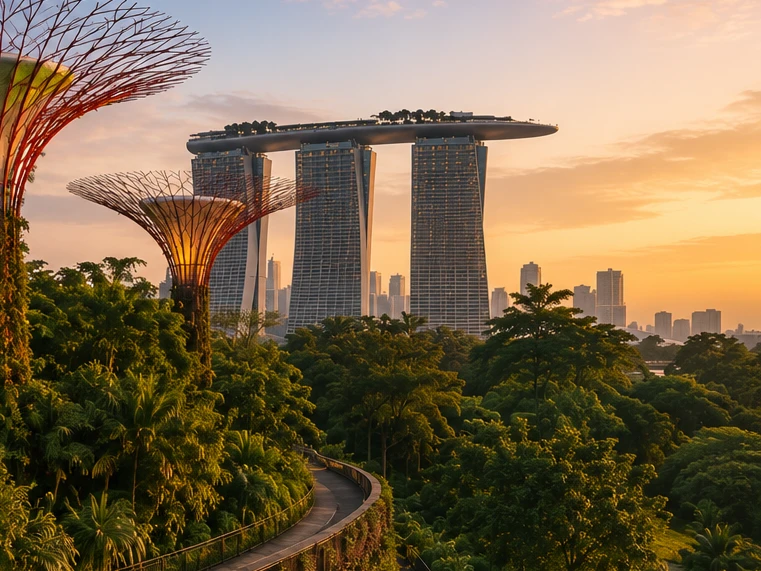
Help me plan a trip to Singapore. I’m going to be there for a work trip in July and will have a few days free at the end.

I’ll build this around your known constraints: a few free days after work, hot/humid July weather, wildlife/photography/nature bias, strong AC needs for sleep, and good but not overly social dining. I’ll verify current July logistics and then give a practical short itinerary rather than a generic Singapore list.

memory-preferences-with

Here’s how I’d structure it: 2–3 free days, mostly nature / wildlife / photography, with heat-managed mornings and AC breaks. July is hot and humid: Singapore’s July long-term stats are about 31.4°C / 88.5°F average daily max, 25.4°C / 77.7°F min, 146.6 mm rain, and 14 rain days, so outdoor plans should be early morning or evening, not midday. (National Environment Agency⁠(נפתח בחלון חדש))

Best plan for 3 free days

Day 1 — Gardens by the Bay + Marina Bay, low-friction

Morning: Cloud Forest + Flower Dome. This is the obvious “touristy” pick, but it fits you well because it’s visually interesting, good for photography, and climate-controlled. Gardens by the Bay lists Cloud Forest and Flower Dome-type attractions running 9:00am–9:00pm, and Cloud Forest currently has the Jurassic World experience listed as ongoing. (Gardens by the Bay⁠(נפתח בחלון חדש))

Late afternoon / evening: Supertree Grove + Borealis / light show. Gardens currently lists Borealis every Sat, Sun & Mon, 8:00–8:30pm at Supertree Grove, so try to align this with one of those nights. (Gardens by the Bay⁠(נפתח בחלון חדש))

Dinner: do something easy nearby: Marina Bay / Tanjong Pagar / Telok Ayer. For you, I’d prioritize reservation-based restaurants with real tables over hawker centers on the first night, because you dislike cramped solo seating.

Day 2 — Mandai wildlife day

Morning to afternoon: Bird Paradise + River Wonders. Bird Paradise is probably the best fit photographically; River Wonders is less “wildlife photography” and more controlled exhibits, but it pairs well logistically. River Wonders is listed as daily 9:00am–6:00pm, last entry 5:00pm. (Mandai Wildlife Reserve⁠(נפתח בחלון חדש))

Evening: Night Safari. This is the rare Singapore attraction that is genuinely better at night and avoids the worst heat. Night Safari is listed as daily 6:00pm–12:00am, last entry 11:15pm, with tram plus walking trails and over 900 nocturnal animals. (Mandai Wildlife Reserve⁠(נפתח בחלון חדש))

This is a full day. I would not add Singapore Zoo unless you have 4 free days; Mandai can become exhausting fast.

Day 3 — Nature reserve / macro-ish walking + food

Early morning: Singapore Botanic Gardens or MacRitchie / Windsor Nature Park. For a few free days, Botanic Gardens is the safer pick: easier transport, less sweaty, better bailout options, and more consistent casual photography. MacRitchie / Windsor is better if you want more actual forest, but it is hotter, sweatier, and less predictable.

Midday: AC break.

Late afternoon: Joo Chiat / Katong or Chinatown / Telok Ayer for walking, architecture, coffee, and dinner. This gives you a different texture from Marina Bay without turning the day into a logistics project.

My ranking for you

  1. Cloud Forest / Gardens by the Bay — best combination of photogenic, iconic, heat-managed.

  2. Bird Paradise + Night Safari — best wildlife-focused day.

  3. Botanic Gardens early morning — best low-stress outdoor nature.

  4. Joo Chiat / Katong — best neighborhood walk.

  5. Hawker centers — worth doing, but not ideal for your seating preferences unless timed off-peak.

What I’d avoid or deprioritize

I would skip Sentosa unless you specifically want beach/resort stuff. I would also skip a packed “greatest hits” day of Merlion / Orchard / Little India / Chinatown / Clarke Quay; it’s inefficient and hot. For you, the trip will be better if each day has one strong anchor plus one easy evening plan.

Hotel / sleep note

Since this is a work trip, your hotel may be fixed. If you can choose or extend at the same hotel, the hard gate is still AC. Singapore hotels are generally AC-heavy, but your requirement is unusually strict.

One thing I need to make this concrete

Send the exact free dates and whether your work hotel is fixed. Then I’d turn this into a day-by-day plan with restaurant targets and a hotel/AC callout.

המודל מספק תשובה שמותאמת לעניין של המשתמש בצילום חיות בר ובארוחות ערב שקטות, ולסדרי העדיפויות שלו בהזמנת מלון.

העדפות יכולות לבוא לידי ביטוי בכמה דרכים:

  1. הנחיות לגבי האופן שבו ChatGPT צריך להשיב (״אל תזכיר שוב את סטן״).

  2. העדפות או אילוצים אישיים (״אני צמחוני״)

  3. העדפות משתמעות שקובעות מה רלוונטי לכם (״אני גר ליד סן פרנסיסקו״ ← הצעות מקומיות צריכות להתאים לאזור הזה)

בפיתוח מערכת הזיכרון החדשה שיפרנו את היכולת של ChatGPT ליישם העדפות רלוונטיות משיחות קודמות. בהמשך לדוגמה ״אני צמחוני״, אנחנו יכולים לבדוק אם המודל משתמש נכון בזיכרון ומציע אפשרויות שמתאימות לצמחונים, כשמשתמש צמחוני מבקש רעיונות להכנת ארוחות מראש.

שמירה על עדכניות לאורך זמן

הזמן לא עוצר כשהשיחה שלכם מסתיימת.

המידע במערכות זיכרון מסורתיות עלול להתיישן. למשל, אתם אומרים ל-ChatGPT: ״אני בסינגפור וצריך המלצה לארוחת ערב להיום״. אחר כך הזמן עובר, הנסיעה מסתיימת, ואתם תוהים למה ChatGPT עדיין חושב שאתם בסינגפור.

בזכות החלימה, הזיכרונות מתעדכנים אוטומטית עם הזמן, כך ש-ChatGPT יכול לעדכן את הזיכרון שלו מ״אתם נוסעים לסינגפור ביולי״ ל״נסעתם לסינגפור ביולי 2026״ כשהנסיעה מסתיימת. כך, כשאתם חוזרים הביתה, ChatGPT יכול שוב להציע המלצות שמותאמות למקום מגוריכם ולאזור הזמן שלכם.

זיכרון לא עדכני

Help me find something for take-out tonight that’s still open.

It’s about 5:19 AM Sunday in Singapore, so your safest take-out/delivery bets are 24-hour places.

Best bets right now:

  1. McDelivery / McDonald’s Singapore — easiest islandwide option; McDonald’s says McDelivery is available 24 hours, 7 days a week. Breakfast menu should be on now. (McDonald's Singapore⁠(נפתח בחלון חדש))

  2. Srisun Express — good for prata, Indian Muslim food, local comfort food; their site says they’re halal-certified and open 24/7. (Sri Sun Express⁠(נפתח בחלון חדש))

  3. 89.7 Supper Club — good if you’re near Changi Village or Geylang East; their outlets page says both locations are open 24 hours, 7 days a week. (89.7 Supper Club⁠(נפתח בחלון חדש))

  4. 126 Dim Sum Wen Dao Shi — worth checking on GrabFood/foodpanda if you’re in the East; a 2025 guide says it runs till 5:30 AM on weekdays and round-the-clock on weekends. Since it’s Sunday morning, it may still be available. (Eatbook⁠(נפתח בחלון חדש))

  5. Prata around Geylang / Serangoon / Bedok / Jalan Kayu — look in GrabFood or Google Maps for “prata open now”; guides list multiple 24-hour prata/supper spots, including Mufiz Prata Corner and RK Eating House. (Eatbook⁠(נפתח בחלון חדש))

For the fastest path: open GrabFood / foodpanda / Deliveroo, set filter to Open now, then search “prata,” “McDonald’s,” “Srisun,” “89.7,” “dim sum,” or “nasi lemak.” If you tell me your neighborhood or nearest MRT, I’ll narrow it to specific nearby places.

המודל חושב שהמשתמש עדיין בסינגפור.

עם זיכרון

Help me find something for take-out tonight that’s still open.

I’ll use Portola Valley / Ladera as the starting point and prioritize places that are plausibly open for takeout tonight, then narrow to low-friction options rather than a huge list.

For tonight, Saturday May 30, near Ladera / Portola Valley, I’d start here:

  1. Alpine Inn — safest casual pickup option. Open Saturday until 9:30 pm and has Order Takeout on its site. Good for burgers / tavern food. (Rossotti's Alpine Inn⁠(נפתח בחלון חדש))

  2. Taverna Portola Valley — nearby at Ladera Country Shopper; open daily, Saturday dinner until 9:00 pm. Better if you want Greek / Mediterranean. (TAVERNA Portola Valley⁠(נפתח בחלון חדש))

  3. Portola Bistro — also nearby; Saturday dinner until 9:30 pm. Good option for Italian / Mediterranean / pizza-ish dinner. (Portola Bistro -⁠(נפתח בחלון חדש))

  4. Amigos Grill — Mexican, very close in Ladera Country Shopper. Official site says call to order at 650-851-3997; DoorDash / order.online lists pickup/delivery ordering until 8:40 pm. (Amigos Grill⁠(נפתח בחלון חדש))

  5. State of Mind Slice House, Palo Alto — best fallback if you want pizza and can drive farther; Friday–Saturday hours are 11 am–10 pm. (State of Mind Slice House⁠(נפתח בחלון חדש))

My pick: Alpine Inn for easiest local takeout, Taverna if you want something less heavy, State of Mind if it’s later and you want the most reliable post-9 pm option.

המודל מספק תשובות שרלוונטיות למקום מגוריו של המשתמש.

במבחני הזיכרון שלנו, אנחנו בודקים אם ChatGPT יכול להשיב נכון לפרומפטים שבהם הזמן שחלף משפיע מהותית על התשובה או ההמלצה הנכונה. חלימה מביאה לשיפור משמעותי בתחום הזה:

תשתית שתאפשר להתרחב יותר בעתיד

המשימה שלנו ב-OpenAI היא להבטיח שבינה מלאכותית כללית תועיל לאנושות כולה.

זיכרון המבוסס על חלימה זמין למשתמשי Plus ו-Pro כבר זמן מה, אך רק עכשיו אנחנו יכולים להציע למשתמשי Free גרסה שעומדת ברף האיכות שלנו ושאפשר לספק באופן מעשי בקנה מידה רחב. שיפורים מהזמן האחרון צמצמו בערך פי 5 את משאבי החישוב הנדרשים כדי לספק חלימה למשתמשי Free. בזכותם נוכל להתחיל להשיק להם חלימה בהדרגה בשבועות הקרובים, ולהגדיל את קיבולת הזיכרון למשתמשי Plus ו-Pro.

במבט קדימה, החלימה מספקת לנו כעת תשתית זיכרון משותפת לכל המשתמשים. העדכון הזה מציג את מערכת הזיכרון בעלת היכולות המתקדמות ביותר שלנו עד כה, ונמשיך לשפר אותה.

למידע נוסף על העדכון ועל אפשרויות השליטה בזיכרון, בקרו בעמוד השאלות הנפוצות על הזיכרון⁠(נפתח בחלון חדש).

מחבר/ת

OpenAI