Intii aannu Codex iyo ChatGPT ee Shaqo gaarsiinaynay malaayiin qof oo dunida ku nool, waxaannu ogaanay waxa loo baahan yahay si wakiillada muddada dheer shaqeeya ay ficil ahaan ah si fiican ugu shaqeeyaan. Wakiillada waxtarka leh waxay u baahan yihiin dejin dhammaystiran oo awood badan taas oo maamusha macnaha guud, si hufan u adeegsata qalabka, isla markaana isku dubbaridda wakiillo-hoosaadyada. Waxay sidoo kale u baahan yihiin kaabayaal maalmo si lagu kalsoonaan karo u sii wada, iyo deegaanno ay kaga shaqayn karaan faylasha, ku hawlgelin karaan koodhka, kuna kaydin karaan natiijooyinka ku-meelgaarka ah.
Maanta, waxaannu tijaabo dadweyne ahaan u soo bandhigaynaa API-ga Wakiillada(ku furmaa daaqad cusub), annagoo horumariyeyaasha siinayna dejinta dhammaystiran iyo kaabayaasha awoodda siiya Codex iyada oo loo marayo API fudud oo dabacsan.
API-ga Wakiillada waxaad hal wicitaan API ah ku abuuri kartaa wakiil diyaar u ah wax-soo-saarka, adigoo cayimaya hawsha, nooca, qalabka iyo deegaanka:
OpenAI ayaa martigelisa oo dayactirta dejinta dhammaystiran. Adiga ayaa dooranaya deegaanka xisaabinta ee wakiilka: ku dhex shaqeeya deegaan tijaabo ay OpenAI maamusho, kaabayaashaada gaarka ah ama mid ka mid ah shuraakadayada deegaanka tijaabo. API-ga Wakiillada wuxuu ku siinayaa aasaas adag oo aad wakiillo ku dhisto dejintayada dhammaystiran iyo kaabayaasha loo habeeyey wakiillada, si aad xoogga u saarto qalabka, aqoonta iyo habsocodyada shaqo ee wakiilkaaga gaarka ka dhigaya.
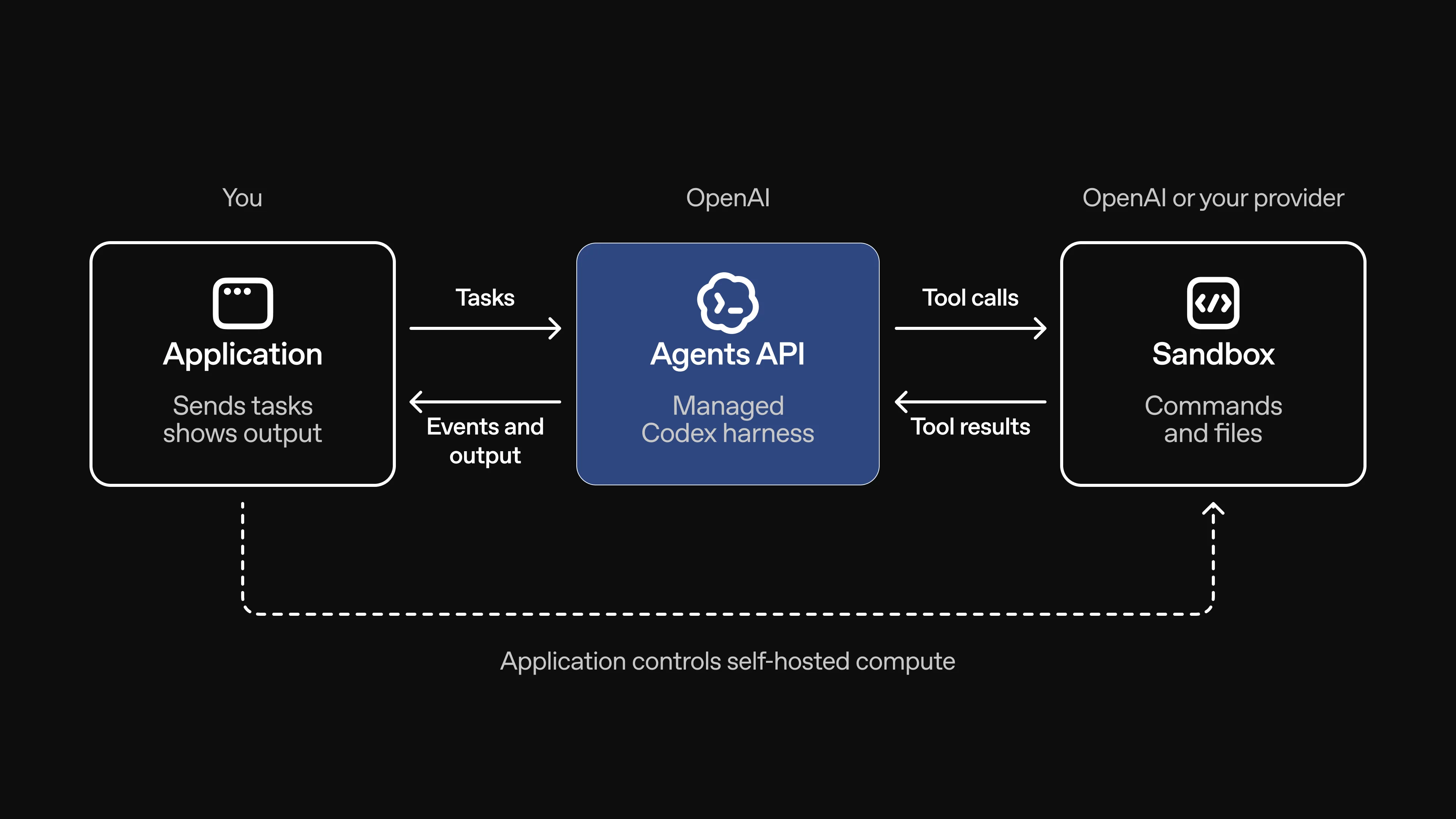
API-ga Wakiillada wuxuu wakiilladaada ku xoojiyaa isla dejinta dhammaystiran iyo kaabayaasha ka dambeeya Codex.
Culaysyada shaqo ee kala duwan waxay u baahan yihiin xisaabin, kaydin iyo xulashooyin hawlgelin oo kala duwan. API-ga Wakiillada wuxuu kuu oggolaanayaa inaad doorato deegaan tijaabo oo ku habboon abkaaga.
Waxaannu shuraako la nahay bixiyeyaasha nidaamka deegaanka(ku furmaa daaqad cusub), oo ay ka mid yihiin Blaxel, Cloudflare, Daytona, DigitalOcean, E2B, Modal, Oracle, Runloop iyo Vercel, si aannu u bixinno isku-xidhyo heer sare ah oo daboola baahiyo kala duwan:
Deegaanno si buuxda loo maamulo ama hawlgelinno ka dhex jira VPC-gaaga
Habab gaar ah oo loo kaydiyo faylasha iyo siraha
Qaabaynno kala duwan oo CPU, GPU iyo ratibaada xasuusaha ah, kuwaas oo leh waxqabad, bilow aan xog badan loo adeegsan iyo kharash ku habboon habsocodka shaqo ee shirkaddaada.

API-ga Wakiillada wuxuu bixiyaa isku-xidhyo heer sare ah oo dhex mara bixiyeyaasha caanka ah ee nidaamyada deegaanka.
Horumariyeyaasha doonaya inay dhakhso u bilaabaan oo si hufan u kobcaan, waxaannu sidoo kale u soo bandhigaynaa deegaan tijaabo oo ay OpenAI martigeliso(ku furmaa daaqad cusub). Wuxuu adeegsadaa isla kaabayaasha deegaan tijaabeed ee awoodda siiya Codex iyo ChatGPT.
OpenAI ayaa diyaarisa oo maamusha deegaan tijaabo, iyadoo wakiilkaaga siinaysa deegaan sugan oo waxqabad sare leh si koodhka loo halwgeliyo, faylasha looga shaqeeyo loona soo saaro faylal la abuuray. Deegaanadaan tijaabo si dabacsan ayaa loogu qaabayn karaa faylashaada, xidhmooyinkaaga, xirfadahaaga iyo xirmo-ku-daradaada, si wakiilka loo siiyo waxa uu u baahan yahay inuu hawsha ku dhammaystiro.
Ka faa’iidaysiga awoodaha cusub ee nooca badanaa wuxuu ka dhigan yahay in dib loo habeeyo dejintaada dhammaystiran, taas oo waqti qiimo leh ka qaadata wanaajinta abkaaga. API-ga Wakiillada wuxuu nooc la cayimay kuugu suurtageliyaa helitaanka awoodahaan mar kasta oo nooc cusub la soo saaro. Waxaannu dejinta dhammaystiran la dayactirnaa oo si joogto ah ula wanaajinaa noocyadayada, taas oo wakiilladaada ka caawisa inay casriyeyn kasta ku yeeshaan waxqabad wanaagsan. Tusaale ahaan, horumarinnadii dhowaan lagu sameeyey dejinta dhammaystiran waxaa ka mid ahaa:
Si loo taageero noocyada shaqeeya saacado badan, waxaannu dhisnay maareynta macnaha guud taas oo wakiillada ka caawisa inay xogta khusaysa sii hayaan inta lagu jiro kal-fadhiyada dhaadheer. Marka kal-fadhigu ku dhowaado xadka macnaha guud, API-ga Wakiillada ayaa si toos ah isugu soo ururiya(ku furmaa daaqad cusub) macnihii hore, isagoo ilaalinaya xogta wakiilku u baahan yahay si uu hawsha u sii wado. Horumariyeyaashu waxay dhisi karaan habsocodyo shaqo oo ka gudba shaashado macnaha guud ah oo badan iyaga oo aan hirgelin caqligooda isku-soo-ururinta.
API-ga Wakiillada wuxuu wakiillada ka caawiyaa inay helaan qalabka saxda ah ayna si hufan u adeegsadaan. Raadinta qalabka(ku furmaa daaqad cusub) waxay hadba sidii loogu baahdo soo rartaa qeexitaannada qalabka ee khuseeya, taas oo yaraysa isticmaalka tokennada iyo kharashka iyadoo ilaalinaysa kaydka nooca. Marka qalabku diyaar noqdo, codsiga isticmaalka qalabka barnaamijaysan(ku furmaa daaqad cusub) wuxuu wakiillada u saamaxaa inay codsiyada si isbarbar socda u fuliyaan, ku xidhaan hawlgallada la xidhiidha, natiijooyinkana koodh ku shaandheeyaan ama ku mideeyaan, si ay xog tiro badan uga shaqeeyaan iyagoo macnaha guud ku soo celinaya keliya natiijooyinka khuseeya. API-ga Wakiillada wuxuu taageeraa MCP, hawlaha gaarka loo codsado iyo qalab ku dhex shaqeeya sida raadinta mareegta.
Taageerada wakiillo badan(ku furmaa daaqad cusub) waxay API-ga Wakiillada u saamaxdaa inuu hawlaha adag u kala qaybiyo qaybo madaxbannaan oo uu u igmado wakiillo-hoosaadyo si isbarbar socda u shaqeeya. Wakiil-hoosaad kastaa wuxuu haystaa macnihiisa guud, taas oo ka caawisa inuu diiradda saaro hawsha loo xilsaaray, halka wakiilka ugu weyni isku dubbarido shaqadooda oo mideeyo natiijooyinka. Tani waxay dedejin kartaa cilmi-baadhista, falanqaynta iyo hawlaha koodh qorista ee ka faa’iidaysta shaqada isbarbar socota, iyadoo aan adiga lagaaga baahanayn inaad dhisto nidaam agaasin.
API-ga Wakiillada waxaa awood siiya dejinta dhammaystiran ee il-furan ee Codex, taas oo horumariyeyaasha u muujinaysa caqliga aasaasiga ah ee isku dubbarida wicitaannada nooca, qalabka iyo macnaha guud. API-ga Wakiillada, OpenAI ayaa hawlgelisa oo dayactirta dejintaas dhammaystiran, halka horumariyeyaashu ay eegi karaan oo wax ka baran karaan aasaaska koodhka guud(ku furmaa daaqad cusub).
Agents API maanta waxay qaabka tijaabada daahfuran ugu diyaar tahay dhammaan horumariyayaasha. Ma jiraan khidmad dheeraad ah oo ku saabsan isticmaalka Agents API – waxaad si fudud u bixini tokennada iyo aaladaha ay wakiilladaadu isticmaalaan, sida lagu qeexay boggayaga qiimeynta(ku furmaa daaqad cusub).
Fiir-fiiri dulmarka Agents API(ku furmaa daaqad cusub) si aad wax badan u ogaato, ama raac hagaha degdegga ah(ku furmaa daaqad cusub) si aad u bilowdo oo aad dejinta dhammaystiran ee ka dambaysa Codex ugu isticmaasho wakiilladaada.
Inta lagu jiro muddada tijaabada u daahfuran hormariyaasha, waxaan si dhakhso ah u horumarin doonnaa annagoo ku salaynayna jawaab-celintiinna, annagoo ka shaqaynayna helitaanka guud. Noo sheeg waxa shaqaynaya, meelaha aad caqabado kala kulmaysaan, iyo waxa aad u baahan tihiin si aad wakiilladiinna ugu dhistaan uguna socodsiiisaan wax-soo-saarka.