Miközben a Codexet és a ChatGPT for Worköt világszerte több millió ember számára tettük elérhetővé, megtanultuk, mi kell ahhoz, hogy a hosszú ideig futó ügynökök a gyakorlatban is jól működjenek. A hasznos ügynököknek nagy teljesítményű végrehajtási környezetre van szükségük, amely kezeli a kontextust, hatékonyan használja az eszközöket, és összehangolja az alügynököket. Olyan infrastruktúra is kell nekik, amely napokon át megbízhatóan működteti őket, valamint olyan környezetek, ahol fájlokkal dolgozhatnak, kódot futtathatnak és menthetik a köztes eredményeket.
Ma nyilvános bétaverzióban bemutatjuk az Agents API-t(új ablakban nyílik meg), amely egy egyszerű, rugalmas API-n keresztül teszi elérhetővé a fejlesztőknek ugyanazt a végrehajtási környezetet és infrastruktúrát, amely a Codexet működteti.
Az Agents API-val egyetlen API-hívással létrehozhat egy éles használatra kész ügynököt, csupán a feladatot, a modellt, az eszközöket és a környezetet kell megadnia:
A végrehajtási környezetet az OpenAI üzemelteti és tartja karban. Ön választja ki az ügynök számítási környezetét: egy OpenAI által felügyelt izolált környezetet, a saját infrastruktúráját vagy valamelyik izoláltkörnyezet-partnerünk szolgáltatását. Az Agents API szilárd alapot biztosít ügynökök létrehozásához optimalizált ügynöki végrehajtási környezetünk és infrastruktúránk használatával, így Ön azokra az eszközökre, ismeretekre és munkafolyamatokra összpontosíthat, amelyek egyedivé teszik ügynökét.
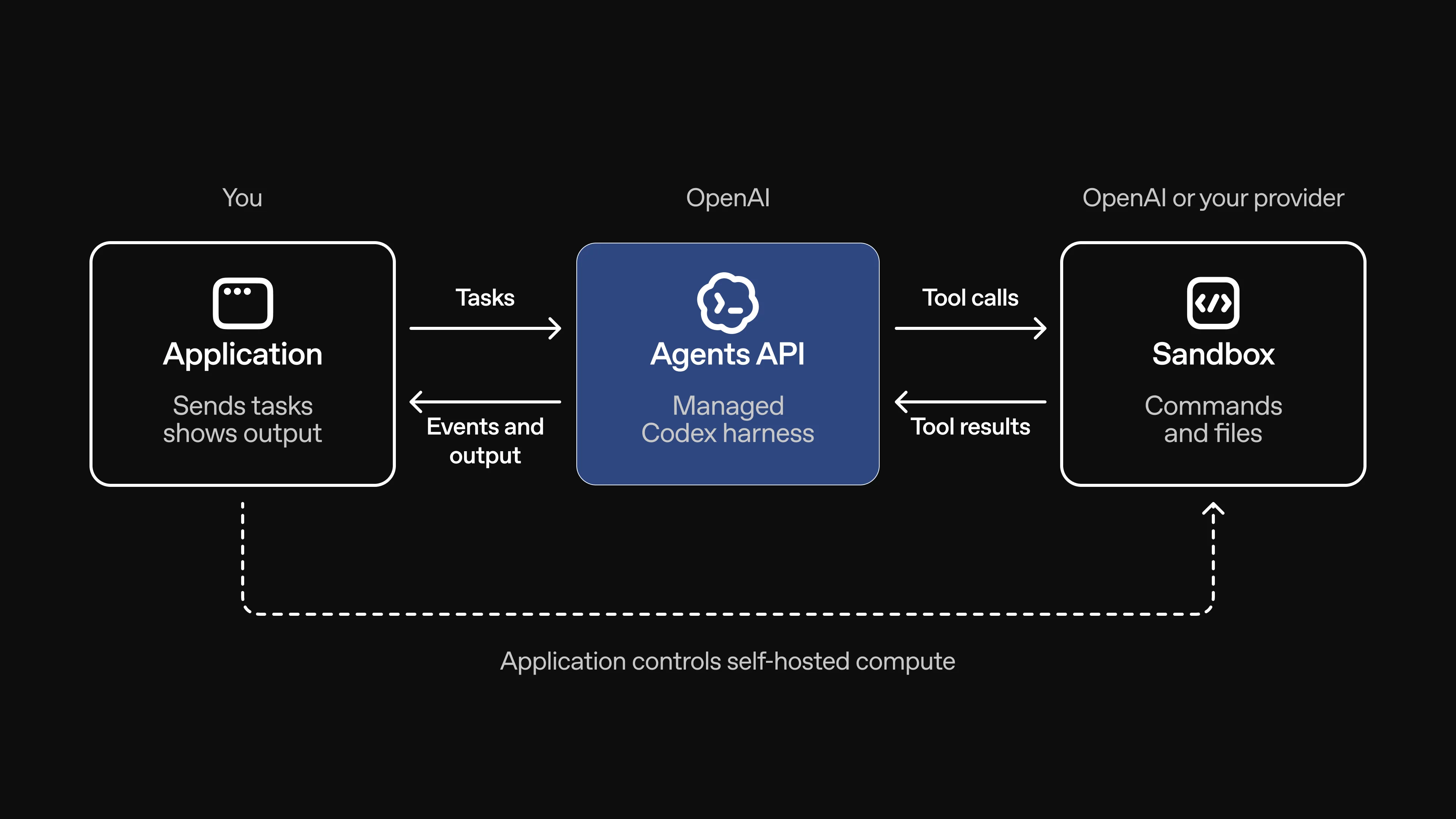
Az Agents API ugyanazzal a végrehajtási környezettel és infrastruktúrával működteti ügynökeit, amely a Codex alapját is adja.
A különböző munkaterhelések eltérő számítási, tárolási és üzembe helyezési lehetőségeket igényelnek. Az Agents API-val kiválaszthatja az alkalmazásához illő izolált környezetet.
Az igények széles körét kiszolgáló, elsőrangú integrációk biztosítása érdekében együttműködünk az ökoszisztéma szolgáltatóival(új ablakban nyílik meg), köztük a Blaxel, a Cloudflare, a Daytona, a DigitalOcean, az E2B, a Modal, az Oracle, a Runloop és a Vercel vállalattal:
Teljes körűen felügyelt környezetek vagy a saját VPC-jén belüli üzembe helyezés
Egyedi fájl- és titokkezelési megoldások
Különböző CPU-, GPU- és memóriakonfigurációk, a vállalat munkafolyamatához igazodó teljesítmény-, hidegindítási és költségjellemzőkkel.
Az Agents API elsőrangú integrációkat kínál az ökoszisztéma népszerű szolgáltatóival.
A gyors kezdésre és hatékony skálázásra törekvő fejlesztők számára bemutatjuk az OpenAI által üzemeltetett izolált környezetet(új ablakban nyílik meg) is. Ez ugyanazt az izolációs infrastruktúrát használja, amely a Codexet és a ChatGPT‑t működteti.
Az izolált környezetet az OpenAI hozza létre és kezeli, így ügynöke biztonságos és nagy teljesítményű környezetben futtathat kódot, dolgozhat fájlokkal és hozhat létre eredménytermékeket. Ezek az izolált környezetek rugalmasan konfigurálhatók az Ön fájljaival, csomagjaival, készségeivel és bővítményeivel, így az ügynök mindent megkap a feladat elvégzéséhez.
Az új modellképességek kihasználásához gyakran át kell dolgozni a végrehajtási környezetet, ami értékes időt vesz el az alkalmazás fejlesztésétől. Az Agents API minden modellbevezetéskor verziózott hozzáférést biztosít ezekhez a képességekhez. Modelljeinkkel párhuzamosan karbantartjuk és folyamatosan fejlesztjük a végrehajtási környezetet, hogy ügynökei minden frissítésből nagyobb teljesítményt nyerjenek. A végrehajtási környezet legújabb fejlesztései közé tartoznak például a következők:
Az órákon át dolgozó modellek támogatásához olyan kontextuskezelést hoztunk létre, amely segít az ügynököknek hosszabb munkameneteken át megőrizni a fontos információkat. Amikor egy munkamenet megközelíti a kontextuskorlátját, az Agents API automatikusan tömöríti(új ablakban nyílik meg) a korábbi kontextust, megtartva az ügynök folytatásához szükséges információkat. A fejlesztők több kontextusablakon átívelő munkafolyamatokat hozhatnak létre anélkül, hogy saját tömörítési logikát kellene megvalósítaniuk.
Az Agents API segít az ügynököknek megtalálni és hatékonyan használni a megfelelő eszközöket. Az eszközkeresés(új ablakban nyílik meg) szükség szerint tölti be a releváns eszközdefiníciókat, így a modell gyorsítótárának megőrzése mellett csökkenti a tokenhasználatot és a költségeket. Miután az eszközök elérhetővé váltak, a programozott eszközhívás(új ablakban nyílik meg) lehetővé teszi az ügynökök számára a hívások párhuzamos futtatását, a kapcsolódó műveletek láncba fűzését, valamint az eredmények kódbeli szűrését vagy egyesítését. Így nagy adatmennyiségeket dolgozhatnak fel úgy, hogy csak a releváns eredmények kerülnek vissza a kontextusba. Az Agents API támogatja az MCP-t, az egyéni függvényeket és a beépített eszközöket, például a webes keresést.
A többügynökös támogatással(új ablakban nyílik meg) az Agents API önálló részekre bonthatja az összetett feladatokat, és párhuzamosan dolgozó alügynökökre bízhatja őket. Minden alügynök saját kontextust tart fenn, így a rábízott feladatra összpontosíthat, miközben a fő ügynök összehangolja a munkájukat és egyesíti az eredményeket. Ez saját koordinációs rendszer kiépítése nélkül gyorsíthatja fel a párhuzamos munkából profitáló kutatási, elemzési és programozási feladatokat.
Az Agents API-t a nyílt forráskódú Codex végrehajtási környezet működteti, így a fejlesztők betekinthetnek a modellhívásokat, eszközöket és kontextust összehangoló alapvető logikába. Az Agents API használatakor az OpenAI üzemelteti és tartja karban ezt a végrehajtási környezetet, a fejlesztők pedig megvizsgálhatják annak nyilvános kódbázisát(új ablakban nyílik meg), és tanulhatnak belőle.
Az Agents API mától nyilvános bétaverzióban minden fejlesztő számára elérhető. Az Agents API használatáért nincsenek további díjak – egyszerűen csak az ügynökei által használt tokenekért és eszközökért kell fizetnie, az árképzési oldalunkon(új ablakban nyílik meg) leírtak szerint.
További információkért tekintse meg az Agents API áttekintését(új ablakban nyílik meg) , vagy kövesse a gyors kezdési útmutatót(új ablakban nyílik meg) az induláshoz, és építse be a Codex mögött álló végrehajtási környezetet saját ügynökeibe.
A nyilvános bétaverzió során a visszajelzései alapján gyors fejlesztést végzünk, miközben az általános elérhetőség elérése felé haladunk. Tudassa velünk, mi működik, hol ütközik nehézségekbe, és mire van szüksége ahhoz, hogy ügynökeit éles környezetben fejlessze és működtesse.