Unlocking the Codex harness: how we built the App Server
By Celia Chen, Member of the Technical Staff
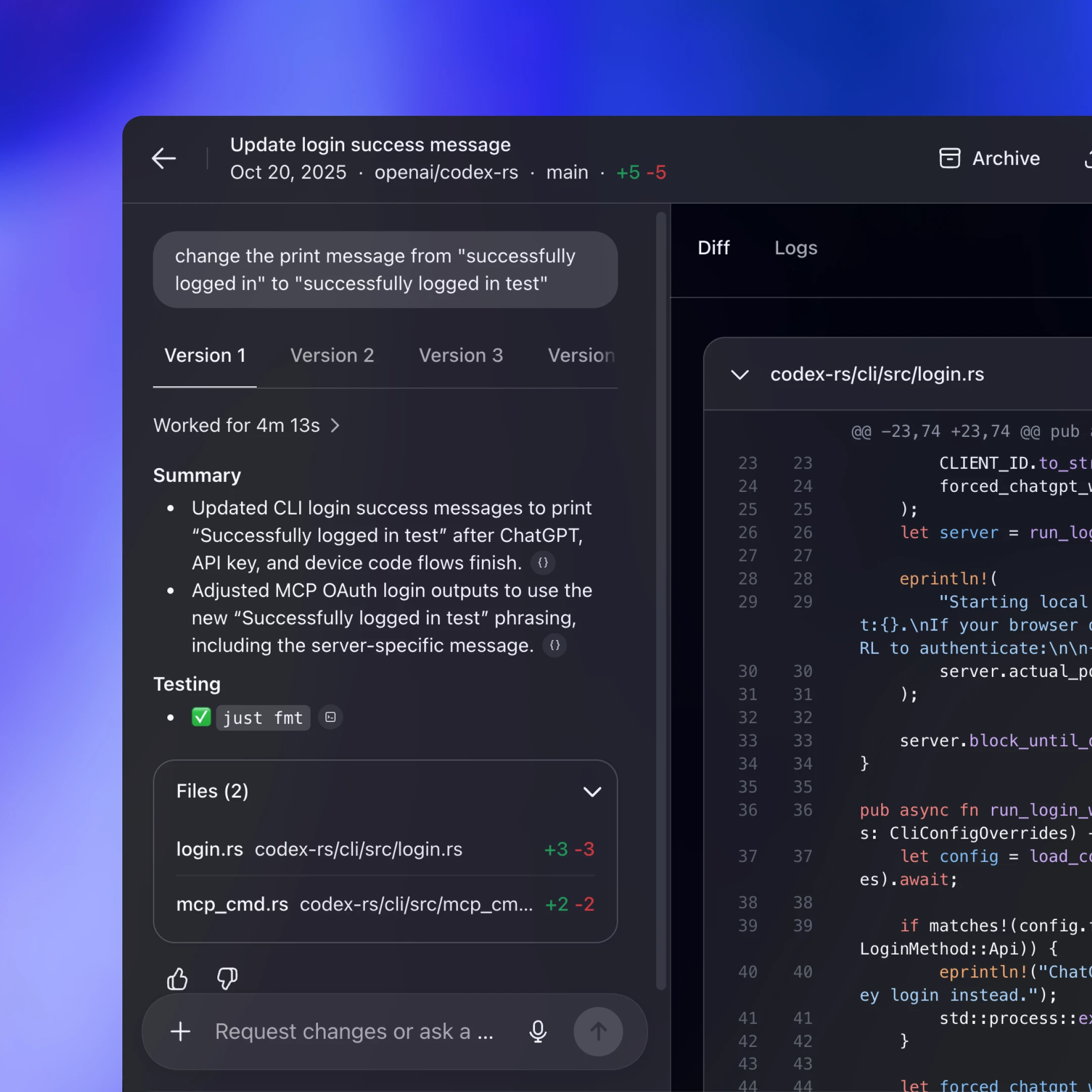
OpenAI’s coding agent Codex exists across many different surfaces: the web app(નવી વિન્ડોમાં ખૂલે છે), the CLI(નવી વિન્ડોમાં ખૂલે છે), the IDE extension(નવી વિન્ડોમાં ખૂલે છે), and the new Codex macOS app. Under the hood, they’re all powered by the same Codex harness—the agent loop and logic that underlies all Codex experiences. The critical link between them? The Codex App Server(નવી વિન્ડોમાં ખૂલે છે), a client-friendly, bidirectional JSON-RPC1 API.
In this post, we’ll introduce the Codex App Server; we’ll share our learnings so far on the best ways to bring Codex’s capabilities into your product to help your users supercharge their workflows. We’ll cover the App Server’s architecture and protocol and how it integrates with different Codex surfaces, as well as tips on leveraging Codex, whether you want to turn Codex into a code reviewer, an SRE agent, or a coding assistant.
Before diving into architecture, it’s helpful to know the App Server’s backstory. Initially, the App Server was a practical way to reuse the Codex harness across products that gradually evolved into our standard protocol.
Codex CLI started as a TUI (terminal user interface), meaning Codex is accessed through the terminal. When we built the VS Code extension (a more IDE-friendly way to interact with Codex agents), we needed a way to use the same harness so as to drive the same agent loop from an IDE UI without re-implementing it. That meant supporting rich interaction patterns beyond request/response, such as exploring the workspace, streaming progress as the agent reasons, and emitting diffs. We first experimented with exposing Codex as an MCP server(નવી વિન્ડોમાં ખૂલે છે), but maintaining MCP semantics in a way that made sense for VS Code proved difficult. Instead, we introduced a JSON-RPC protocol that mirrored the TUI loop, which became the unofficial first version(નવી વિન્ડોમાં ખૂલે છે) of the App Server. At the time, we didn’t expect other clients to depend on the App Server, so it wasn’t designed as a stable API.
As Codex adoption grew over the next few months, internal teams and external partners wanted the ability to embed the same harness in their own products in order to accelerate their users’ software development workflows. For example, JetBrains and Xcode wanted an IDE-grade agent experience, while the Codex desktop app needed to orchestrate many Codex agents in parallel. Those demands pushed us to design a platform surface that both our products and partner integrations could safely depend on over time. It needed to be easy to integrate and backward compatible, meaning we could evolve the protocol without breaking existing clients.
Next, we’ll walk through how we designed the architecture and protocol so different clients can use the same harness.
First, let’s zoom in on what’s inside the Codex harness and how the Codex App Server exposes it to clients. In our last Codex blog, we broke down the core agent loop that orchestrates the interaction between the user, the model, and the tools. This is the core logic of the Codex harness, but there’s more to the full agent experience:
1. Thread lifecycle and persistence. A thread is a Codex conversation between a user and an agent. Codex creates, resumes, forks, and archives threads, and persists the event history so clients can reconnect and render a consistent timeline.
2. Config and auth. Codex loads configuration, manages defaults, and runs authentication flows like “Sign in with ChatGPT,” including credential state.
3. Tool execution and extensions. Codex executes shell/file tools in a sandbox and wires up integrations like MCP servers and skills so they can participate in the agent loop under a consistent policy model.
All the agent logic we mentioned here, including the core agent loop, lives in a part of the Codex CLI codebase called “Codex core(નવી વિન્ડોમાં ખૂલે છે).” Codex core is both a library where all the agent code lives and a runtime that can be spun up to run the agent loop and manage the persistence of one Codex thread (conversation).
To be useful, the Codex harness needs to be accessible to clients. That’s where the App Server comes in.

The App Server is both the JSON-RPC protocol between the client and the server and a long-lived process that hosts the Codex core threads. As we can see from the diagram above, an App Server process has four main components: the stdio reader, the Codex message processor, the thread manager, and core threads. The thread manager spins up one core session for each thread, and the Codex message processor then communicates with each core session directly to submit client requests and receive updates.
One client request can result in many event updates, and these detailed events are what allow us to build a rich UI on top of the App Server. Furthermore, the stdio reader and the Codex message processor serve as the translation layer between the client and Codex core threads. They translate client JSON-RPC requests into Codex core operations, listen to Codex core’s internal event stream, and then transform those low-level events into a small set of stable, UI-ready JSON-RPC notifications.
The JSON-RPC protocol between the client and the App Server is fully bidirectional. A typical thread has a client request and many server notifications. In addition, the server can initiate requests when the agent needs input, like an approval, and then pause the turn until the client responds.
Next, we’ll break down the conversation primitives, the building blocks of the App Server protocol. Designing an API for an agent loop is tricky because the user/agent interaction is not a simple request/response. One user request can unfold into a structured sequence of actions that the client needs to represent faithfully: the user’s input, the agent’s incremental progress, artifacts produced along the way (e.g., diffs). To make that interaction stream easy to integrate and resilient across UIs, we landed on three core primitives with clear boundaries and lifecycles:
1. Item: An item is the atomic unit of input/output in Codex. Items are typed (e.g., user message, agent message, tool execution, approval request, diff) and each has an explicit lifecycle:
item/startedwhen the item beginsoptional
item/*/deltaevents as content streams in (for streaming item types)item/completedwhen the item finalizes with its terminal payload
This lifecycle lets clients start rendering immediately on started, stream incremental updates on delta, and finalize on completed.
2. Turn: A turn is one unit of agent work initiated by user input. It begins when the client submits an input (for example, “run tests and summarize failures”) and ends when the agent finishes producing outputs for that input. A turn contains a sequence of items that represent the intermediate steps and outputs produced along the way.
3. Thread: A thread is the durable container for an ongoing Codex session between a user and an agent. It contains multiple turns. Threads can be created, resumed, forked, and archived. Thread history is persisted so clients can reconnect and render a consistent timeline.
Now, we’ll look at a simplified conversation between a client and an agent, where the conversation is represented by primitives:

At the beginning of the conversation, the client and the server need to establish the initialize handshake. The client must send a single initialize request before any other method, and the server acknowledges with a response. This gives the server a chance to advertise capabilities and lets both sides agree on protocol versioning, feature flags, and defaults before the real work begins. Here’s an example payload from OpenAI’s VS Code extension:
This is what the server returns:

When a client makes a new request, it will first create a thread and then a turn. The server will send back notifications for progress (thread/started and turn/started). It will also send back inputs it registers as items, like the user message here.

Tool calls are also sent back to the client as items. Additionally, the server may ask for client approval before it can run an action by sending a server request. The approval will pause the turn until the client replies with either “allow” or “deny.” This is what the approval flow looks like in the VS Code extension:
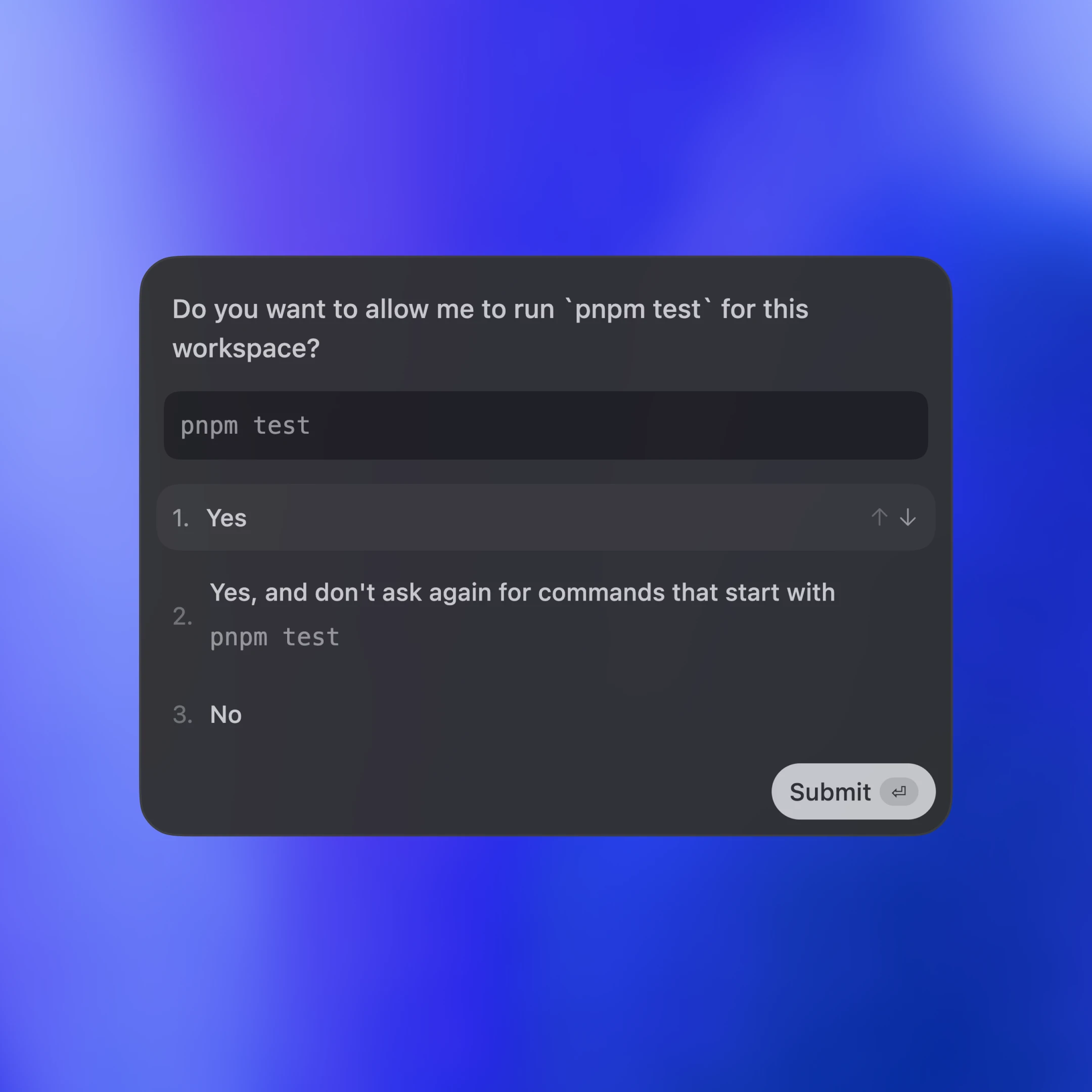

In the end, the server sends an agent message and then ends the turn with turn/completed. The agent message delta events stream pieces of the message back until the message is finalized with item/completed.
આલેખમાંના સંદેશાઓ વાંચવામાં સરળતા માટે સરળ બનાવવામાં આવ્યા છે. જો તમે સંપૂર્ણ ટર્ન માટેનું JSON જોવા માંગતા હો, તો તમે Codex CLI રિપોઝિટરીમાંથી ટેસ્ટ ક્લાયન્ટ ચલાવી શકો છો.
હવે, જુદા જુદા ક્લાયન્ટ સપાટીઓ App Server દ્વારા Codex ને કેવી રીતે એમ્બેડ કરે છે તે જોઈએ. અમે ત્રણ પેટર્ન આવરીશું: સ્થાનિક એપ્સ અને IDEs, Codex web runtime, અને TUI.

ત્રણેમાં ટ્રાન્સપોર્ટ stdio (JSONL) ઉપર JSON-RPC છે. JSON-RPC તમારી પસંદગીની ભાષામાં ક્લાયન્ટ બાઇન્ડિંગ્સ બનાવવાનું સરળ બનાવે છે. Codex સપાટીઓ અને ભાગીદાર એકીકરણે Go, Python, TypeScript, Swift અને Kotlin સહિતની ભાષાઓમાં App Server ક્લાયન્ટ્સ અમલમાં મૂક્યા છે. TypeScript માટે, તમે Rust પ્રોટોકોલમાંથી સીધી definitions આ કમાન્ડ ચલાવી બનાવી શકો છો:
અન્ય ભાષાઓ માટે, તમે JSON Schema bundle બનાવી તેને તમારી પસંદગીના code generator માં આ કમાન્ડ ચલાવી આપી શકો છો:
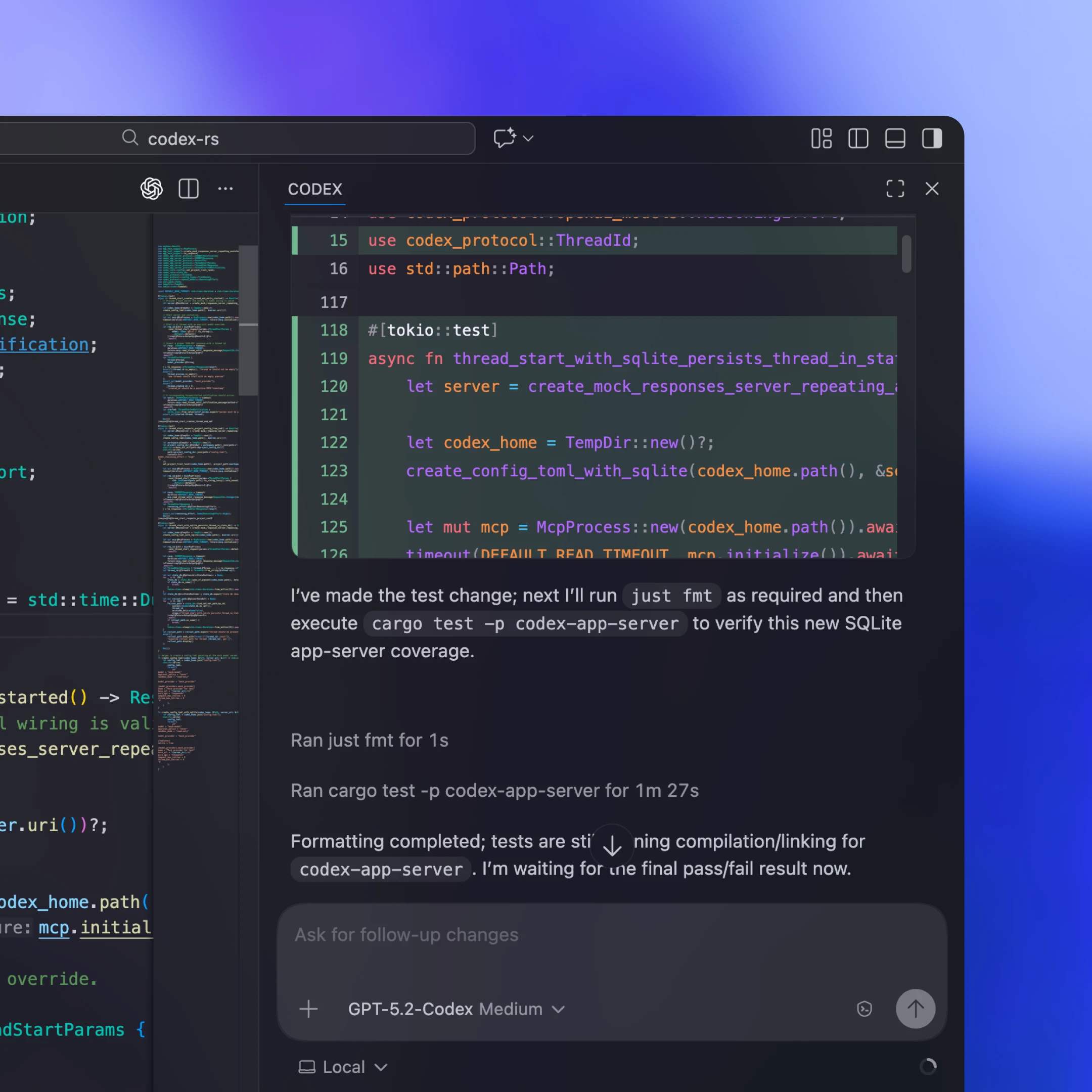
સ્થાનિક ક્લાયન્ટ્સ સામાન્ય રીતે પ્લેટફોર્મ-વિશિષ્ટ App Server binary ને bundle કરે છે અથવા લાવે છે, તેને લાંબા સમય સુધી ચાલતી child process તરીકે શરૂ કરે છે, અને JSON-RPC માટે દ્વિમાર્ગી stdio ચેનલ ખુલ્લી રાખે છે. અમારા VS Code extension અને Desktop App માં, ઉદાહરણ તરીકે, મોકલવામાં આવતી artifact માં પ્લેટફોર્મ-વિશિષ્ટ Codex binary સામેલ હોય છે અને તે પરીક્ષણ કરેલા સંસ્કરણ પર pin કરાયેલ હોય છે જેથી ક્લાયન્ટ હંમેશા એ જ bits ચલાવે જેને અમે ચકાસ્યા છે.
દરેક એકીકરણ વારંવાર ક્લાયન્ટ અપડેટ મોકલી શકતું નથી. Xcode જેવા કેટલાક ભાગીદારો ક્લાયન્ટને સ્થિર રાખીને અને જરૂર પડે ત્યારે તેને નવા App Server binary તરફ point કરવાની મંજૂરી આપીને release cycles અલગ રાખે છે. તેથી તેઓ server-side સુધારાઓ અપનાવી શકે છે, જેમ કે Codex core માં વધુ સારી auto-compaction અથવા નવા સમર્થિત config keys, અને ક્લાયન્ટ release ની રાહ જોયા વગર bug fixes રજૂ કરી શકે છે. App Server ની JSON-RPC સપાટી backward compatible રીતે ડિઝાઇન કરાઈ છે, તેથી જૂના ક્લાયન્ટ્સ સુરક્ષિત રીતે નવા સર્વર્સ સાથે વાત કરી શકે છે.
Codex Web Codex harness નો ઉપયોગ કરે છે, પરંતુ તેને container environment માં ચલાવે છે. Worker checked-out વર્કસ્પેસ સાથે container provision કરે છે, તેની અંદર App Server binary શરૂ કરે છે, અને stdio2 ઉપર લાંબા સમય સુધી ચાલતી JSON-RPC ચેનલ જાળવે છે. Web app, જે વપરાશકર્તાના browser tab માં ચાલે છે, HTTP અને SSE મારફતે Codex backend સાથે વાત કરે છે, જે worker દ્વારા ઉત્પન્ન task events stream કરે છે. આથી browser-side UI હળવું રહે છે અને સાથે desktop અને web માં સુસંગત runtime મળે છે.
કારણ કે web sessions અસ્થાયી હોય છે, જેમ કે tabs બંધ થાય અથવા networks તૂટી જાય, web app લાંબા સમય સુધી ચાલતા tasks માટે source of truth બની શકતું નથી. server પર state અને progress રાખવાથી tab અદૃશ્ય થઈ જાય તો પણ કામ ચાલુ રહે છે. streaming protocol અને સાચવેલા thread sessions નવા session માટે ફરી જોડાવું, જ્યાં છૂટ્યું હતું ત્યાંથી આગળ વધવું અને ક્લાયન્ટમાં state ફરીથી બનાવ્યા વગર catch up કરવું સરળ બનાવે છે.
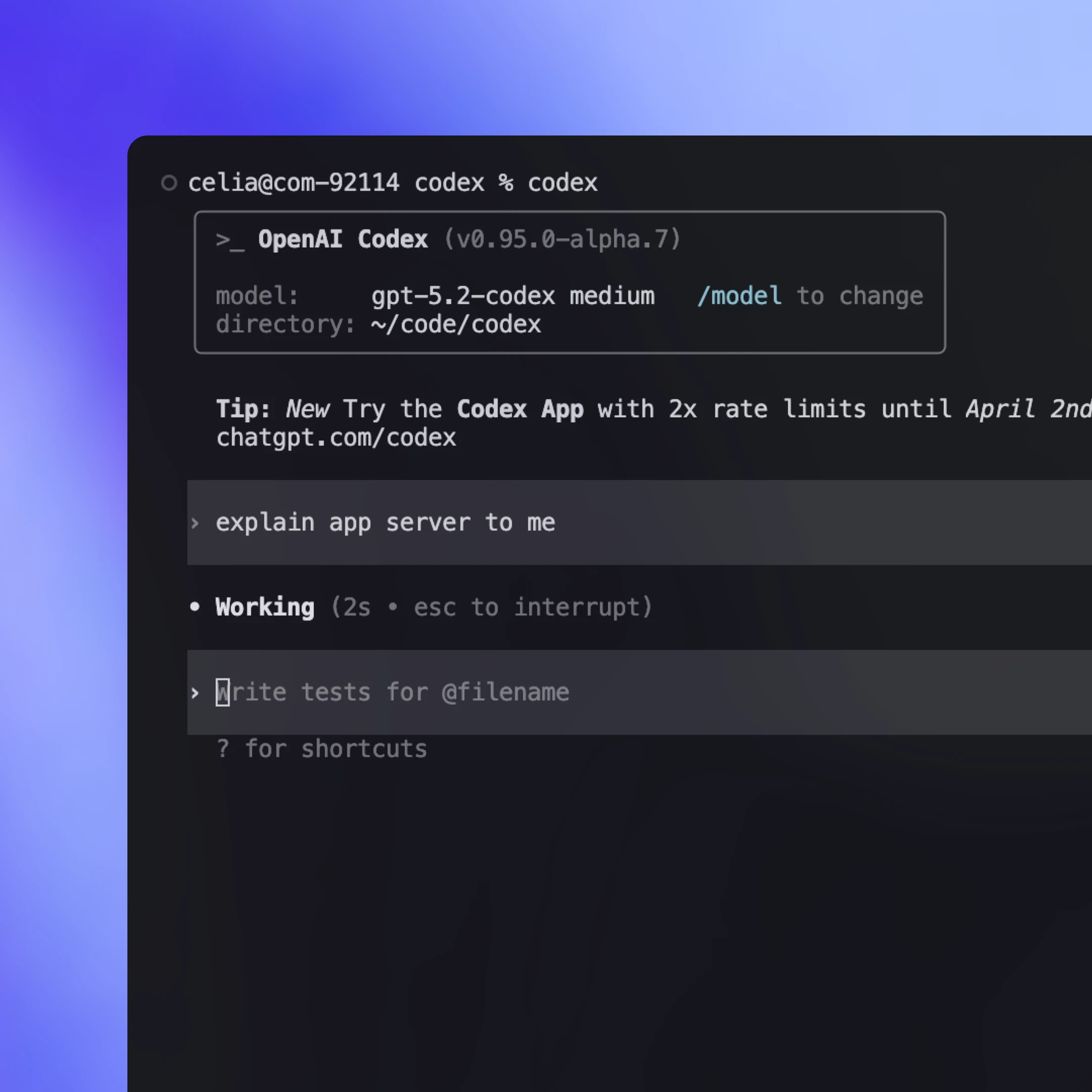
ઇતિહાસ મુજબ, TUI એક “native” ક્લાયન્ટ હતો જે એજન્ટ લૂપ સાથે એ જ process માં ચાલતો હતો અને app-server protocol ને બદલે સીધા Rust core types સાથે વાત કરતો હતો. તેનાથી શરૂઆતની iteration ઝડપી બની, પણ TUI ને ખાસ કેસવાળી સપાટી પણ બનાવી દીધી.
હવે App Server અસ્તિત્વમાં છે, અમે TUI ને refactor(નવી વિન્ડોમાં ખૂલે છે) કરીને તેનો ઉપયોગ કરાવવાની યોજના ધરાવીએ છીએ જેથી તે અન્ય કોઈપણ ક્લાયન્ટની જેમ વર્તે: App Server child process શરૂ કરે, stdio ઉપર JSON-RPC બોલે, અને એ જ streaming events અને approvals રજૂ કરે. આથી એવા workflows ખુલશે waarin TUI દૂરસ્થ મશીન પર ચાલતા Codex સર્વર સાથે જોડાઈ શકે, એજન્ટને compute ની નજીક રાખી શકે અને laptop sleep થાય અથવા disconnect થાય તો પણ કામ ચાલુ રાખી શકે, સાથે સ્થાનિક રીતે live updates અને controls આપે.
આગળ જઈને અમે જાળવી રાખીશું એવી પ્રથમ-શ્રેણીની integration method Codex App Server હશે, પરંતુ મર્યાદિત કાર્યક્ષમતાવાળી અન્ય પદ્ધતિઓ પણ છે. મૂળભૂત રીતે, અમે ભલામણ કરીએ છીએ કે ક્લાયન્ટ્સ Codex સાથે એકીકરણ માટે Codex App Server નો ઉપયોગ કરે, પરંતુ જુદી જુદી integration methods અને તેમના લાભ-ગેરલાભ સમજવા યોગ્ય છે. નીચે Codex ને ચલાવવાના સૌથી સામાન્ય રસ્તાઓ છે અને દરેક ક્યારે યોગ્ય હોઈ શકે તે દર્શાવ્યું છે.
codex mcp-server(નવી વિન્ડોમાં ખૂલે છે) ચલાવો અને stdio servers ને સમર્થન આપતા કોઈપણ MCP ક્લાયન્ટ પરથી જોડાઓ, જેમ કે OpenAI Agents SDK(નવી વિન્ડોમાં ખૂલે છે). જો તમારી પાસે પહેલેથી MCP આધારિત workflow હોય અને તમે Codex ને બોલાવી શકાય એવા tool તરીકે ઉપયોગમાં લેવા માંગતા હો, તો આ યોગ્ય છે. ગેરલાભ એ છે કે તમને MCP જે expose કરે છે એટલું જ મળે છે, તેથી Codex-વિશિષ્ટ interactions, જે વધુ સમૃદ્ધ session semantics પર આધાર રાખે છે, જેમ કે diff updates, MCP endpoints મારફતે સરળતાથી map ન પણ થાય.
કેટલાક ecosystems એવી portable interface આપે છે જે ઘણા મોડલ providers અને runtimes ને target કરી શકે છે. જો તમે ઘણા એજન્ટ્સનું સંકલન કરતી એક abstraction માંગતા હો, તો આ યોગ્ય હોઈ શકે. સમજૂતી એ છે કે આ પ્રોટોકોલ્સ ઘણીવાર ક્ષમતાઓના સામાન્ય subset પર આવે છે, જેના કારણે વધુ સમૃદ્ધ interactions દર્શાવવી મુશ્કેલ બને છે, ખાસ કરીને જ્યારે provider-વિશિષ્ટ tool અને session semantics મહત્વ ધરાવે. આ ક્ષેત્ર ઝડપથી બદલાઈ રહ્યું છે, અને વાસ્તવિક એજન્ટ workflows દર્શાવવા શ્રેષ્ઠ primitives સમજતા જઈએ તેમ વધુ સામાન્ય standards ઉભા થશે એવી અમારી અપેક્ષા છે. skills(નવી વિન્ડોમાં ખૂલે છે) તેનું સારું ઉદાહરણ છે.
જ્યારે તમે સ્થિર, UI-મૈત્રીપૂર્ણ event stream તરીકે સંપૂર્ણ Codex harness expose કરાવવા માંગતા હો ત્યારે App Server પસંદ કરો. તમને એજન્ટ લૂપની સંપૂર્ણ કાર્યક્ષમતા સાથે Sign in with ChatGPT, model discovery અને configuration management જેવી સહાયક સુવિધાઓ પણ મળે છે. મુખ્ય ખર્ચ integration work નો છે, કારણ કે તમારી ભાષામાં client-side JSON-RPC binding બનાવવી પડે છે. હકીકતમાં, જો તમે Codex ને JSON schema અને documentation આપો તો તે ભારે કામનો મોટો ભાગ કરી શકે છે. અમે સાથે કામ કરેલી ઘણી ટીમો Codex નો ઉપયોગ કરીને ઝડપથી કાર્યરત integration બનાવી શકી હતી.
એકવારના tasks અને CI runs માટે હળવો, scriptable CLI mode. automation અને pipelines માટે આ યોગ્ય છે, જ્યાં તમે એક જ command ને non-interactively પૂર્ણ થવા દોરવા માંગો છો, logs માટે structured output stream કરવા માંગો છો, અને સ્પષ્ટ success અથવા failure signal સાથે બહાર નીકળવું માંગો છો.
તમારી પોતાની application અંદરથી સ્થાનિક Codex એજન્ટ્સને programmatically નિયંત્રિત કરવા માટેની TypeScript library. જ્યારે તમે અલગ JSON-RPC ક્લાયન્ટ બનાવ્યા વગર server-side tools અને workflows માટે native library interface ઈચ્છો ત્યારે આ શ્રેષ્ઠ છે. App Server કરતાં વહેલું ship થયું હોવાથી, હાલમાં તે ઓછી ભાષાઓ અને નાની સપાટી સમર્થન આપે છે. જો developers માં રસ હશે, તો અમે વધારાના SDKs ઉમેરી શકીએ જે App Server protocol ને wrap કરે જેથી ટીમો JSON-RPC bindings લખ્યા વગર harness ની વધુ સપાટી આવરી શકે.
આ પોસ્ટમાં અમે એજન્ટ્સ સાથે ક્રિયાપ્રતિક્રિયા કરવા માટેનો નવો ધોરણ ડિઝાઇન કરવા અંગેનો અમારો અભિગમ અને Codex harness ને સ્થિર, ક્લાયન્ટ-મૈત્રીપૂર્ણ પ્રોટોકોલમાં કેવી રીતે ફેરવ્યો તે શેર કર્યું. અમે આવરી લીધું કે App Server કેવી રીતે Codex core ને expose કરે છે, ક્લાયન્ટ્સને પૂર્ણ એજન્ટ લૂપ ચલાવવા દે છે, અને TUI, સ્થાનિક IDE integrations, અને web runtime સહિત વિવિધ સપાટીઓને શક્તિ આપે છે.
જો આથી તમારા પોતાના workflows માં Codex એકીકૃત કરવાની કલ્પનાઓ ઉદ્ભવી હોય, તો App Server અજમાવવું યોગ્ય છે. બધી source code Codex CLI open-source repo(નવી વિન્ડોમાં ખૂલે છે) માં છે. કૃપા કરીને તમારો પ્રતિસાદ અને feature requests શેર કરો. તમારી પાસેથી સાંભળવા અને એજન્ટ્સને બધાને વધુ સુલભ બનાવતા રહેવા માટે અમે ઉત્સુક છીએ.
લેખક
આભારવિદિ
માઇકલ બોલિન, ઓવેન લિન, એરિક ટ્રાઉટ અને રાસ્મસ રાયગાર્ડનો વિશેષ આભાર, જેમણે આ પોસ્ટમાં યોગદાન આપ્યું, તેમજ App Server પર કામ કરનાર સંપૂર્ણ Codex ટીમનો પણ આભાર.
ફૂટનોટ્સ
- 1
- 2