Přeskoč na hlavní obsah
OpenAI

4. června 2026

VýzkumProduktVydání

Silnější základ pro paměť ChatGPT

Zlepšujeme syntézu paměti v ChatGPT s důrazem na aktuálnost, kontinuitu a relevanci.

Načítání…

Dnes začínáme zavádět výkonnější a škálovatelnější systém pro syntézu paměti, vyvinutý k řešení problémů se zastaráváním, správností a škálovatelností, které pozorujeme, když byla paměť v ChatGPT nasazena u stovek milionů uživatelů a v časových horizontech několika let.

Paměť pomáhá ChatGPT učit se vaše preference, projekty a omezení, takže budoucí konverzace mohou začínat ne od nuly, ale od sdíleného kontextu.

Za poslední dva roky se paměť stala zásadní součástí používání ChatGPT: pomáhá ChatGPT lépe chápat váš kontext, aby vám v průběhu času dokázal pomáhat dosahovat smysluplných cílů. To je klíčové pro to, aby byl ChatGPT užitečnější: aby vás znal, pomáhal vám a dokázal toho pro vás udělat víc.

Tato aktualizace je ode dneška dostupná uživatelům Plus a Pro v USA a v nadcházejících týdnech bude zpřístupněna v dalších zemích a uživatelům Free a Go.

Jak se paměť vyvíjela

Paměť byla poprvé spuštěna v dubnu 2024 (nazýváme ji také „uložené vzpomínky“). Tato funkce vám umožnila požádat ChatGPT, aby si zapamatoval informace a přenášel je do budoucích chatů.
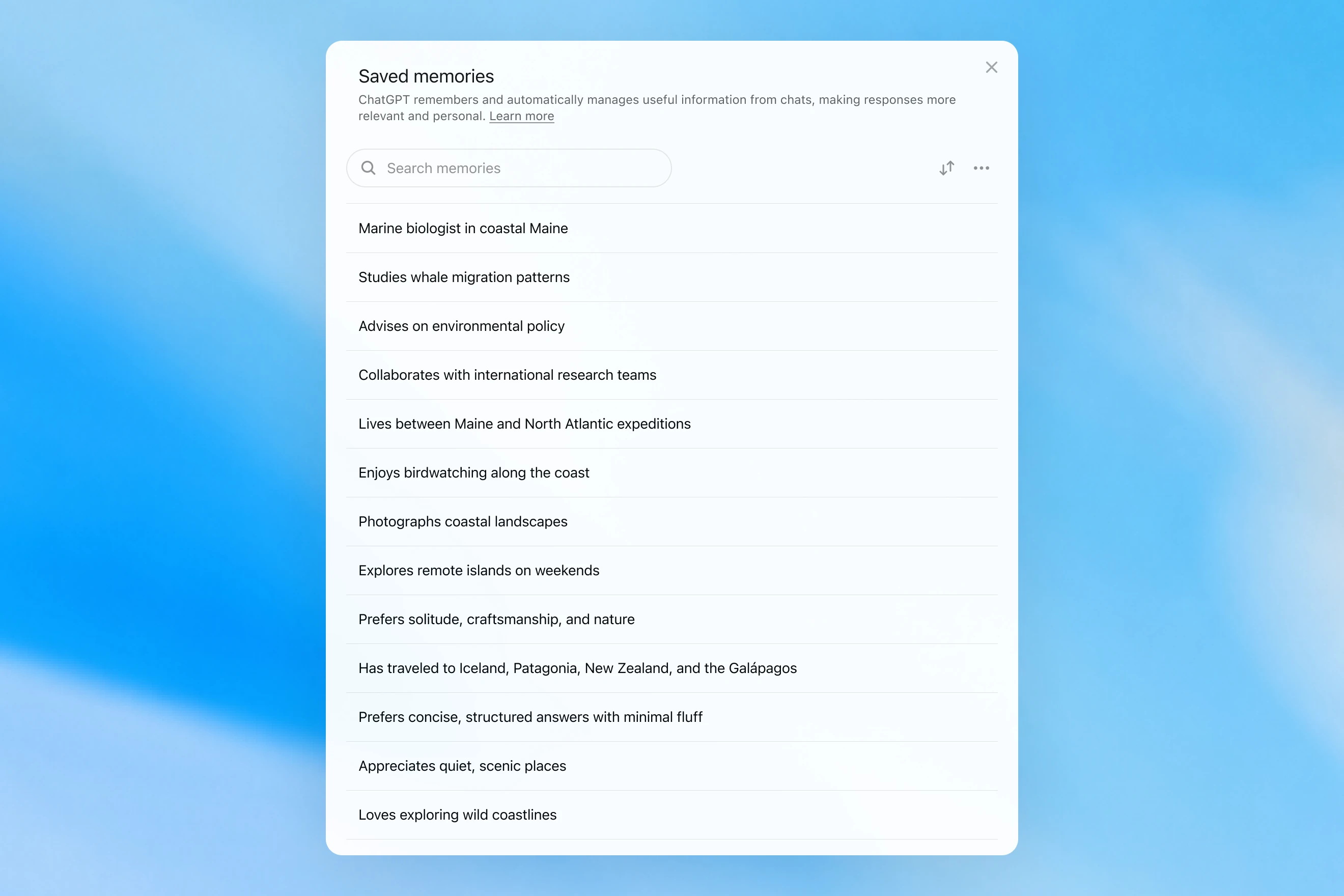
Saved memories modal showing a searchable list of personal details, including work, interests, travel, and response preferences.

Uložené vzpomínky se zapisovaly pouze během konverzace a při rozhodování, kdy paměť spustit, se se řídily pouze silnými signály, například pokynem „zapamatuj si, že v červenci cestuji do Singapuru“. V praxi mohla interakce s tímto systémem působit jako rozhovor s někým, kdo si udělal pár poznámek, ale zapomněl všechno, co si nezapsal. Uložené vzpomínky mají také tendenci časem zastarávat a nakonec se stát nesprávnými nebo nerelevantními.

V dubnu 2025 jsme paměť ChatGPT aktualizovali tím, že jsme modelu dali možnost odkazovat na kontext chatů mimo seznam uložených vzpomínek; udělali jsme to zavedením první verze metody dreaming – způsobu, jak může ChatGPT na pozadí automaticky spravovat vzpomínky s využitím historie chatů.
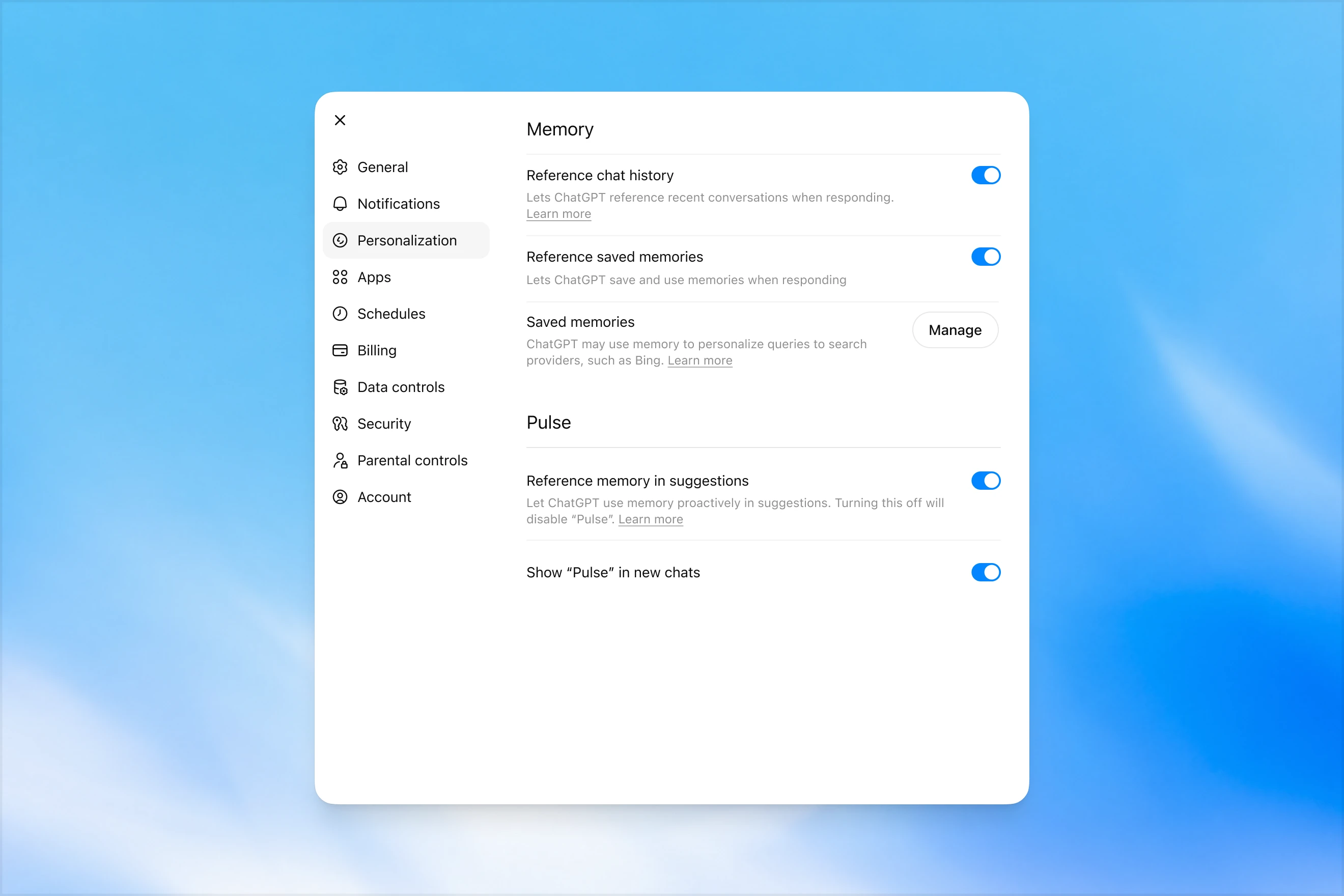
Memory settings page in ChatGPT showing options to reference chat history, use saved memories, manage saved memories, and enable Pulse memory suggestions.

Na rozdíl od uložených vzpomínek využívá dreaming proces na pozadí, který ChatGPT umožňuje učit se z mnoha konverzací a syntetizovat stav paměti ChatGPT, aby vašim konverzacím vždy poskytoval co nejaktuálnější a nejrelevantnější kontext. Dreaming také usnadňuje, aby paměť zahrnovala kontext, který se v konverzaci objevuje přirozeně, aniž by bylo nutné spoléhat na výslovné žádosti, aby si ChatGPT něco zapamatoval.

V posledním roce dreaming doplňoval uložené vzpomínky a přinesl skokové zlepšení schopnosti ChatGPT personalizovat odpovědi a vyvažovat zastarávání uložených vzpomínek. Historicky však nikdy nestačil jako samostatný systém paměti.

Dnes spouštíme výrazně výkonnější a výpočetně efektivnější architekturu paměti postavenou na dreamingu.

Vzpomínky syntetizované dreamingem lze zkontrolovat prostřednictvím jejich shrnutí, které je viditelné na stránce se souhrnem paměti. Ze souhrnu paměti můžete rychle zjistit hlavní body toho, co o vás ChatGPT ví, přidat nebo aktualizovat informace o sobě a poskytnout pokyny k tomu, jaká témata má ChatGPT zmiňovat a kdy. Pokud se chcete do určité oblasti ponořit hlouběji a dozvědět se víc, stačí si s modelem promluvit.
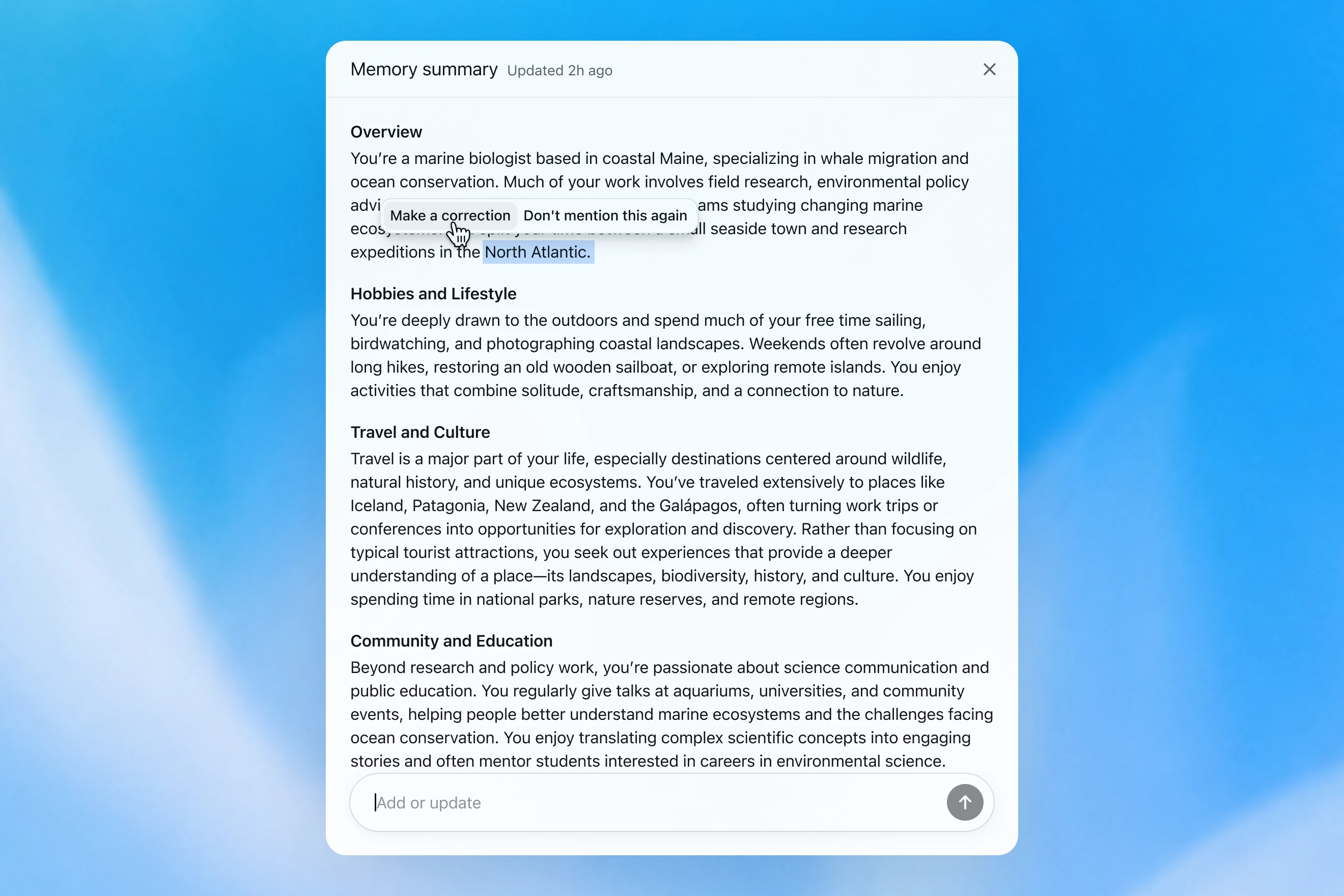
Memory summary modal showing a personalized overview of a user’s work, hobbies, travel interests, and community involvement, with options to correct or dismiss specific details.

Jak vyhodnocujeme paměť

Když přemýšlíme o tom, jak vypadá „dobrá paměť“ v ChatGPT, napadá nás několik věcí:

  1. Přenášet užitečný kontext: Řeknete ChatGPT něco jednou a on si tuto informaci zapamatuje pro vaše další chaty.
  2. Řídit se preferencemi a omezeními: Pokud popíšete preferenci (např. že jste vegetarián), měl by ChatGPT do budoucna jednat v souladu s touto preferencí.
  3. Zůstávat v čase aktuální: Paměť by měla zohledňovat plynutí času. Představte si: „Uživatel plánuje narozeninovou oslavu na příští sobotu“; dříve či později je tu neděle.

Můžeme vyhodnotit, jak se paměť v ChatGPT Plus a Pro v čase zlepšovala vzhledem ke každému ze tří výše uvedených cílů paměti. Děláme to pro každou z těchto verzí:

  1. 2024: Uložené vzpomínky
  2. 2025: Uložené vzpomínky + Dreaming V0
  3. 2026: Dreaming V3

Přenášení kontextu

Když začnete nový chat s ChatGPT, nemusíte se představovat od nuly. ChatGPT vám může ušetřit čas a navázat na předchozí kontext, zejména u složitých, dlouhodobých projektů.

Představte si například, že používáte ChatGPT k nákupu nového fotografického vybavení, které je kompatibilní s vaším současným fotoaparátem. Pokud jste už dříve s ChatGPT probírali svou fotografickou výbavu, můžete požádat o produkty kompatibilní s „mou fotografickou sestavou“ a získat doporučení na míru, která odpovídají vašim potřebám.

GPT-5.2 Instant

What would I need to buy to use TTL for my underwater photography setup?

To use TTL flash underwater, you need a compatible chain from camera → housing/trigger → cable → strobe. What you buy depends mostly on whether your setup uses fiber-optic TTL or electrical TTL.

Basic shopping checklist

  • TTL-capable underwater strobe
    Look for strobes that support your TTL type, such as Inon S-TTL, Sea & Sea DS-TTL, Ikelite DS TTL, or compatible Backscatter/Nauticam systems. TTL has to be supported by the strobe, not just the camera.
  • TTL trigger or TTL converter
    This is the key piece. It translates your camera’s flash metering into something the underwater strobe can understand. Examples include Nauticam optical TTL converters, Sea & Sea TTL converters, Backscatter Smart Control optical TTL triggers, or Ikelite DS Link TTL converters, depending on housing and camera brand. Backscatter notes that Nauticam optical TTL converters can work with fiber-optic-connected Inon and Sea & Sea TTL strobes, while Ikelite’s DS Link converters are made around Ikelite DS strobes and electrical sync setups. (Backscatter.com(otevře se v novém okně))
  • Connection cable
    For fiber optic TTL, buy one fiber optic cable per strobe. Ikelite’s fiber-optic guide says each strobe needs its own light path, converter/adapter, and cord. (Ikelite(otevře se v novém okně))
    For
    electrical TTL, buy the correct sync cord, such as Ikelite-style, Nikonos 5-pin, or housing-specific bulkhead cable.
  • Housing compatibility parts
    You may need a hot-shoe adapter, bulkhead, fiber optic window/adapter, or housing-specific TTL board. Many TTL triggers mount inside the housing on the camera hot shoe.
  • Strobe arms, clamps, tray, and mounting hardware
    TTL controls exposure, but you still need to physically mount and aim the strobes.
  • Batteries and spares
    Bring strobe batteries, trigger batteries if required, spare fiber optic cables or sync cord O-rings, and silicone grease for serviceable O-rings.

Which route should you choose?

Fiber optic TTL is usually easiest if your housing has optical ports or can use the camera’s pop-up flash/LED trigger. It is common with compact, mirrorless, Nauticam, Sea & Sea, AOI, and Olympus/OM TG-style setups.

Electrical TTL is often best if you use Ikelite DS strobes or an Ikelite-style housing/bulkhead. Ikelite says its DS Link TTL converters are faster and more reliable than fiber-optic TTL triggers, and they do not require batteries. (Backscatter.com(otevře se v novém okně))

The compatibility rule

You need all three to match:

camera brand/protocol + housing/trigger type + strobe TTL system

For example:

  • Sony camera + Nauticam housing + optical TTL trigger + Inon/Sea & Sea-compatible fiber optic strobe
  • Nikon/Canon/Sony camera + Ikelite housing/bulkhead + Ikelite DS Link TTL converter + Ikelite DS strobe
  • Compact camera with built-in flash + fiber optic cable + S-TTL/DS-TTL-capable strobe

So the practical answer is: buy a TTL-compatible strobe, the correct TTL trigger/converter for your camera and housing, and the right fiber optic or electrical sync cable. The exact part numbers depend on your camera, housing, and strobe model.

Model vytváří obecnou odpověď, která nechává uživatele, aby si složité kontroly kompatibility udělal sám.

GPT-5.3 Instant

What would I need to buy to use TTL for my underwater photography setup?

I’ll verify this against your actual setup: Sony A1 II in Nauticam NA-A1II, with Backscatter Mini Flash 3 and Inon Z-330 strobes. The key question is whether you want TTL with the Mini Flash 3, the Z-330s, or both.

For your setupSony A1 II + Nauticam NA-A1II + Backscatter Mini Flash 3 + Inon Z-330 — there are two different TTL paths:

Best buy for Mini Flash 3 TTL

Buy:

Backscatter Smart Control TTL LED Nauticam Flash Trigger for Sony
SKU: BS-TR-SN2

Backscatter lists it as custom-designed for Nauticam full-frame Sony housings, TTL-compatible with Mini Flash 3, and the NA-A1II housing page offers it as the “Backscatter Smart Control TTL Flash Trigger” option. (Backscatter.com(otevře se v novém okně))

You’d use normal optical fiber cables from the housing to the Mini Flash 3. On the MF-3, you’d use SC or SC Macro mode; Backscatter says SC / SC Macro are the TTL modes for Mini Flash 3, with SC Macro specifically tuned for close macro work. (Backscatter.com(otevře se v novém okně))

For Inon Z-330 TTL

For the Inon Z-330, the relevant unit is:

UW Technics 11075-HSS TTL Converter for Sony / Nauticam

UW Technics explicitly lists Inon Z-330 as a compatible TTL strobe and supports optical TTL output. (UWTechnics(otevře se v novém okně))

But I would not buy this for Mini Flash 3 TTL. Backscatter’s own UW Technics listing says Backscatter strobes are manual / HSS only on that converter, while the Backscatter Smart Control trigger is the one listed for Sony TTL with the Mini Flash 3. (Backscatter.com(otevře se v novém okně))

Practical recommendation

Since you shoot macro and have the Mini Flash 3, I’d buy the Backscatter Smart Control TTL LED Nauticam Flash Trigger for Sony — BS-TR-SN2.

The catch: there probably is no single trigger that gives true TTL for both the Mini Flash 3 and Inon Z-330 at the same time. The Backscatter trigger is the right TTL solution for the MF-3; the UW Technics converter is the right TTL solution for the Z-330. So choose based on which strobe you actually want TTL for.

For your use case, I’d prioritize Mini Flash 3 TTL / SC Macro and treat the Z-330s as manual when needed.

Model si pamatuje fotografickou výbavu uživatele a doporučuje kompatibilní produkt.

GPT‑5.2 Instant nakonec na otázku odpoví, ale ve snaze vysvětlit své bezpečnostní hranice začne dlouhým úvodem o tom, s čím nemůže pomoci. GPT‑5.3 Instant se naopak věnuje přímo odpovědi.

Z podobných příkladů můžeme sestavit eval, v němž je model požádán, aby odpověděl na prompt vyžadující vybavení faktických informací o uživateli. Model je pak odměněn, pokud odpoví způsobem, který správně využívá relevantní kontext. V tomto vyhodnocení nový systém založený na dreamingu zlepšuje schopnost modelu vybavit si relevantní fakta.

Řízení se preferencemi

Paměť také pomáhá ChatGPT odpovídat způsobem, který lépe odpovídá vašim preferencím a omezením.

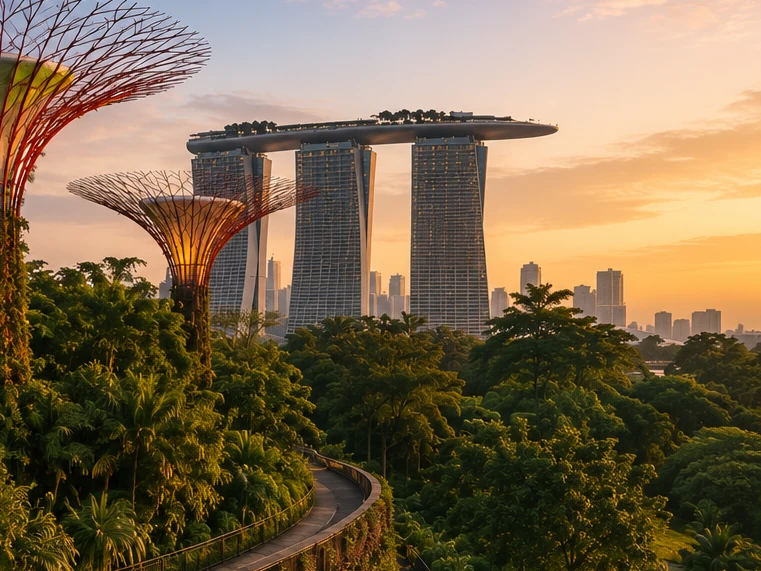
Představte si, že plánujete cestu do Singapuru. Dva měsíce před cestou požádáte ChatGPT o pomoc s itinerářem. ChatGPT už z dřívějšího plánování cest ví, že vás baví fotografování divoké přírody, preferujete hotely se silnou klimatizací a dáte přednost klidné večeři před přeplněným barem.

GPT-5.2 Instant
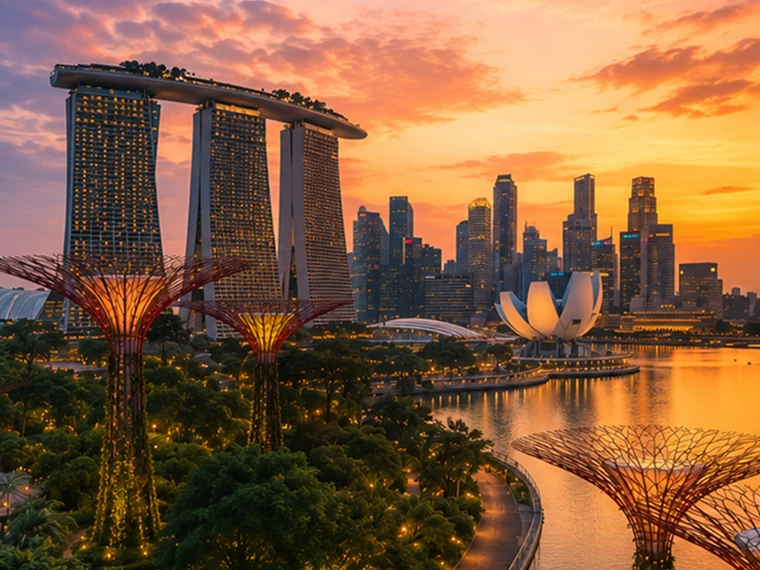
Help me plan a trip to Singapore. I'm going to be there for a work trip in July and will have a few days free at the end.

Great add-on city for a work trip: Singapore is compact, safe, excellent for solo exploring, and easy to do in 2–4 free days. July is hot and humid; expect daytime highs around 31–33°C / 88–91°F, warm nights, and sudden rain, so plan outdoor time early morning or after 5 p.m. and keep midday for museums, malls, cafés, or hotel downtime. Singapore’s official weather service notes typical daily highs of 31–33°C and lows of 23–25°C. (Singapore Weather Service(otevře se v novém okně))

memory-preferences-without

A strong 3-day plan

Day 1: Marina Bay, Gardens, and skyline

Start late afternoon at Marina Bay and walk the waterfront: Merlion Park, Helix Bridge, ArtScience Museum exterior, then into Gardens by the Bay. Book Cloud Forest, Flower Dome, and either the OCBC Skyway or Supertree Observatory if views matter to you. Gardens by the Bay lists Cloud Forest and Flower Dome as open daily 9 a.m.–9 p.m.; Supertree Observatory is also listed as 9 a.m.–9 p.m. with last admission at 8:30 p.m., but check maintenance closures before booking. (Gardens by the Bay(otevře se v novém okně))

Evening: stay for the Supertree light show area, then dinner at Lau Pa Sat for an easy first-night hawker experience near the CBD. It has 80+ stalls and local staples like satay, laksa, nasi lemak, bak kut teh, kaya toast, and char kway teow. (Laupasat(otevře se v novém okně))

Day 2: Culture neighborhoods and food

Morning: Chinatown. Visit Buddha Tooth Relic Temple, walk the shophouse streets, and eat at Maxwell Food Centre or Chinatown Complex Food Centre. Visit Singapore lists Maxwell, Chinatown Complex, Old Airport Road, Tiong Bahru Market, Newton, and others among popular hawker centres. (Visit Singapore(otevře se v novém okně))

Afternoon: Kampong Glam and Haji Lane for Sultan Mosque, murals, boutiques, and cafés. Then head to Little India around golden hour for temples, flower garlands, Tekka Centre, and dinner.

Evening: either cocktails around Ann Siang / Club Street, or keep it low-key with a night walk along the Singapore River: Boat Quay to Clarke Quay to Robertson Quay.

Day 3: Nature or beach day

Pick one based on your energy.

For nature: do Singapore Botanic Gardens early, then the National Orchid Garden, followed by lunch in Dempsey Hill or Tiong Bahru. This is the best “green Singapore” day without leaving the city.

For beach/resort mode: go to Sentosa. Choose the southern beaches, Fort Siloso Skywalk, or a beach club. I would skip trying to do every Sentosa attraction unless you love theme parks.

For local food focus: do Tiong Bahru Market for breakfast, National Gallery Singapore midday, then Old Airport Road Food Centre for dinner. The official events page also shows exhibitions and cultural events, so it is worth checking once your exact July dates are fixed. (Visit Singapore(otevře se v novém okně))

Best places to stay after the work part

Marina Bay / CBD is easiest if you want polished, walkable, skyline-heavy Singapore and minimal transit.

Chinatown / Telok Ayer / Tanjong Pagar is my top pick for a few free days: great food, MRT access, heritage streets, cocktail bars, and close to work districts.

Bugis / Kampong Glam is better if you want boutique hotels, cafés, street art, and a slightly more relaxed neighborhood feel.

Orchard is convenient for shopping and rainy-day malls, but less atmospheric.

What to book ahead

Book Gardens by the Bay conservatories/Skyway, any special restaurants, and possibly a cocktail bar. For hawker centres, do not over-plan; just go hungry, carry tissues or wet wipes, and be ready to share tables.

July packing notes

Bring breathable work clothes, comfortable walking shoes, a small umbrella, and a light layer for aggressive air-conditioning. I would also plan one “rain-flexible” indoor block each day, because showers can arrive suddenly even when the forecast looks fine.

My suggested balance: Day 1 Marina Bay/Gardens, Day 2 Chinatown–Kampong Glam–Little India, Day 3 Botanic Gardens or Sentosa. That gives you the Singapore highlights without turning your post-work break into another work project.

Model vytváří obecnou odpověď, která je více turistická, nepomáhá s rezervací hotelu a do značné míry ignoruje zájmy uživatele.

GPT-5.3 Instant
Help me plan a trip to Singapore. I'm going to be there for a work trip in July and will have a few days free at the end.

I’ll build this around your known constraints: a few free days after work, hot/humid July weather, wildlife/photography/nature bias, strong AC needs for sleep, and good but not overly social dining. I’ll verify current July logistics and then give a practical short itinerary rather than a generic Singapore list.

memory-preferences-with

Here’s how I’d structure it: 2–3 free days, mostly nature / wildlife / photography, with heat-managed mornings and AC breaks. July is hot and humid: Singapore’s July long-term stats are about 31.4°C / 88.5°F average daily max, 25.4°C / 77.7°F min, 146.6 mm rain, and 14 rain days, so outdoor plans should be early morning or evening, not midday. (National Environment Agency(otevře se v novém okně))

Best plan for 3 free days

Day 1 — Gardens by the Bay + Marina Bay, low-friction

Morning: Cloud Forest + Flower Dome. This is the obvious “touristy” pick, but it fits you well because it’s visually interesting, good for photography, and climate-controlled. Gardens by the Bay lists Cloud Forest and Flower Dome-type attractions running 9:00am–9:00pm, and Cloud Forest currently has the Jurassic World experience listed as ongoing. (Gardens by the Bay(otevře se v novém okně))

Late afternoon / evening: Supertree Grove + Borealis / light show. Gardens currently lists Borealis every Sat, Sun & Mon, 8:00–8:30pm at Supertree Grove, so try to align this with one of those nights. (Gardens by the Bay(otevře se v novém okně))

Dinner: do something easy nearby: Marina Bay / Tanjong Pagar / Telok Ayer. For you, I’d prioritize reservation-based restaurants with real tables over hawker centers on the first night, because you dislike cramped solo seating.

Day 2 — Mandai wildlife day

Morning to afternoon: Bird Paradise + River Wonders. Bird Paradise is probably the best fit photographically; River Wonders is less “wildlife photography” and more controlled exhibits, but it pairs well logistically. River Wonders is listed as daily 9:00am–6:00pm, last entry 5:00pm. (Mandai Wildlife Reserve(otevře se v novém okně))

Evening: Night Safari. This is the rare Singapore attraction that is genuinely better at night and avoids the worst heat. Night Safari is listed as daily 6:00pm–12:00am, last entry 11:15pm, with tram plus walking trails and over 900 nocturnal animals. (Mandai Wildlife Reserve(otevře se v novém okně))

This is a full day. I would not add Singapore Zoo unless you have 4 free days; Mandai can become exhausting fast.

Day 3 — Nature reserve / macro-ish walking + food

Early morning: Singapore Botanic Gardens or MacRitchie / Windsor Nature Park. For a few free days, Botanic Gardens is the safer pick: easier transport, less sweaty, better bailout options, and more consistent casual photography. MacRitchie / Windsor is better if you want more actual forest, but it is hotter, sweatier, and less predictable.

Midday: AC break.

Late afternoon: Joo Chiat / Katong or Chinatown / Telok Ayer for walking, architecture, coffee, and dinner. This gives you a different texture from Marina Bay without turning the day into a logistics project.

My ranking for you

  1. Cloud Forest / Gardens by the Bay — best combination of photogenic, iconic, heat-managed.
  2. Bird Paradise + Night Safari — best wildlife-focused day.
  3. Botanic Gardens early morning — best low-stress outdoor nature.
  4. Joo Chiat / Katong — best neighborhood walk.
  5. Hawker centers — worth doing, but not ideal for your seating preferences unless timed off-peak.

What I’d avoid or deprioritize

I would skip Sentosa unless you specifically want beach/resort stuff. I would also skip a packed “greatest hits” day of Merlion / Orchard / Little India / Chinatown / Clarke Quay; it’s inefficient and hot. For you, the trip will be better if each day has one strong anchor plus one easy evening plan.

Hotel / sleep note

Since this is a work trip, your hotel may be fixed. If you can choose or extend at the same hotel, the hard gate is still AC. Singapore hotels are generally AC-heavy, but your requirement is unusually strict.

One thing I need to make this concrete

Send the exact free dates and whether your work hotel is fixed. Then I’d turn this into a day-by-day plan with restaurant targets and a hotel/AC callout.

Model vytváří odpověď přizpůsobenou zájmům uživatele o fotografování divoké přírody, klidné večeře a jeho prioritám při rezervaci hotelu.

GPT‑5.2 Instant nakonec na otázku odpoví, ale ve snaze vysvětlit své bezpečnostní hranice začne dlouhým úvodem o tom, s čím nemůže pomoci. GPT‑5.3 Instant se naopak věnuje přímo odpovědi.

Preference mohou mít několik podob:

  1. Pokyny, jak má ChatGPT odpovídat („už nezmiňuj Stana“).
  2. Vaše osobní preference nebo omezení („Jsem vegetarián“)
  3. Implicitní preference, které určují, co je pro vás relevantní („Bydlím poblíž San Franciska“ → místní možnosti by měly být přizpůsobeny této oblasti)

Při vývoji nového systému paměti jsme zlepšili schopnost ChatGPT uplatňovat relevantní preference z minulých konverzací. Na výše uvedeném příkladu „Jsem vegetarián“ můžeme vyhodnotit, zda model správně využívá paměť k vytvoření možností stravování vhodných pro vegetariány, když vegetariánský uživatel požádá o návrhy na přípravu jídel.

Udržování aktuálnosti v čase

Čas se nezastaví, když váš chat skončí.

Tradiční systémy paměti mohou zastarávat. Například ChatGPT řeknete: „Jsem v Singapuru a potřebuji doporučení na dnešní večeři.“ Pak čas plyne, vaše cesta skončí a vy se divíte, proč si ChatGPT stále myslí, že jste v Singapuru.

S dreamingem se vzpomínky automaticky aktualizují, jak plyne čas. ChatGPT díky tomu po skončení cesty upraví paměť z „V červenci jedete do Singapuru“ na „V červenci 2026 jste byli v Singapuru“. Když se pak vrátíte domů, ChatGPT vám může znovu poskytovat doporučení přizpůsobená místu vašeho bydliště a časovému pásmu.

GPT-5.2 Instant

Help me find something for take-out tonight that's still open.

It’s about 5:19 AM Sunday in Singapore, so your safest take-out/delivery bets are 24-hour places.

Best bets right now:

  1. McDelivery / McDonald’s Singapore — easiest islandwide option; McDonald’s says McDelivery is available 24 hours, 7 days a week. Breakfast menu should be on now. (McDonald's Singapore(otevře se v novém okně))
  2. Srisun Express — good for prata, Indian Muslim food, local comfort food; their site says they’re halal-certified and open 24/7. (Sri Sun Express(otevře se v novém okně))
  3. 89.7 Supper Club — good if you’re near Changi Village or Geylang East; their outlets page says both locations are open 24 hours, 7 days a week. (89.7 Supper Club(otevře se v novém okně))
  4. 126 Dim Sum Wen Dao Shi — worth checking on GrabFood/foodpanda if you’re in the East; a 2025 guide says it runs till 5:30 AM on weekdays and round-the-clock on weekends. Since it’s Sunday morning, it may still be available. (Eatbook(otevře se v novém okně))
  5. Prata around Geylang / Serangoon / Bedok / Jalan Kayu — look in GrabFood or Google Maps for “prata open now”; guides list multiple 24-hour prata/supper spots, including Mufiz Prata Corner and RK Eating House. (Eatbook(otevře se v novém okně))

For the fastest path: open GrabFood / foodpanda / Deliveroo, set filter to Open now, then search “prata,” “McDonald’s,” “Srisun,” “89.7,” “dim sum,” or “nasi lemak.” If you tell me your neighborhood or nearest MRT, I’ll narrow it to specific nearby places.

Model si myslí, že uživatel je stále v Singapuru.

GPT-5.3 Instant

Help me find something for take-out tonight that's still open.

I’ll use Portola Valley / Ladera as the starting point and prioritize places that are plausibly open for takeout tonight, then narrow to low-friction options rather than a huge list.

For tonight, Saturday May 30, near Ladera / Portola Valley, I’d start here:

  1. Alpine Inn — safest casual pickup option. Open Saturday until 9:30 pm and has Order Takeout on its site. Good for burgers / tavern food. (Rossotti's Alpine Inn(otevře se v novém okně))
  2. Taverna Portola Valley — nearby at Ladera Country Shopper; open daily, Saturday dinner until 9:00 pm. Better if you want Greek / Mediterranean. (TAVERNA Portola Valley(otevře se v novém okně))
  3. Portola Bistro — also nearby; Saturday dinner until 9:30 pm. Good option for Italian / Mediterranean / pizza-ish dinner. (Portola Bistro -(otevře se v novém okně))
  4. Amigos Grill — Mexican, very close in Ladera Country Shopper. Official site says call to order at 650-851-3997; DoorDash / order.online lists pickup/delivery ordering until 8:40 pm. (Amigos Grill(otevře se v novém okně))
  5. State of Mind Slice House, Palo Alto — best fallback if you want pizza and can drive farther; Friday–Saturday hours are 11 am–10 pm. (State of Mind Slice House(otevře se v novém okně))

My pick: Alpine Inn for easiest local takeout, Taverna if you want something less heavy, State of Mind if it’s later and you want the most reliable post-9 pm option.

Model poskytuje odpovědi, které jsou relevantní pro místo bydliště uživatele.

GPT‑5.2 Instant nakonec na otázku odpoví, ale ve snaze vysvětlit své bezpečnostní hranice začne dlouhým úvodem o tom, s čím nemůže pomoci. GPT‑5.3 Instant se naopak věnuje přímo odpovědi.

V našich vyhodnoceních paměti měříme, zda ChatGPT dokáže správně reagovat na prompty, u nichž plynutí času podstatně ovlivňuje správnou odpověď nebo doporučení. Dreaming v této oblasti přináší výrazné zlepšení:

Škálovatelnější základ pro budoucnost

Naším posláním v OpenAI je zajistit, aby obecná umělá inteligence byla prospěšná celému lidstvu.

Ačkoli je paměť založená na dreamingu už nějakou dobu dostupná uživatelům plánů Plus a Pro, teprve nyní můžeme nabídnout verzi, která splňuje naše kvalitativní požadavky a je prakticky provozovatelná ve velkém měřítku, i uživatelům plánu Free. Nedávná zlepšení snížila výpočetní nároky na poskytování dreamingu uživatelům plánu Free přibližně 5×, takže můžeme v nadcházejících týdnech začít dreaming zpřístupňovat uživatelům plánu Free a zvýšit kapacitu paměti pro uživatele plánů Plus a Pro.

Do budoucna nám dreaming poskytuje společný základ paměti pro všechny uživatele. Tato aktualizace představuje náš dosud nejvýkonnější systém paměti, který budeme dál zlepšovat.

Další informace o této verzi a uživatelských ovládacích prvcích paměti najdete v našich častých dotazech k paměti(otevře se v novém okně).


Autor

OpenAI