Rosalind
Att koppla samman banbrytande AI och vetenskapliga verktyg för att främja livsvetenskaperna.
Används av ledande innovatörer inom livsvetenskap
Rosalind är OpenAI:s varumärke inom biovetenskap, som gör modellen GPT‑Rosalind tillgänglig för forskare via Rosalind Workbench, en samordnad arbetsmiljö som syftar till att påskynda vetenskaplig forskning.
GPT‑Rosalind: Avancerad modellintelligens för livsvetenskap
Utforska vetenskapliga frågor med GPT‑Rosalind, en modell som är särskilt utvecklad för forskning inom biovetenskap, och som nu erbjuder utökad tillgång för behöriga organisationer som bedriver specialiserad forskning inom biovetenskap.


Använd GPT‑Rosalind i Codex
Använd Codex för att koppla samman dina vetenskapliga verktyg, data och underlag och skapa forskningsflöden som ditt team kan granska, dela och återanvända.
Testat på forskningsuppgifter inom biovetenskap
- 53,7 %
Genebench
ökning i prestanda per token
- 18,0 %
Medchem Bench
ökning i prestanda per token
- 19,6 %
Labworkbench
ökning i prestanda per token
- 4,42 %
LifeSci Bench
ökning i prestanda per token
Rosalind ger varje forskare möjlighet att bli sitt eget forskningsteam
Kom igång med Rosalind Workbench: ladda ner det, öppna det i Codex eller bygg med GPT‑Rosalind API.

Kom igång med Rosalind Workbench
Passar bäst för forskare som ännu inte har Codex installerat. Besök den särskilda nedladdningssidan för att komma igång med ChatGPT Rosalind och börja din forskning.

Rosalind Workbench i Codex
Bäst för forskare som redan använder Codex. Öppna Rosalind Workbench direkt i Codex och kom igång med din forskning direkt.

GPT-Rosalind API
Perfekt för att integrera specialiserat resonemang inom biovetenskap i dina egna forskningsapplikationer, interna verktyg och reglerade arbetsflöden.
Rosalind Workbench finns för närvarande i en forskningsförhandsversion och består av en samordnad uppsättning vetenskapliga verktyg som är sammanlänkade i en enda arbetsyta för att stödja dina vetenskapliga arbetsflöden.
Tillgång till GPT‑Rosalind API förutsätter en bedömning av behörighet och godkännande från organisationen.
Utvecklad för arbetsflödet inom livsvetenskaplig forskning
Börja med guidad sekvensanalys i Rosalind Workbench och utforska mer omfattande forskningsuppgifter med hjälp av integrerade vetenskapliga verktyg – från granskning av forskningsresultat till planering av nästa experiment.
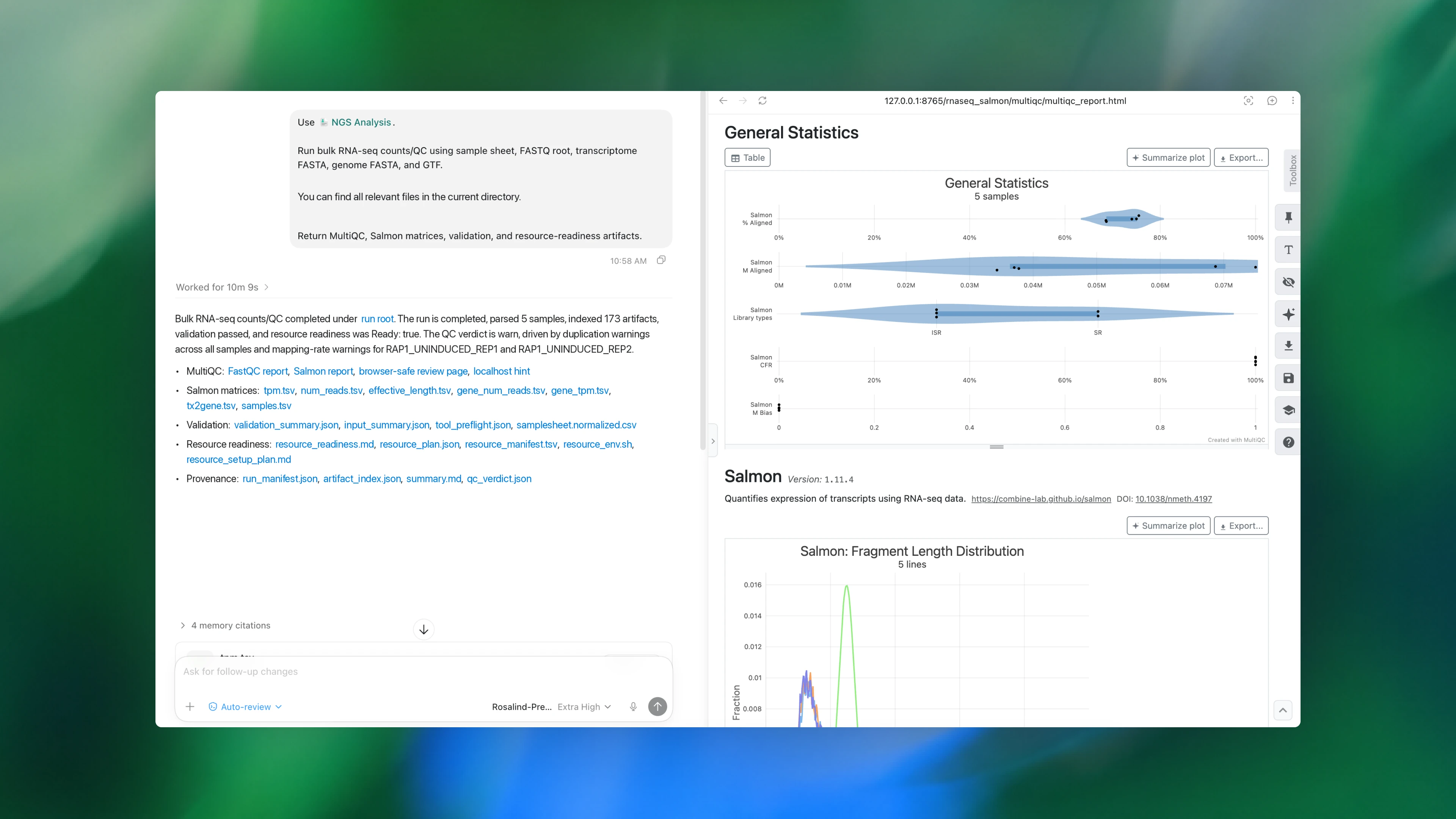
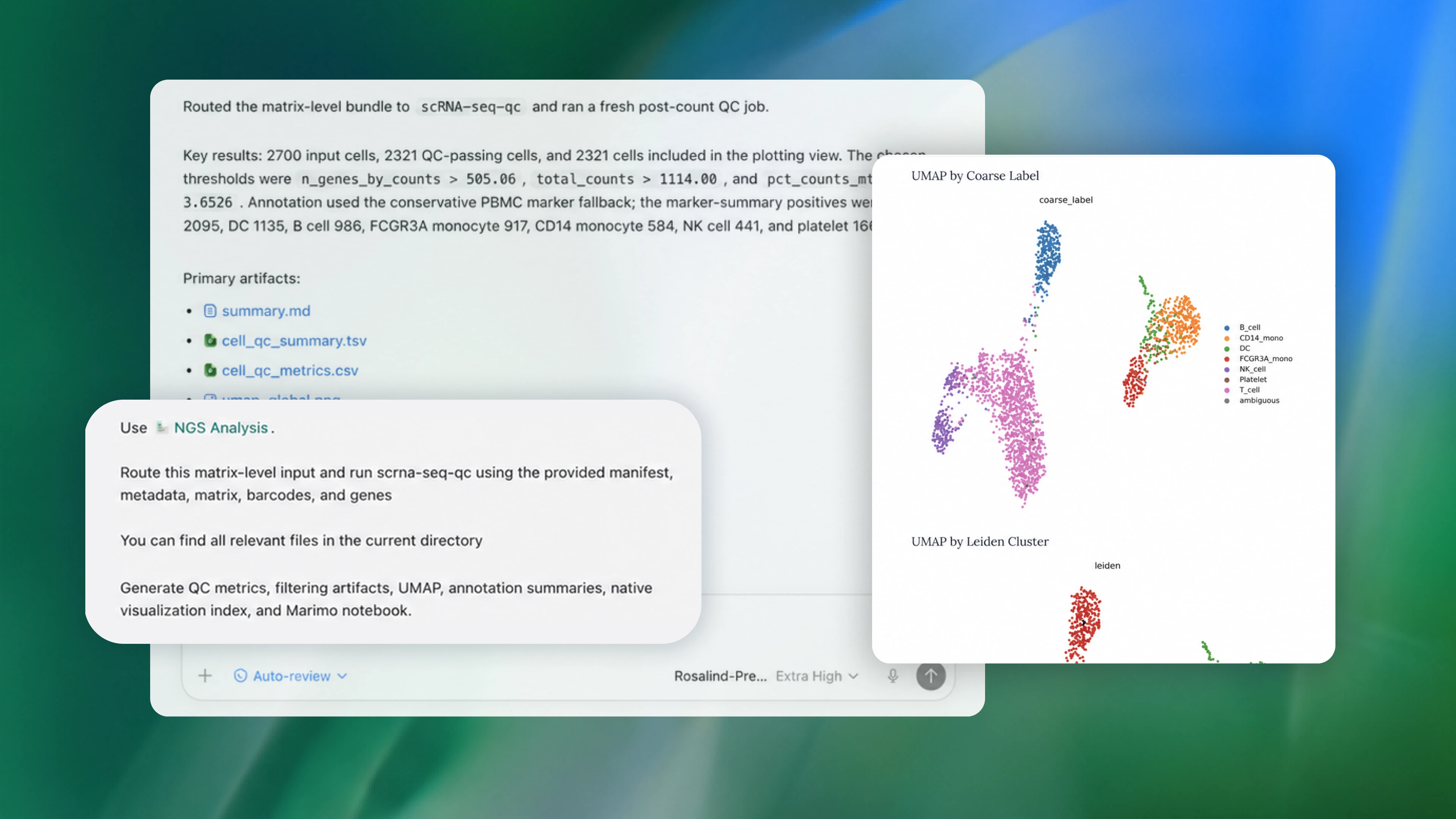
Analysera sekvenseringsdata
Importera sekvenseringsfiler och provinformation till ett NGS-arbetsflöde. Kontrollera indata, godkänn analysplanen, följ analysförloppet och granska kvalitetskontrollmått samt sparade resultat innan du väljer nästa biologiska frågeställning.
Syntetisera vetenskaplig evidens
Samla vetenskapliga artiklar, tillförlitliga biologiska data och dina egna resultat. Se var bevisen stämmer överens, upptäck vad som saknas och bestäm vilken biologisk fråga eller vilket experiment du ska undersöka härnäst.
Välj lovande biologiska mål
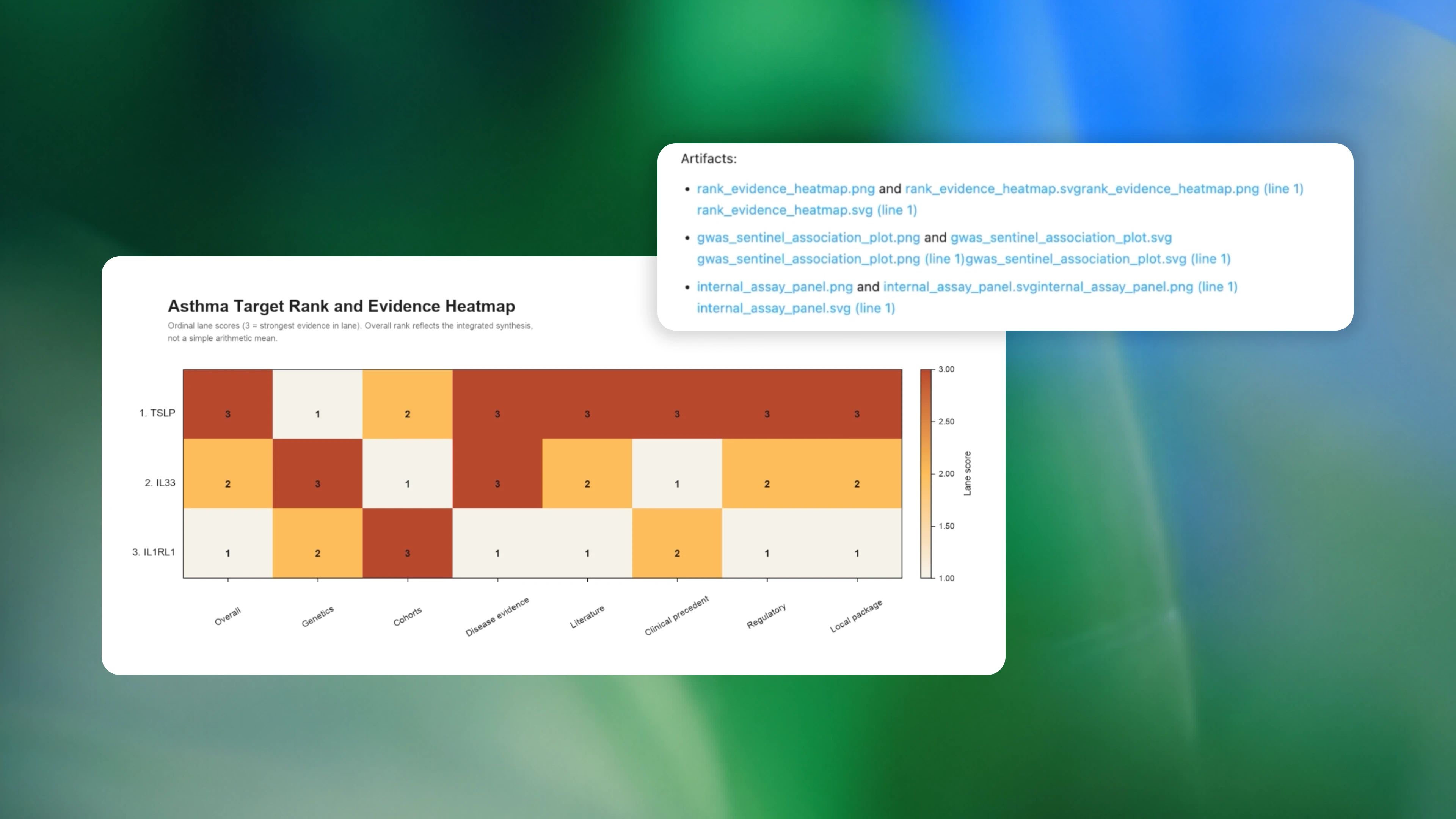
Väg samman genetik, genuttryck, signalvägar och sjukdomsevidens för att jämföra kandidatmål, förklara motiveringen och identifiera var ytterligare validering behövs.
Förstå proteiner och varianter
Utforska sekvenser, aligneringar och strukturer sida vid sida. Se hur varianter kan påverka proteinets funktion eller interaktioner, granska bevisen och välj nästa experiment som ska genomföras.
Jämför molekylära kandidater
Jämför molekylära egenskaper, struktur–aktivitetssamband och publicerade resultat för att bedöma möjliga avvägningar och fastställa nästa steg i forskningen.
Planera och förfina experiment
Omvandla de granskade resultaten till testbara hypoteser och uppföljningsplaner. Gå igenom kontrollrutinerna, felsök protokollen och kartlägg antaganden och begränsningar innan arbetet tas tillbaka till laboratoriet.
Vad våra partner säger



Stärker biologisk beredskap
Rosalind Biodefense stödjer betrodda utvecklare och folkhälsoteam som bygger defensiva tillämpningar med GPT‑Rosalind. Fokusområden omfattar tidig upptäckt, beredskap, diagnostik, respons och medicinska motåtgärder.