Acelerando descobertas científicas com o ChatGPT para Pesquisadores Acadêmicos
Estamos colocando nossos modelos de fronteira e ferramentas nas mãos de 100 mil cientistas, matemáticos e engenheiros, sem nenhum custo.
Atualização de 10 de agosto de 2026: Quem se inscrever a partir de agora entrará em uma lista de espera enquanto analisamos as mais de 13.000 inscrições da primeira rodada — que correspondem a até 65.000 vagas para pesquisadores — e selecionamos, por meio de um sorteio entre os candidatos elegíveis, os 10.000 participantes do grupo inicial. Quem não for selecionado para esse grupo continuará elegível para futuras rodadas de seleção quando as inscrições forem reabertas mais adiante neste segundo semestre. Assim, poderemos nos concentrar em apoiar o primeiro grupo de pesquisadores conforme expandimos o programa.
Acreditamos que os benefícios da IA de ponta não devem ficar concentrados em poucas empresas e laboratórios com muitos recursos. O progresso científico depende de pesquisadores que façam as perguntas certas, testem novas ideias e avancem com base nas descobertas de outros. Nosso papel é colocar ferramentas poderosas nas mãos desses pesquisadores e trabalhar com eles para desenvolver modelos que acelerem suas pesquisas, sem que percam o controle.
Estamos lançando o ChatGPT para pesquisadores acadêmicos, um programa que oferecerá a 100.000 pesquisadores de instituições acadêmicas selecionadas acesso gratuito aos nossos modelos de ponta. O programa ajudará pesquisadores das áreas de ciências, matemática e engenharia a enfrentar problemas avançados, acelerar descobertas e aumentar a produtividade, desde a preparação de propostas de financiamento até o teste de hipóteses.
Começaremos com 10 mil pesquisadores neste verão, e o acesso já está disponível em instituições como o Institute for Advanced Study (IAS) e a École normale supérieure (ENS). Planejamos expandir o programa para 100 mil pesquisadores até 2027. Os participantes terão acesso aos nossos modelos de fronteira, incluindo o GPT‑5.6 Sol Pro no lançamento, e poderão convidar até quatro colaboradores de sua instituição. Os ambientes de trabalho seguros incluem proteções de privacidade e segurança de nível empresarial e, por padrão, os dados não são usados para treinar nossos modelos. Os pesquisadores podem usar ferramentas e habilidades em atividades que vão da análise genômica e modelagem de proteínas a revisões de literatura, redação de solicitações de financiamento e publicação.
O programa também inclui treinamento, suporte prático e oportunidades para aprender com outros pesquisadores e compartilhar feedback conosco.
Para instituições que usam o ChatGPT Edu, o acesso gratuito concedido por este programa será coordenado pelo ambiente de trabalho seguro da instituição. Saiba mais sobre o ChatGPT Edu e como a OpenAI apoia o ensino superior.
O ChatGPT para Pesquisadores Acadêmicos faz parte de um compromisso de mais de US$ 250 milhões até 2027 para apoiar pesquisas científicas externas e novas descobertas. Isso inclui a NextGenAI, nossa iniciativa de US$ 50 milhões para apoiar instituições de pesquisa, e nosso trabalho com a Genesis Mission do Departamento de Energia dos EUA para levar IA de ponta a pesquisadores de laboratórios nacionais e universidades. Em conjunto, essas iniciativas refletem nossa convicção de que o progresso científico se acelera quando mais pesquisadores têm as ferramentas necessárias para desenvolver suas próprias ideias.
A IA está se tornando uma ferramenta de pesquisa mais avançada em um ritmo mais rápido do que muitos esperavam. A cada semana, cerca de 1,3 milhão de pessoas usam o ChatGPT para ciências e matemática avançadas, gerando aproximadamente 8,4 milhões de mensagens.
Essa mudança é especialmente evidente na matemática. Nos últimos seis meses, a IA deixou de ser usada ocasionalmente em problemas isolados e passou a fazer parte da pesquisa matemática com mais regularidade. Um número cada vez maior de artigos reconhece a contribuição do ChatGPT, refletindo a rapidez com que os pesquisadores estão incorporando essas ferramentas ao trabalho.
* Mês incompleto; o índice de texto completo abrange atualmente até 21 de julho.
Os pesquisadores usam o ChatGPT e o Codex em praticamente todas as etapas do trabalho científico. O ChatGPT ajuda pesquisadores a analisar ideias, adquirir conhecimento, formular hipóteses e comunicar suas descobertas. O Codex auxilia na execução de pesquisas e em análises formais, incluindo a escrita de código e a análise de resultados.
Participação das solicitações de pesquisa científica por categoria do fluxo de trabalho científico e produto, de 21 de junho a 20 de julho de 2026
Esses padrões já aparecem nas pesquisas. O físico Rogerio Jorge e sua equipe estão usando IA para desenvolver um software de código aberto para pesquisas sobre fusão, usado pela indústria e por laboratórios nacionais para projetar dispositivos de energia de fusão. Na ciência da computação teórica, os pesquisadores Barna Saha, Yinzhan Xu e Christopher Ye usaram o GPT‑5.5 Pro para elaborar uma prova que estabelece novos limites para a eficiência com que computadores resolvem problemas de geometria de alta dimensão. Depois, eles próprios validaram e aprimoraram os resultados.
Os pesquisadores que usam essas ferramentas com mais intensidade também estão assumindo trabalhos mais ambiciosos. Os 20% que mais usam IA em suas áreas têm quase o dobro da probabilidade de pedir à IA que realize tarefas com duração estimada de quatro horas ou mais: quase 7% de suas solicitações, ante 3,5% entre os demais pesquisadores da mesma área.
Participação das solicitações científicas por tempo estimado de trabalho humano ativo e intensidade de uso de IA pelos cientistas, de 21 de junho a 20 de julho de 2026
Nossa estratégia não é decidir quais problemas científicos merecem atenção nem tentar resolver todos eles por conta própria. É colocar ferramentas avançadas nas mãos da comunidade científica e permitir que os pesquisadores se dediquem às questões que conhecem melhor.
Os participantes receberão acesso gratuito aos nossos modelos de fronteira no ChatGPT, ChatGPT Work e Codex, incluindo a família de modelos GPT‑5.6 no lançamento. Eles também terão mais acesso à pesquisa aprofundada, limites de uso maiores e janelas de contexto mais amplas. Em conjunto, esses recursos apoiam o raciocínio científico, a execução com agentes de IA e fluxos de trabalho de pesquisa em diversas áreas.
O GPT‑5.6 Terra equilibra capacidade e eficiência nas pesquisas cotidianas, o GPT‑5.6 Luna oferece respostas mais rápidas para tarefas mais simples e o GPT‑5.6 Sol enfrenta os problemas científicos e matemáticos mais difíceis. No FrontierMath Tier 4, que avalia o raciocínio matemático em nível de pesquisa, o GPT‑5.6 Sol alcança 83%, em comparação com 72,5% do GPT‑5.5. No GeneBench Pro, que avalia a análise de dados biológicos complexos e o raciocínio científico, o GPT‑5.6 Sol Pro resolve 31,5% das tarefas.
Os pesquisadores podem usar mais de 75 habilidades de ciências da vida(abre em uma nova janela) que abrangem genética, genômica, sequenciamento, análise de célula única, modelagem de proteínas e descoberta de medicamentos. Os conectores apoiam pesquisas em diversas áreas, oferecendo acesso a literatura científica, bancos de dados públicos de genômica e dados clínicos, imagens de satélite, notebooks computacionais, plataformas de dados e gerenciadores de referências.
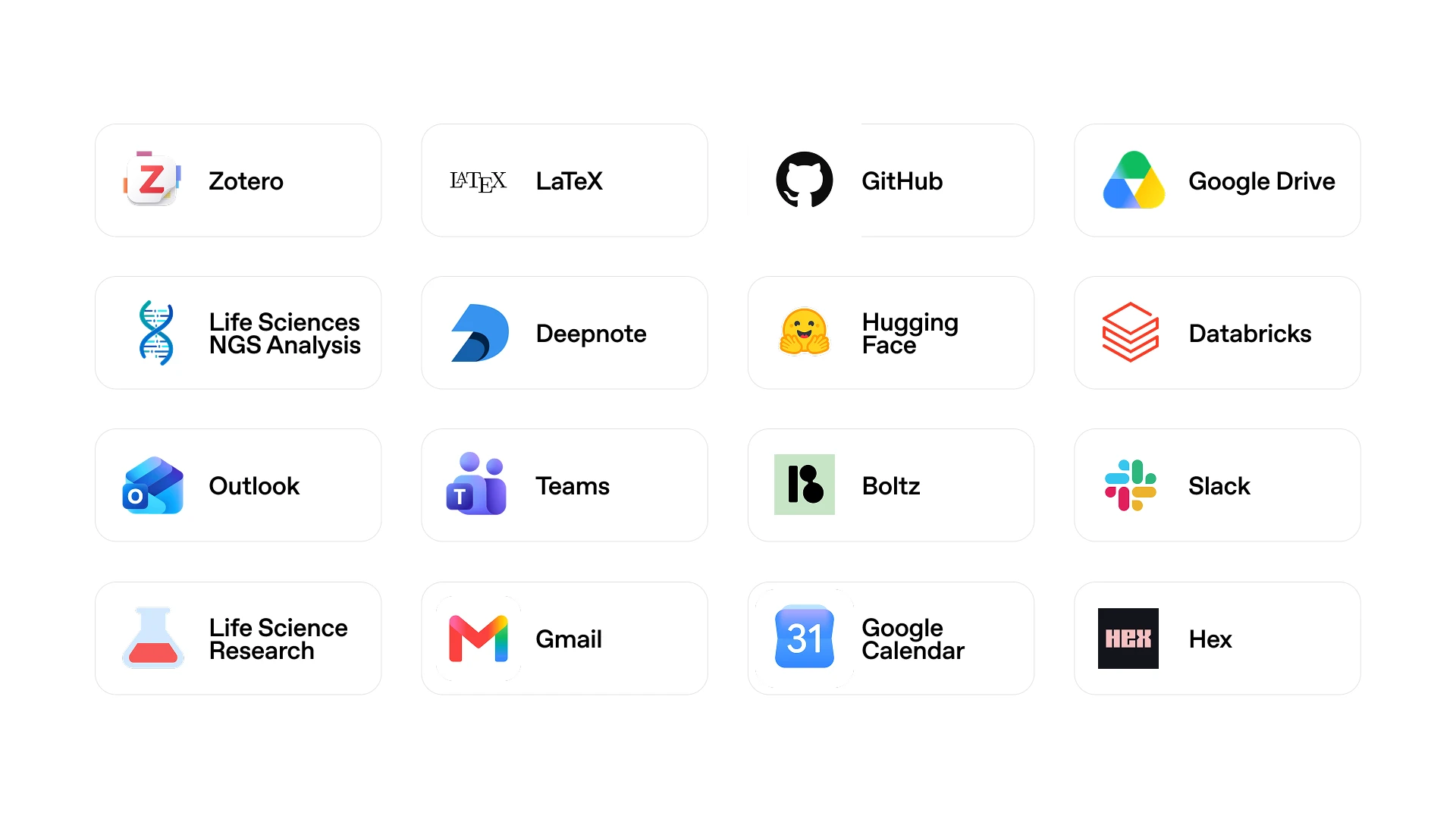
Exemplos representativos de habilidades, conectores e ferramentas disponíveis no ChatGPT e no Codex.
O Codex pode ajudar a escrever e depurar código, analisar conjuntos de dados e criar fluxos de trabalho reproduzíveis. O ChatGPT Work pode apoiar projetos mais longos, como encontrar oportunidades de financiamento, preparar solicitações de financiamento, revisar a literatura, redigir manuscritos e criar materiais para comunicar resultados.
Os pesquisadores terão diferentes níveis de familiaridade com a IA. Alguns podem estar usando essas ferramentas pela primeira vez; outros podem estar desenvolvendo aplicações avançadas em suas áreas.
O programa oferecerá treinamentos adaptados a diferentes níveis de experiência, desde os primeiros passos e o aprimoramento dos fluxos de trabalho até aplicações avançadas em pesquisa. Os participantes terão acesso a especialistas familiarizados com fluxos de trabalho de pesquisa, inclusive para ajudar a integrar essas ferramentas ao trabalho.
À medida que acompanharmos as descobertas dos pesquisadores, planejamos criar mais oportunidades para que compartilhem abordagens práticas, aprendam uns com os outros e destaquem aplicações em diversas áreas. O feedback deles nos ajudará a entender onde nossos modelos são úteis, onde deixam a desejar e como torná-los mais valiosos para a comunidade científica.
O programa inicial está aberto a pesquisadores qualificados de instituições acadêmicas selecionadas. As instituições qualificadas(abre em uma nova janela) devem ser faculdades ou universidades reconhecidas, autorizadas a conceder diplomas e com alto nível de atividade de pesquisa.
Os candidatos precisarão confirmar seu vínculo institucional e fornecer informações sobre suas pesquisas em andamento e o uso científico pretendido. Os pesquisadores aprovados poderão convidar até quatro colaboradores de sua instituição. Cada colaborador também deverá confirmar seu vínculo e será contabilizado no número total de contas do programa.
As inscrições estão abertas a partir de hoje. Consulte os critérios de qualificação e inscreva-se aqui(abre em uma nova janela).