Etter hvert som vi har skalert Codex og ChatGPT for Work til millioner av mennesker over hele verden, har vi lært hva som skal til for at agenter som kjører over lang tid, skal fungere godt i praksis. Nyttige agenter trenger et kraftig rammeverk som håndterer kontekst, bruker verktøy effektivt og koordinerer underagenter. De trenger også infrastruktur som holder dem stabilt i gang i flere dager, med miljøer der de kan arbeide med filer, kjøre kode og lagre mellomresultater.
I dag lanserer vi Agents API(åpnes i et nytt vindu) i offentlig betaversjon. Det gir utviklere tilgang til det samme rammeverket og den samme infrastrukturen som driver Codex, gjennom et enkelt og fleksibelt API.
Med Agents API kan du opprette en produksjonsklar agent med ett enkelt API-kall ved å angi oppgaven, modellen, verktøyene og miljøet:
OpenAI drifter og vedlikeholder rammeverket. Du velger agentens kjøremiljø: en sandkasse administrert av OpenAI, din egen infrastruktur eller en av sandkassepartnerne våre. Agents API gir deg et solid grunnlag for å bygge agenter på det optimaliserte agentrammeverket og infrastrukturen vår, slik at du kan konsentrere deg om verktøyene, kunnskapen og arbeidsflytene som gjør agenten din unik.
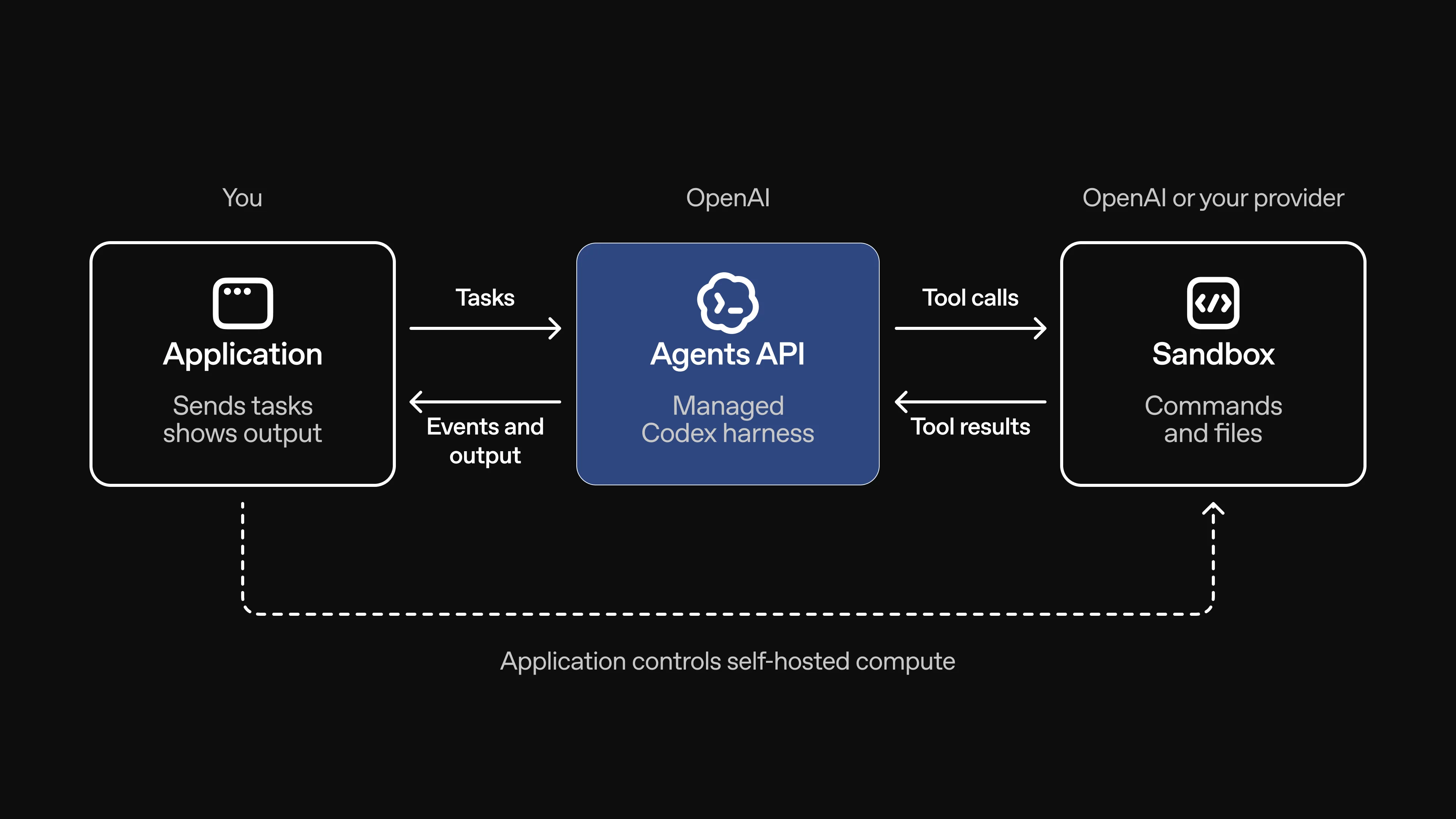
Agents API gir agentene dine det samme rammeverket og den samme infrastrukturen som driver Codex.
Ulike arbeidsbelastninger krever ulike alternativer for databehandling, lagring og distribusjon. Med Agents API kan du velge en sandkasse som passer til applikasjonen din.
Vi samarbeider med leverandører i økosystemet(åpnes i et nytt vindu), blant annet Blaxel, Cloudflare, Daytona, DigitalOcean, E2B, Modal, Oracle, Runloop og Vercel, for å tilby førsteklasses integrasjoner til ulike behov:
Fullt administrerte miljøer eller distribusjon i ditt eget VPC
Særskilte mekanismer for lagring av filer og hemmeligheter
Ulike konfigurasjoner av CPU, GPU og minne, med ytelse, kaldstart og kostnadsprofiler tilpasset bedriftens arbeidsflyt.
Agents API tilbyr førsteklasses integrasjoner med populære leverandører i økosystemet.
For utviklere som vil komme raskt i gang og skalere effektivt, lanserer vi også en sandkasse driftet av OpenAI(åpnes i et nytt vindu). Den bruker den samme sandkasseinfrastrukturen som driver Codex og ChatGPT.
OpenAI klargjør og administrerer sandkassen, slik at agenten får et sikkert miljø med høy ytelse der den kan kjøre kode, arbeide med filer og produsere artefakter. Disse sandkassene kan konfigureres fleksibelt med filene, pakkene, ferdighetene og programtilleggene dine, slik at agenten får det den trenger for å fullføre oppgaven.
For å dra nytte av nye modellegenskaper må rammeverket ofte bygges om, noe som tar verdifull tid bort fra arbeidet med å forbedre applikasjonen. Agents API gir versjonert tilgang til disse egenskapene ved hver modellansering. Vi vedlikeholder og forbedrer rammeverket kontinuerlig sammen med modellene våre, slik at agentene dine får bedre ytelse ved hver oppgradering. Nylige forbedringer av rammeverket omfatter for eksempel:
For å støtte modeller som arbeider i timevis, har vi utviklet konteksthåndtering som hjelper agenter med å ta med relevant informasjon videre gjennom lengre økter. Agents API komprimerer automatisk(åpnes i et nytt vindu) tidligere kontekst når en økt nærmer seg kontekstgrensen, og bevarer informasjonen agenten trenger for å fortsette. Utviklere kan bygge arbeidsflyter som går over flere kontekstvinduer, uten å implementere sin egen logikk for komprimering.
Agents API hjelper agenter med å finne de riktige verktøyene og bruke dem effektivt. Verktøysøk(åpnes i et nytt vindu) laster inn relevante verktøydefinisjoner ved behov. Det reduserer tokenbruk og kostnader samtidig som modellens hurtigbuffer bevares. Når verktøyene er tilgjengelige, kan agenter bruke programmatisk verktøykalling(åpnes i et nytt vindu) til å kjøre kall parallelt, kjede sammen relaterte operasjoner og filtrere eller kombinere resultater i kode. Dermed kan de behandle store datamengder og bare føre relevante resultater tilbake til konteksten. Agents API støtter MCP, egendefinerte funksjoner og innebygde verktøy som nettsøk.
Med støtte for flere agenter(åpnes i et nytt vindu) kan Agents API dele komplekse oppgaver i uavhengige deler og delegere dem til underagenter som arbeider parallelt. Hver underagent beholder sin egen kontekst, slik at den kan holde oppmerksomheten på oppgaven sin, mens hovedagenten koordinerer arbeidet og samler resultatene. Dette kan gjøre forskning, analyse og programmering som egner seg for parallelt arbeid, raskere uten at du må bygge din egen orkestrering.
Agents API drives av Codex-rammeverket med åpen kildekode, slik at utviklere får innsyn i kjernelogikken som koordinerer modellkall, verktøy og kontekst. Med Agents API drifter og vedlikeholder OpenAI dette rammeverket, mens utviklere kan undersøke og lære av den offentlig tilgjengelige kildekoden(åpnes i et nytt vindu).
Agents API er tilgjengelig i offentlig beta for alle utviklere fra og med i dag. Det er ingen ekstra kostnader for å bruke Agents API – du betaler ganske enkelt for tokenene og verktøyene agentene dine bruker, som beskrevet på prissiden vår(åpnes i et nytt vindu).
Utforsk oversikten over Agents API(åpnes i et nytt vindu) for å finne ut mer, eller følg hurtigstartveiledningen(åpnes i et nytt vindu) for å komme i gang og bruke rammeverket bak Codex i dine egne agenter.
I løpet av den offentlige betaversjonen itererer vi raskt basert på tilbakemeldingene dine mens vi jobber mot generell tilgjengelighet. Fortell oss hva som fungerer, hvor du møter på hindringer, og hva du trenger for å bygge og kjøre agentene dine i produksjon.