Introducing ChatGPT for Teens: Built for learning, backed by protections
We’re introducing ChatGPT for Teens, an experience designed to help teens learn, think critically, deepen understanding, and use AI with confidence. It provides stronger built-in safety protections for teens, including features to promote healthy use and additional controls for parents. If our system estimates someone is under 18 or they state their age is between 13 and 17, they are automatically placed into ChatGPT for Teens.
This launch builds on the foundational work to support teens on our platform including: Introducing Parental Controls, updating our Under-18 Model Spec, creating our Teen Safety Blueprint, rolling out Age-Prediction and expanding features to support learning and healthy AI use for teens. Across that work, we have been guided by four commitments: put teen safety first, encourage real-world support, treat teens like teens, and be transparent about how our systems should behave. We’re reinforcing and furthering those commitments in ChatGPT for Teens with a focus on learning and even stronger built-in protections.
Built to support learning
We believe AI should expand educational opportunity, which is why we designed ChatGPT for Teens to support moments outside the classroom when help is not always available, while keeping teens engaged in an active and collaborative learning process. A teen studying for a test, for example, can ask ChatGPT to explain an unfamiliar concept, work through a practice problem, and check their understanding. If they ask for a quick answer, ChatGPT for Teens can guide them toward the steps and questions that help them work through it themselves. The experience brings together:
Study Mode, which uses guiding questions and step-by-step support to help teens understand the material.
New responsible homework reminders, which can recognize when a teen appears to be trying to shortcut an assignment and redirect them toward Study Mode for step-by-step collaborative problem solving.
Quizzes and Learning Visualizations which give teens more ways to practice, test what they know, and see difficult concepts more clearly to test understanding.
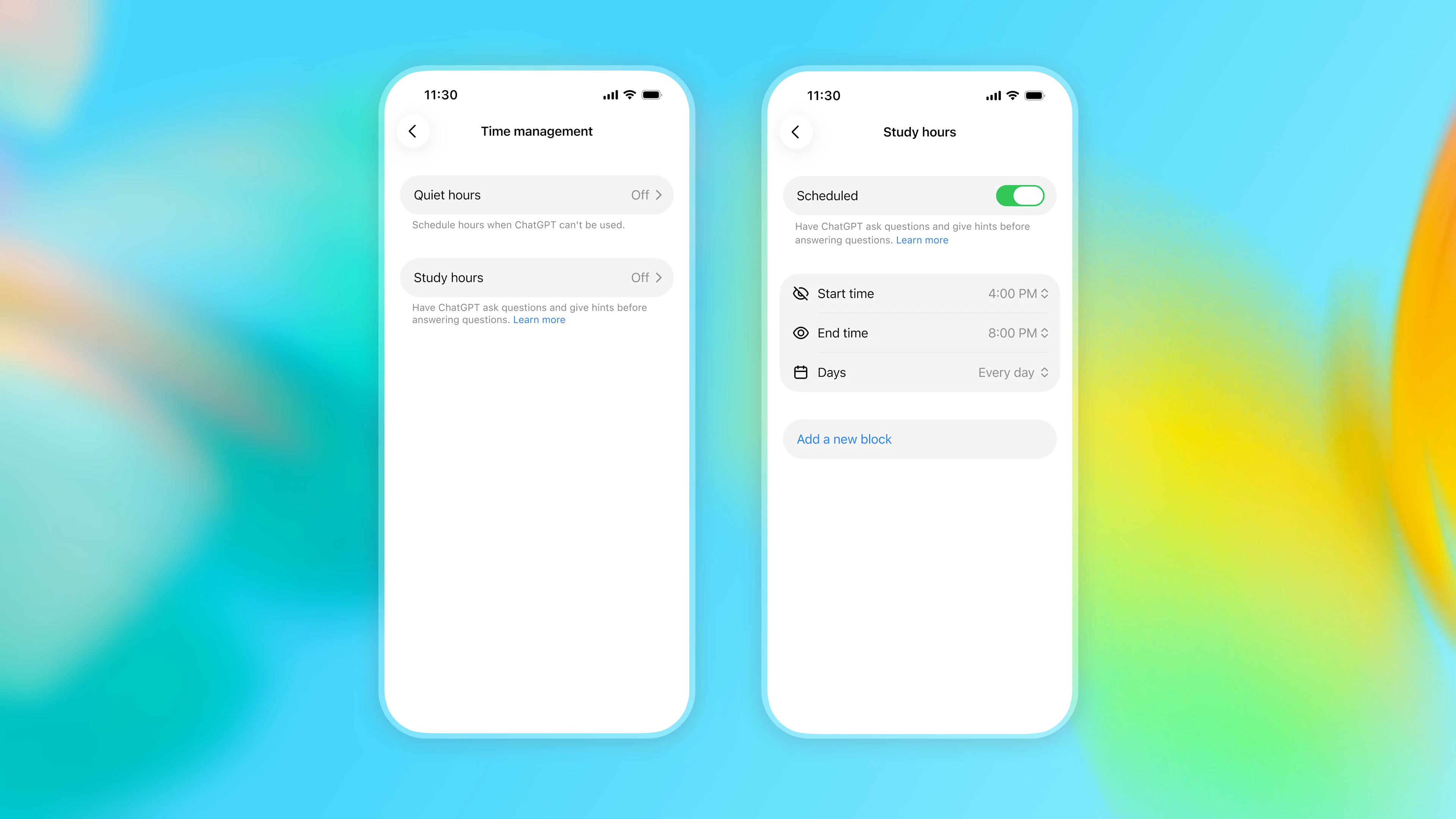
And with new Study Hours, teens or parents can choose times when Study Mode is on by default, making it easier to turn better study habits into a routine.
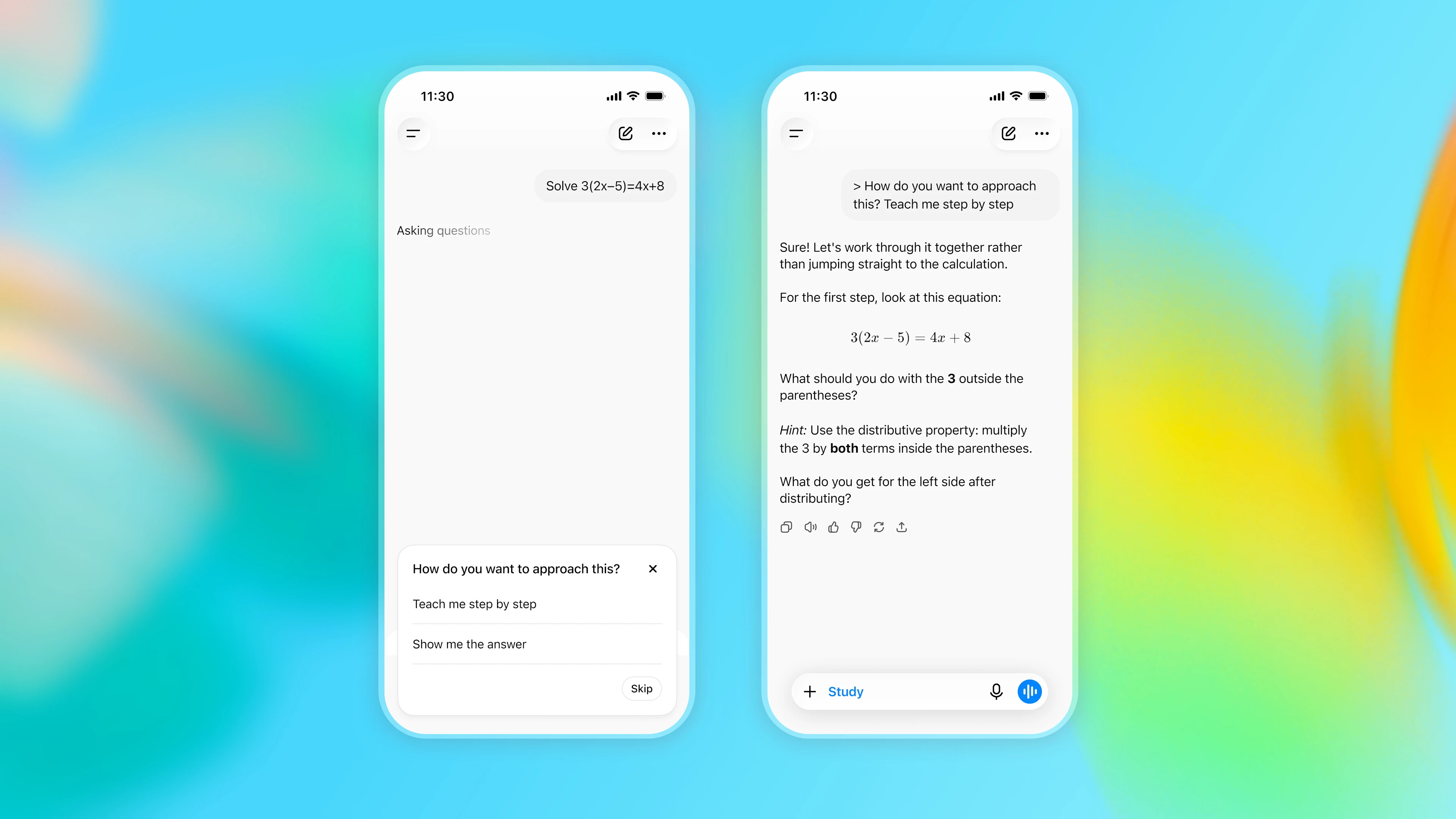
When we introduced Study Mode, it was built with teachers, scientists, and pedagogy experts and drew on longstanding research in learning science. It uses guiding questions, scaffolding, metacognitive prompts, and knowledge checks to help students work through problems step by step instead of simply receiving a solution. That design is consistent with broader research on effective learning techniques(mbukak ing jendhela anyar) showing that active retrieval and self-explanation can support stronger comprehension and longer-term retention than passive review alone. Our own early evaluation of tools like Study Mode has also shown promising gains in student performance.
AI should support learning, not shortcut it, and educators should remain in control of AI experiences in classrooms. In this spirit, ChatGPT for Teens is designed to support learning outside of the classroom while ChatGPT for Teachers continues to provide educators and school districts with secure, institution-managed access to AI and practical support for using it well.
Partnering with CodeAI to prepare teens
To help prepare the first AI generation of students, OpenAI and CodeAI are announcing a signature partnership to give students and educators access to tools and resources that will help them learn how to use and benefit from AI. The partnership will focus on the education that surrounds the technology: helping teens understand how AI works, direct it, question it, and create with it—with teachers playing a meaningful role in shaping how AI enters the classroom.
What teens are building with AI
Teens are already using AI not only to study, but to build tools, teach themselves new skills, and work on problems in their communities. Those are the kinds of uses ChatGPT for Teens is meant to foster: capable, learning-centered AI that helps young people move from understanding ideas to applying them.
In Virginia, Rushil Kukreja, Arhan Menta, and Nayel Rehman developed WiFind(mbukak ing jendhela anyar), a search-and-rescue system that uses existing Wi-Fi signals to help locate survivors trapped beneath rubble after natural disasters. The project grew out of volunteer work with a local search-and-rescue organization and a simple question about how responders could know where to look first. For the team, AI helped speed up the work of learning from research, prototyping quickly, and turning a promising concept into a tool designed for first responders. Crystal Yang in Texas used ChatGPT to help develop and scale Audemy(mbukak ing jendhela anyar), a platform that creates audio-based educational games for blind students, to 200,000 users and 50 games.
While each teen used ChatGPT in different ways, they all point to the kinds of uses we want to support: learning from complex material, building with guidance, and applying new skills to real problems. Teens should be able to explore that potential with tools that are capable, age-appropriate, and designed with clear safeguards.
Stronger protections, on by default
For teen users, protections are part of the default experience. For users under 18, ChatGPT for Teens applies age-appropriate safeguards designed to reduce exposure to content that may be harmful or developmentally inappropriate, while preserving the ability to learn, create, and explore.
These protections are based on our Under-18 Principles in our Model Spec, which are informed by developmental science and guidance from experts. In practice, that means age-appropriate model protections and product interventions in higher-risk areas such as self-harm, violence, eating disorders, dangerous activities, and explicit sexual or graphic content.
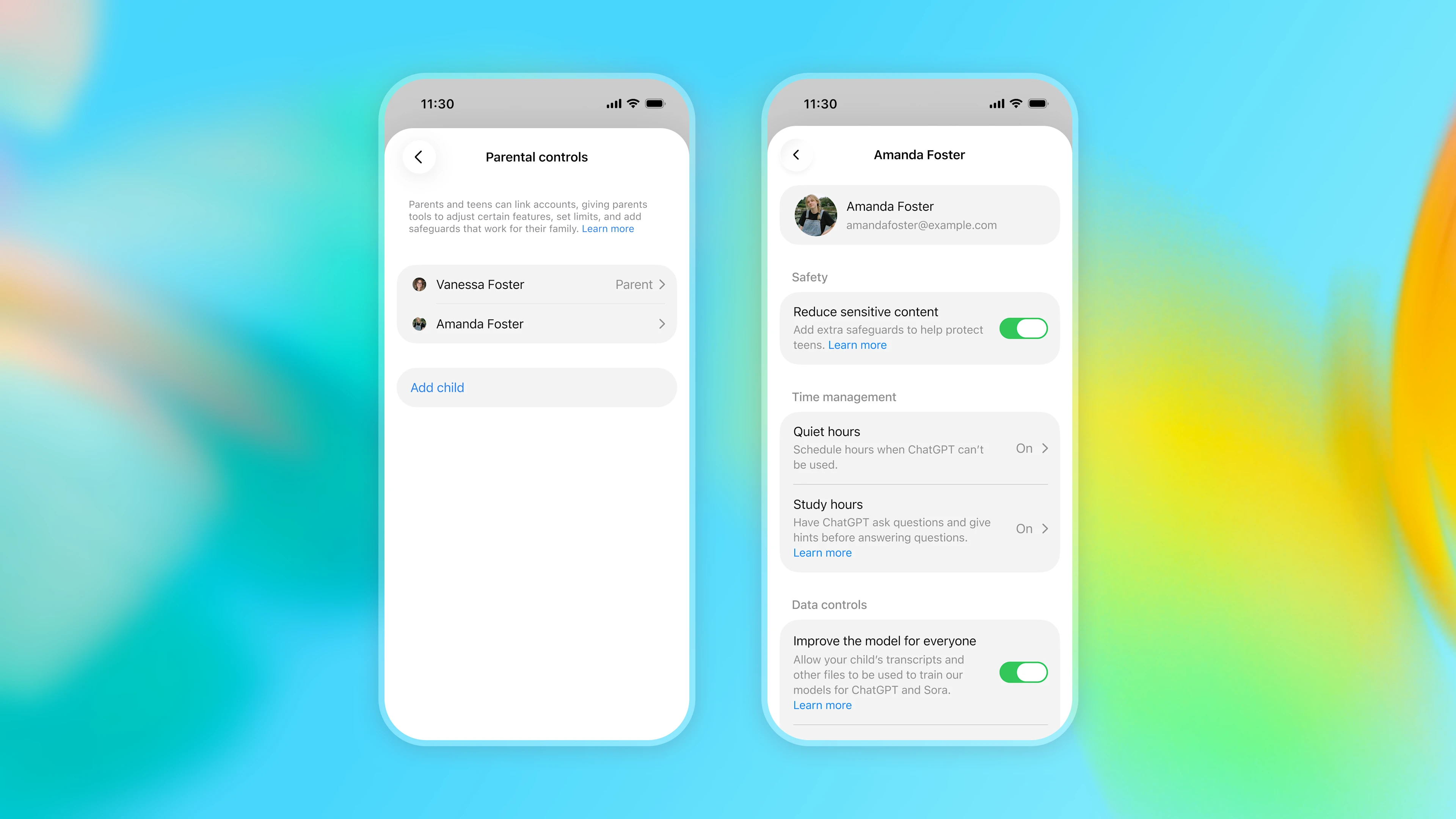
This work also builds on the family tools we introduced with parental controls and notifications. Parents with linked teen accounts can set Quiet Hours, manage selected settings, and receive safety notifications in limited high-risk situations. We are adding additional notifications related to eating disorders, while limiting what is shared and focusing on moments when offline support may matter most.
Supporting healthy, balanced use
We designed ChatGPT for Teens to support real-world relationships and healthy habits, with break reminders that encourage teens to step away, and product cues that consistently identify ChatGPT as AI.
We’re continuing to strengthen ChatGPT’s age-appropriate behavior for users under 18. Our updated under-18 model spec(mbukak ing jendhela anyar) goes beyond blocking romantic or sexualized roleplay: ChatGPT should not use romantic language, encourage emotional dependence, or imply that it has feelings or consciousness. These stronger protections are designed to reinforce healthy, real-world relationships.
We are also adding cues and controls that are meant to reduce risk in context and point teens toward useful tools and protections, including:
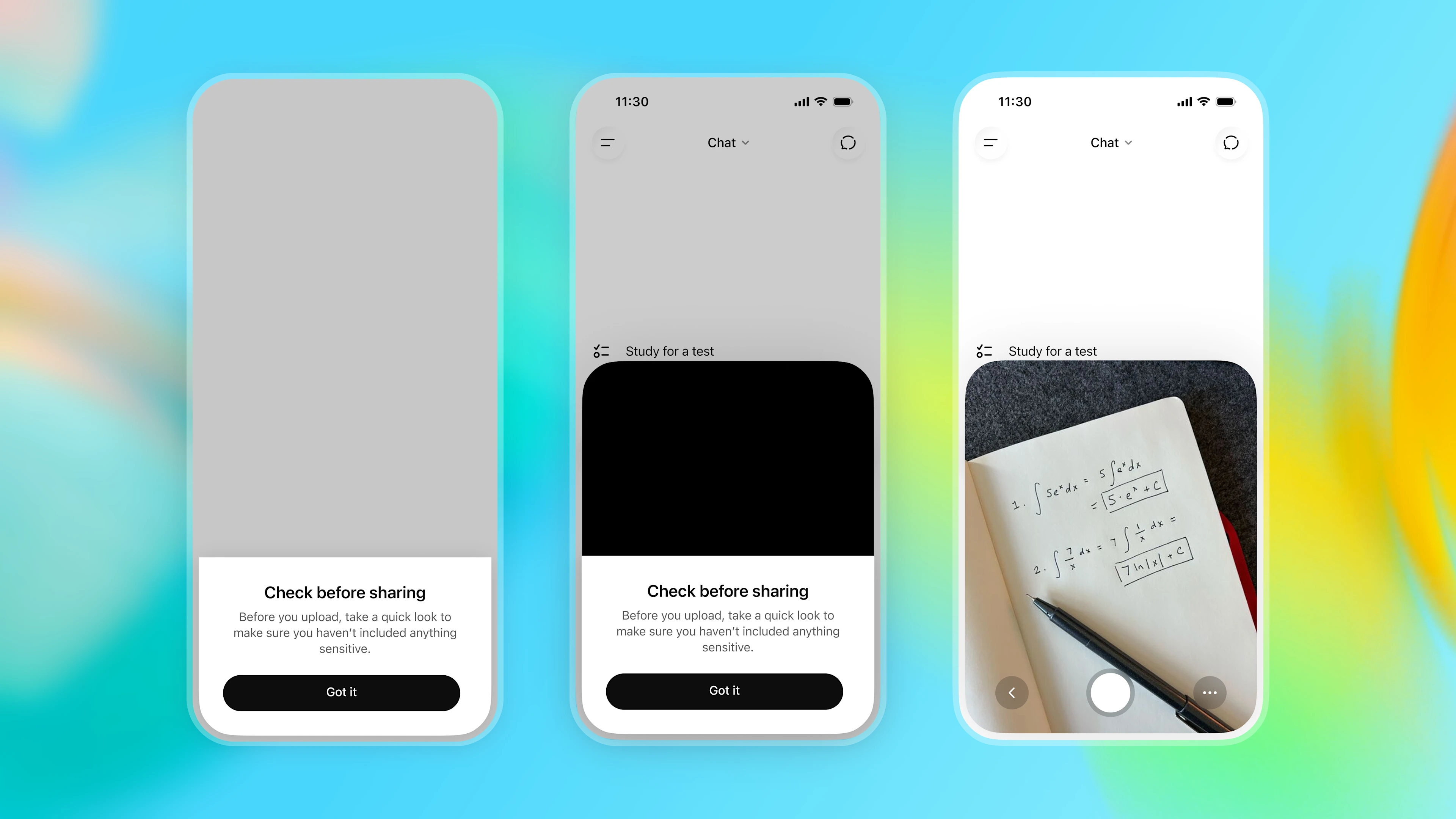
Sensitive-image upload reminders caution teens against sharing private or sensitive images.
Teen-specific onboarding introduces the learning and safety features available to them from the start.
And simple customization options, like accent colors and voice variations, help make the experience feel personal without blurring the line between a useful tool and a human relationship.
Ongoing research for safe AI use by teens
These protections are underpinned by ongoing safety research informed by developmental science, expert input, and testing our models’ safeguards in areas where teens may face distinct or heightened risks. This work helps us refine our policies for under-18 users, strengthen product protections, and improve how we measure progress over time.
We are beginning to share more of this work publicly, starting with new under 18 evaluations we’ve added to our system cards(mbukak ing jendhela anyar) that show how our models perform against teen-specific standards in challenging sensitive-content cases. These evaluations cover areas such as self-harm, eating disorders, violence, age-restricted goods and services, and sexual content, and are designed to help advance understanding of model performance on teen safety.
Ndeleng mangsa ngarep
Kita bakal terus nggawe fitur tambahan supaya bocah enom bisa entuk manfaat saka AI, uga ngukur lan nerbitake apa sing kita sinaoni. Bocah enom kudu bisa nggunakake AI kanggo sinau, nggawe, lan njajahi. Nanging, akses kasebut kudu diiringi pangayoman sing cocog karo tahap pangembangane, nguwatake sesambungan ing donya nyata, lan ndhukung panggunaan sing sehat kanthi terus-terusan. ChatGPT kanggo Bocah Enom minangka langkah sabanjure kanggo nggayuh standar kasebut.