How HSP GRUPPE builds AI capabilities for tax advisory
Tax professionals use ChatGPT Enterprise to process information faster, improve work quality, and create more capacity for advisory work and client service.

98.6%
of employees report higher productivity
84%
Weekly active usage
500,000+
ChatGPT conversations in six months (Feb 1 to Jul 14, 2026)
40,000+
Estimated annual hours of additional capacity across the firm network
The usage figures in this story refer to the shared ChatGPT Enterprise workspace used by HSP GRUPPE and Kanzleipakt, covering 81 organizational groups. HSP GRUPPE itself is a network of legally independent tax advisory, auditing, and law firms.
For more than two decades, HSP GRUPPE(opens in a new window) has consistently invested in digitizing and standardizing professional firm processes. Long before generative AI, the firm network standardized processes, embedded quality management, and fostered a culture of continuous improvement across the network.
When ChatGPT emerged, HSP saw more than another productivity tool. It saw an opportunity to rethink how professional work itself could evolve.
Rather than asking how AI could help employees write faster emails or summarize documents, leadership asked a broader question: What happens when AI becomes part of the operating model of a professional services firm?
That vision led HSP to embed ChatGPT Enterprise into tax advisory, legal research, client communication, financial analysis, and knowledge sharing across the firm network.
“Technology is moving faster than organizations can transform. Our challenge wasn’t introducing AI—it was helping the organization absorb it.”
HSP approached AI as an organizational transformation rather than a software rollout.
The organization introduced ChatGPT Enterprise with a strong focus on adoption, governance, and continuous learning. Monthly AI forums gave employees a place to share practical use cases and learn from one another. ChatGPT Enterprise’s security features provide an important technical foundation, while the use of client-related information is governed by HSP’s internal data protection, confidentiality, and governance requirements. Professional review and final responsibility always remain with the relevant tax, legal, or accounting professional.
The goal wasn’t simply to encourage experimentation. It was to build an organizational capability that could scale.
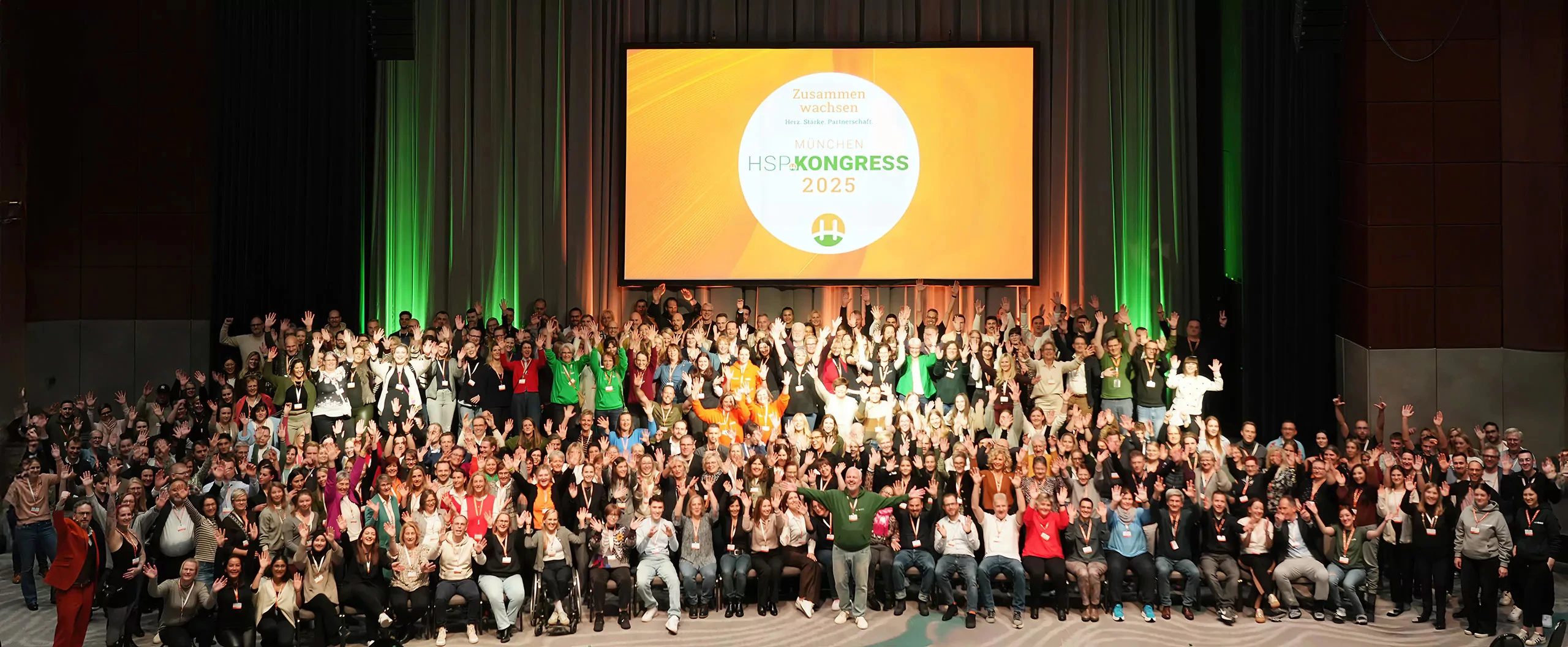
As Carsten Schulz puts it: “People ask me what my favorite AI feature is. I never answer that question. Individual features don’t matter. Once you understand how everything fits together, AI opens the door to a completely new world.”
Across the firm network, professionals quickly found new ways to apply AI to their daily work, while the organization also began standardizing successful use cases into custom Agents. One example is AI Client Communication, a shared Agent that supports first drafts, structure, clarity, and a more consistent, client-oriented tone. Professional review and final responsibility remain with the relevant tax, legal or accounting specialist. Another is the Booking Assistant SKR03 & SKR04, which supports the preparation and classification of specific booking questions. The final professional decision remains with the employee. Together, these kinds of shared Agents reduce repetitive work while making best practices available to every employee—not just AI experts.
Professionals then build on those foundations in their own work. Managing Partner Frank Heibel uses ChatGPT as a technical sparring partner to work through complex tax questions and refine client communications. “ChatGPT has become a genuine sparring partner. It completely changes the level at which you can work.” he says.
Partner Magdalene Posnak reduced the time required to evaluate multiple real estate investments from nine hours to around two, allowing her to spend more time advising clients. Managing Director Marco Sell uses AI-powered dashboards to help clients explore financial scenarios together during meetings, while lawyer and tax advisor Jan-Henrik Leifelt uses ChatGPT to strengthen—not replace—his professional judgment.
The common thread is simple: less time spent preparing information, and more time spent applying expertise.
“An analysis of several real estate investments used to take me around nine hours. With ChatGPT, I can prepare it in about two—and use the time saved for client advisory.”
HSP is already preparing for the next phase of its AI journey with ChatGPT Work.
Just weeks after gaining access, the organization began piloting the platform with a small group of developers and administrators before expanding across the wider workspace. The goal is to understand how agentic AI can safely automate complex workflows while balancing governance, quality, and cost before broader rollout.
For HSP, the economic benefit is not about reducing headcount. The firms in the network are already operating at capacity and managing substantial backlogs. Time saved with ChatGPT can therefore be redirected toward additional client work, shorter turnaround times, more advisory capacity, and stronger client service.
For Schulz, the opportunity isn’t simply helping people complete existing tasks more quickly. It’s redesigning the workflow itself.
He points to year-end accounting as an example. Today, accountants often discover missing information only when they begin preparing annual accounts months after bookkeeping has been completed. HSP is exploring how ChatGPT Work could continuously review bookkeeping, identify missing information throughout the year, and proactively request documents from clients—so that much of the preparation has already happened before an accountant even opens the file.
That shift—from AI assisting people to AI orchestrating work across entire processes—represents the next stage of HSP’s transformation.
“We identified 88 opportunities for automation. But I think that’s already thinking too small. The real question isn’t how we automate today’s processes. It’s how we redesign them. That’s what opens the door to a completely new world.”
Achieved 84% weekly active usage, with 755 weekly active users and 913 unique users over six months (February 1 to July 14, 2026).
During the evaluated period from February 1 to July 14, 2026, users exchanged more than 500,000 messages with ChatGPT.
98.6% of surveyed employees reported higher productivity, while 84.6% reported improved quality of work.
95.9% of respondents reported weekly time savings; 63.5% saved at least two hours per week, and 25.7% saved at least five hours. HSP is already seeing an operational leading indicator in its annual capacity planning, with professionals planning significantly more work than in previous years because employees recognize additional capacity created through AI-supported work. The organization expects to assess the full financial impact later this year.
79.7% reported better client service and 78.1% reported higher job satisfaction.
A deliberately conservative internal scenario estimates approximately 40,000 hours of additional annual capacity. Around 28,000 hours could support productive, generally billable specialist work, while roughly 12,000 hours could support administration, client service, and support. Based on conservative hourly rates, HSP estimates a theoretical annual revenue potential of approximately €3.8 million. This is a capacity scenario—not realized or guaranteed revenue.
Treat AI as an organizational capability, not an individual tool. Scale successful experiments into repeatable workflows that everyone can benefit from.
Invest in operational foundations first. Strong processes, governance, and quality systems accelerate AI adoption.
Create a culture of continuous learning. Regular AI forums helped successful ideas spread quickly across the organization.
Redesign workflows—not just tasks. The greatest value comes from rethinking end-to-end processes rather than automating isolated activities.
Build AI around professional judgement. The greatest value comes when AI enhances expertise rather than replacing it.
Start with business problems—not AI features.
Create regular forums where employees can share successful use cases across teams.
Pair AI specialists with domain experts to turn successful experiments into scalable workflows.
Pilot new capabilities with small groups before expanding organization-wide.
Measure adoption and business impact—not just deployment—to understand where AI is creating real value.
HSP believes its biggest AI gains still lie ahead.
Together with Kanzleipakt, HSP GRUPPE plans to establish a joint DATEV-centric AI, firm process, and development team to evaluate successful decentralized experiments and translate them into documented, scalable reference workflows. As ChatGPT Work and agentic capabilities mature, HSP plans to move beyond assisting individual professionals toward automating entire workflows that proactively support employees and clients alike.
For Schulz, the long-term opportunity extends beyond HSP itself. He believes AI can strengthen—not diminish—the role of trusted professionals by enabling them to spend more time exercising judgment, solving complex problems, and building client relationships.
“Everyone talks about AI replacing tax advisors. I think that’s the wrong conversation. The real opportunity is helping qualified professionals become dramatically more effective.”