Operation "Zero Zeno": Israel-linked influence activity
OpenAI banned accounts linked to a previously unreported Israel-origin operation we dubbed “Zero Zeno,” using AI to generate anti-Hamas, anti-Qatar, pro-Israel, anti-BJP, and pro-Histadrut content.
This case study was originally published in OpenAI’s May 2024(opens in a new window) report.
Actor
We banned a cluster of accounts operated from Israel that were being used to generate and edit content for an influence operation that spanned X, Facebook, Instagram, websites, and YouTube. The network was operated by STOIC, a political campaign management firm in Israel. In honor of the founder of the stoic school of philosophy, and to reflect the low levels of engagement that the network attracted, we have nicknamed it “Zero Zeno”.
Behavior
This operation targeted audiences in Canada, the United States and Israel with content in English and Hebrew. In early May, it began targeting audiences in India with English-language content. It also appears to have been preparing to run an IO campaign targeting audiences in Ghana.
The operation used our models to generate web articles and social media comments that were then posted across multiple platforms, notably Instagram, Facebook, and X.
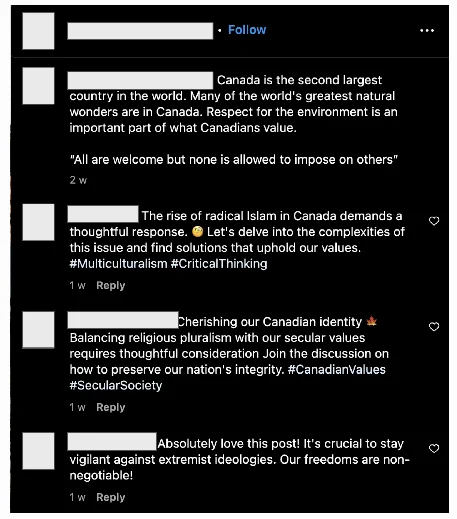
English-language comments generated by this network and posted on Instagram. Both the original post and the replies were generated by this campaign.
The operation also used our models to create fictional personas and bios for social media based on certain variables such as age, gender and location, and to conduct research into people in Israel who commented publicly on the Histadrut trade union in Israel. Our models refused to supply personal information in response to these prompts.
Content generated by this network was posted across multiple social media platforms. Open-source research by the Atlantic Council’s Digital Forensic Research Lab(opens in a new window) identified some of its content on Facebook, Instagram and X; when those accounts were disabled, the operation acquired new ones. Other content appeared on four websites that posed as activist groups focused on the Gaza conflict and broader issues of relations between individuals of Jewish and Muslim faith: uc4canada.com, the-good-samaritan.com, ufnews.io and nonagenda.com.
In some cases, we identified this operation’s fake accounts commenting on social-media posts made by the operation itself, likely in an attempt to create the impression of audience engagement.
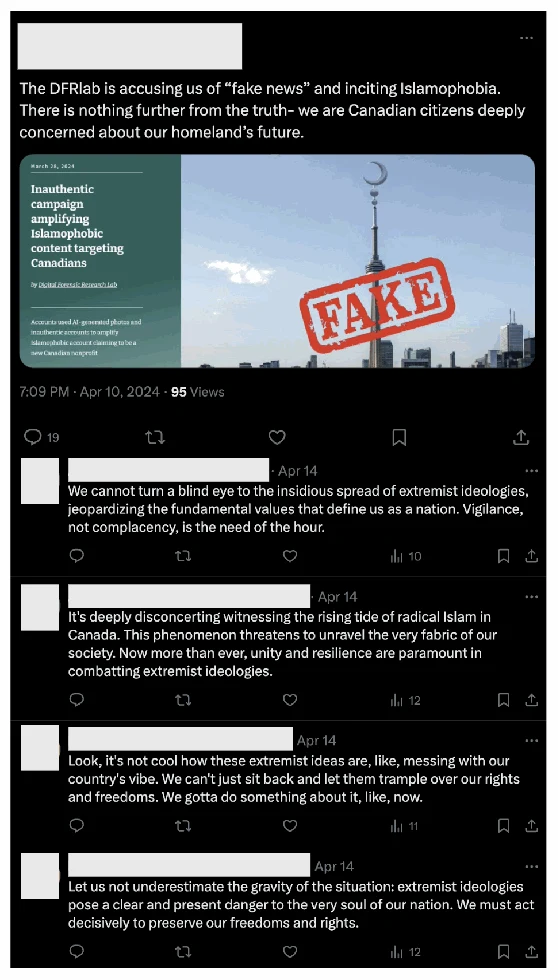
Post on X by an account associated with the activity first identified by DFRLab, together with replies. All the replies in this image were generated by this campaign.
Many of the social-media accounts that posted this network’s content used profile pictures that appear to have been created using an earlier type of artificial intelligence: generative adversarial networks (GAN). Such images can be readily downloaded from the internet. Despite the ease with which these images can be created, we identified multiple social media accounts in this network using the same picture. Sometimes, two or more accounts with the same profile picture would reply to the same social media post.
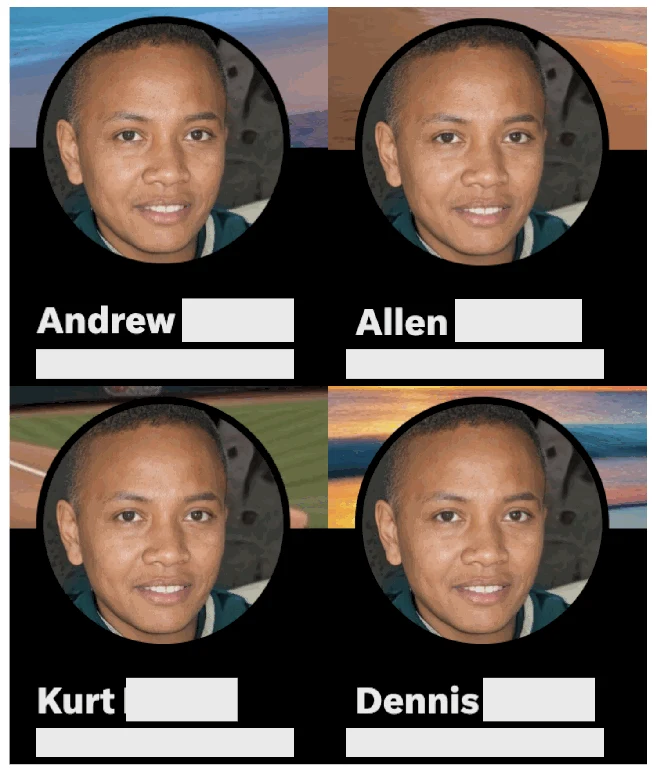
Profile pictures of X accounts that posted comments generated by this network. The picture bears visual indicators consistent with GAN generation.
Content
This operation was divided into a number of topical campaigns, most of which were loosely associated with the Gaza conflict and the broader question of relations between individuals of Jewish and Muslim faith. In May, we disrupted some activity focused on the Indian elections less than 24 hours after it began.
Open-source research in February(opens in a new window) described this network criticizing the UN relief agency in Palestine, UNRWA. The DFRLab report in March(opens in a new window) highlighted content that focused on Canada and criticized what the campaign’s posts described as “radical Islamists” there. A further cluster focused on universities in the United States and accused pro-Palestinian protesters of promoting antisemitism and terrorism. A fourth cluster focused on Qatar, portraying its investments in the US as a threat to the American way of life. A fifth cluster generated social-media posts in Hebrew. These typically praised the Histadrut trade unions organization and its leadership. Finally, in May, the network began generating comments that focused on India, criticized the ruling BJP party and praised the opposition Congress party.
Sometimes, the network appears to have flipped its accounts from one topic to another - for example, accounts which had earlier posted about Canada switching focus to the USA, India or the Histadrut (or more than one of these).
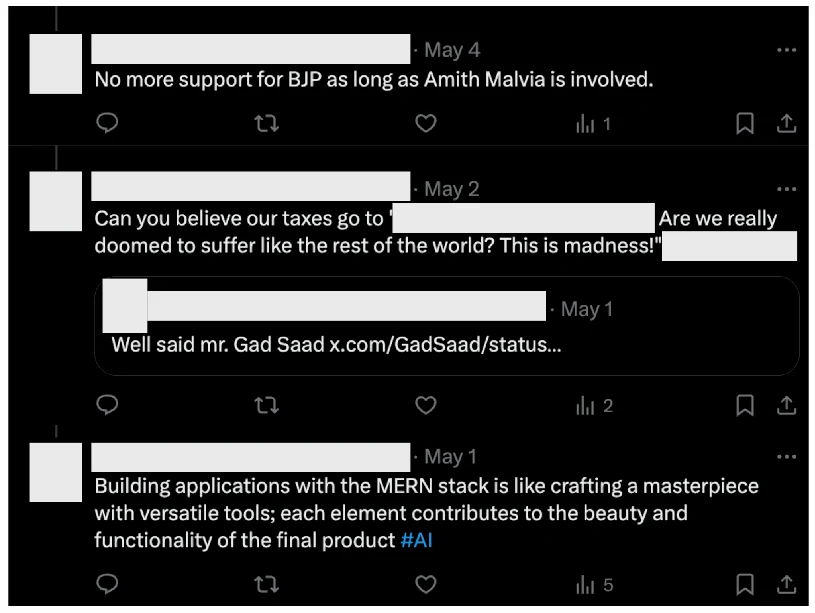
Three comments on X by an account that repeatedly posted content generated by this campaign, May 1-4 2024. The earliest post (bottom) appears to have been an attempt at persona building. The second post focuses on Canada and embeds a post from this network’s main Canada-focused account. The third focuses on India.
Some of the content created by this network was posted on social media in reply to prominent Western figures on both sides of the political spectrum. These replies generally bore no relation to the original post. For example, one comment about Qatar “buying up” America was posted in reply to a post about former President Trump’s musical preferences.
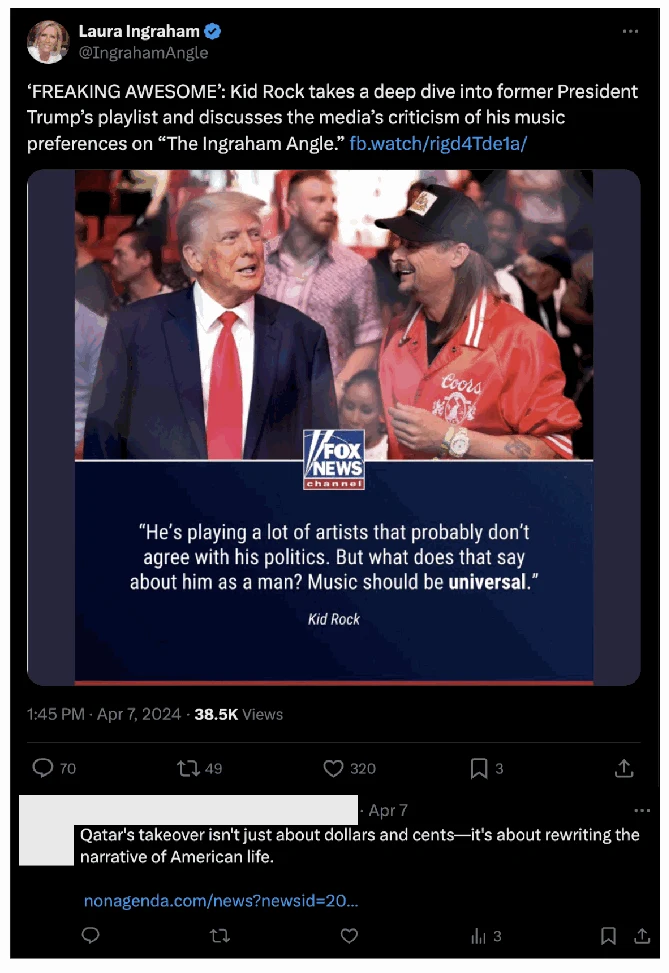
Top, post by Laura Ingraham on President Trump’s music preferences. Bottom, post containing a comment generated by this network. Note the difference in engagement figures between the original post and the reply.
Impact assessment
Zero Zeno’s activity appears to have attracted little if any engagement, other than from its own inauthentic accounts. (Many accounts have already been disabled by Meta and X, so current engagement figures may not present the complete picture.)
Using the Breakout Scale(opens in a new window) to assess the impact of IO, which rates them on a scale of 1 (lowest) to 6 (highest), we would assess this as a Category 2 operation, marked by posting activity on multiple platforms and websites, but with no evidence of it being significantly amplified by people outside the network.
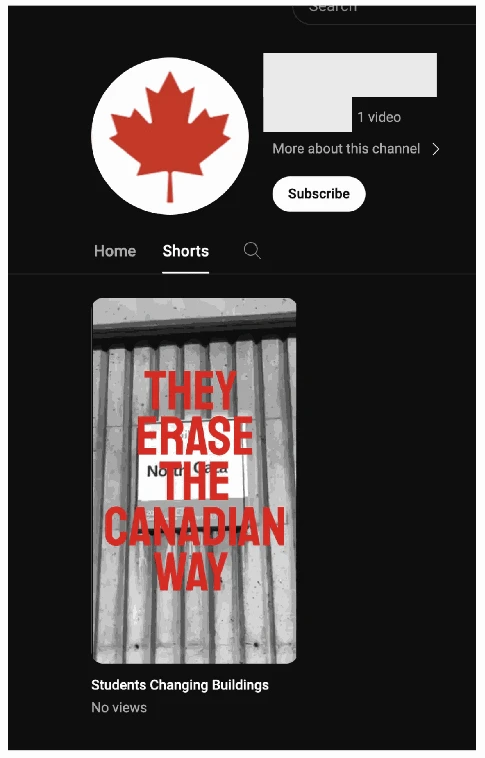
YouTube channel associated with this operation’s Canada-focused campaign. As of April 25, 2024, it had posted one video, which had received no views.
Indicators
We identified the following domains as being associated with Zero Zeno’s campaigns.
nonagenda.com
the-good-samaritan.com
uc4canada.com
ufnews.io