Operation “Uncle Spam”: US polarization influence activity
OpenAI banned China-origin accounts using AI to generate US political content and research people, movements, and online communities.
This case study was originally published in OpenAI’s June 2025(opens in a new window) report.
Actor
We banned a number of ChatGPT accounts linked to a China-origin influence operation(opens in a new window) following a lead from our peers at Meta. The operation generated polarized social media content that supported both sides of divisive topics within U.S. political discourse, including text and AI-generated profile images across platforms such as X and Bluesky.
Behavior
The network used our models for multiple tasks, primarily generating social media comments that were supportive or critical of tariffs. The accounts asked our models for optimal posting times to maximize audience engagement, indicative of calculated amplification tactics.
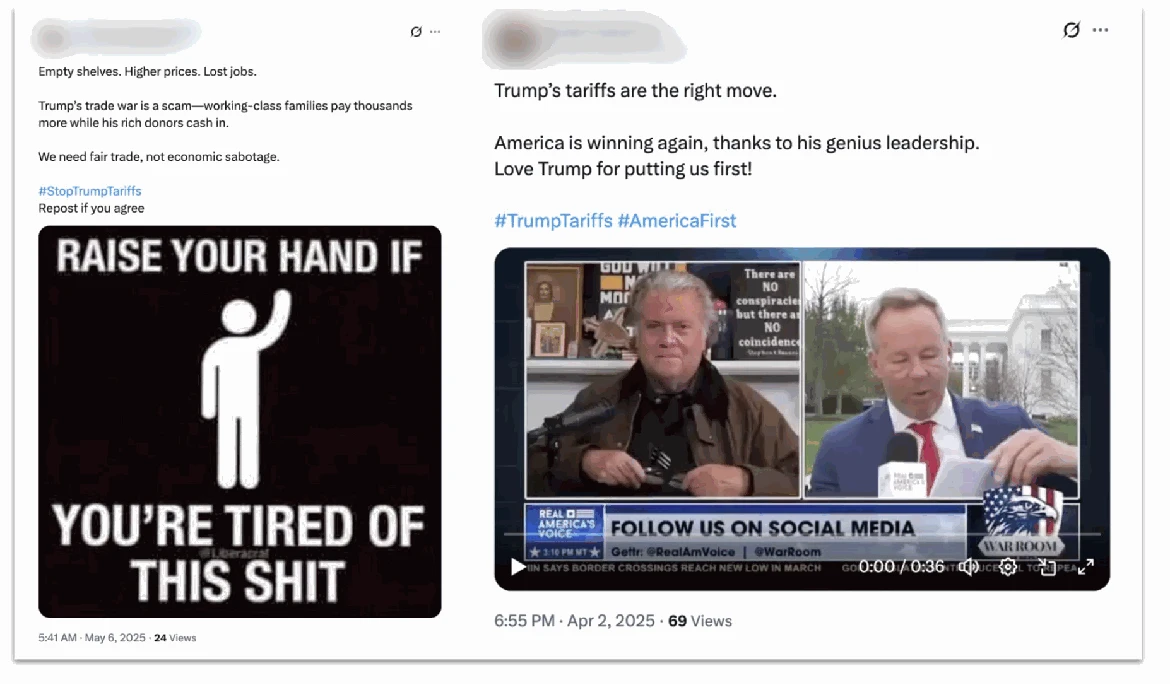
Two tweets whose texts were generated by this threat actor using our models, pushing either side of the debate on tariffs.
Second, the accounts used our image generation capabilities to generate stylized logos that were then used as profile pictures to support fictitious personas across social platforms. In particular, the accounts focused on crafting personas of US veterans critical of the current US administration.
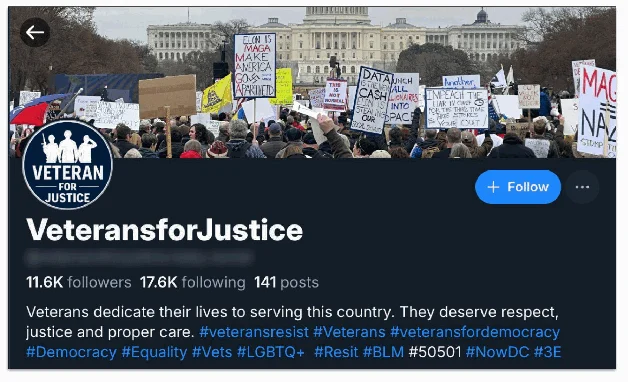
Account on BlueSky that posted content generated by this network. The “Veterans for Justice” logo was generated using our models.
Last, the accounts consistently requested code and methods to extract personal data, such as user profiles, follower lists, and other details, from social platforms like X and Bluesky, using tools like Tweepy, Nitter, and Bluesky’s public API. Additionally, the accounts used our models for guidance to help analyze profile data for personal characteristics and organizational affiliations, potentially to categorize individuals or infer associations and attributes.
Completions
The accounts produced polarizing content spanning U.S. political discourse, often within the same operational sessions. Consistent with known methodologies used by influence operations, this appears likely designed to exploit existing political divisions rather than to promote a specific ideological stance. The volume of content and focus on American messaging led us to dub this operation “Uncle Spam.”
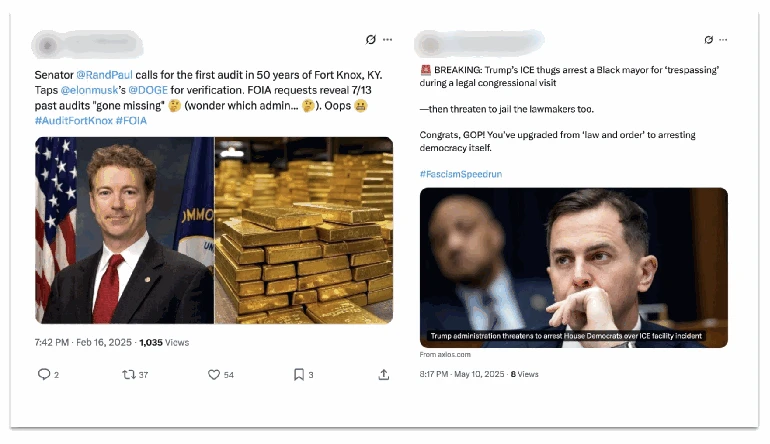
Tweets with text generated by our models posted by fictitious personas.
Impact
Using the IO impact Breakout Scale(opens in a new window), we would assess this as Category 2: activity on multiple platforms, no breakout or minimal engagement. The social media accounts posting content generated by our models received little authentic engagement. Most of the X posts published by this network received few to no likes or reposts, with just a few posts receiving some engagement. Some of the social media accounts had follower counts in the thousands, but we were unable to assess the authenticity of those followers, and the follower numbers did not appear to translate into post engagements.