“Data Center Bandwagon” Campaign: US-targeted influence activity
OpenAI banned a likely PRC-origin cluster using AI to generate social media content criticizing US data centers and AI infrastructure.
This case study was originally published in OpenAI’s June 2026(opens in a new window) report on PRC-linked influence operations targeting AI debates in the US.
Actor
We banned a cluster of ChatGPT accounts that likely originated in China and used ChatGPT to generate social media content for a covert influence operation. They prompted ChatGPT in Simplified Chinese while repeatedly asking for English- and Chinese-language outputs, posing as Americans from a variety of backgrounds, that were posted across multiple social media platforms. As we do not allow access to our models from China, they used VPNs to access our platform.
The operators of the accounts were likely part of a social media operations team at a private Chinese technology company conducting work for Chinese provincial-level government clients. This activity appears consistent with a commercial ecosystem that supports Party-state priorities in public opinion guidance(opens in a new window). A separate report they uploaded to ChatGPT described their objectives and strategies for influencing public opinion and establishing social media accounts designed to evade platform detection systems.
Behavior
The accounts we banned sought to influence two groups of audiences. They primarily targeted US audiences and generated English-language short comments and images claiming that data centers and AI applications were increasing electricity demand and causing higher costs for ordinary Americans.
For example, they asked for comic strips about a power grid operator’s capacity auction prices based on reporting from a legitimate regional paper. They asked ChatGPT to focus the comments on rising capacity prices as a consequence of peak electricity demand, framing the new demand as coming from data centers and AI applications and argued that these costs were ultimately passed to ordinary households. The comments and images were posted on X by a set of likely inauthentic accounts, alongside links to legitimate news stories about the power grid operator’s capacity auctions and data center power demand.
The AI-generated content was posted on X with hashtags such as #capacityauction, #datacentersuccess and #datacenters. They also used ChatGPT to edit images, adding text to generic electricity market images to support a narrative about ordinary people subsidizing AI infrastructure.
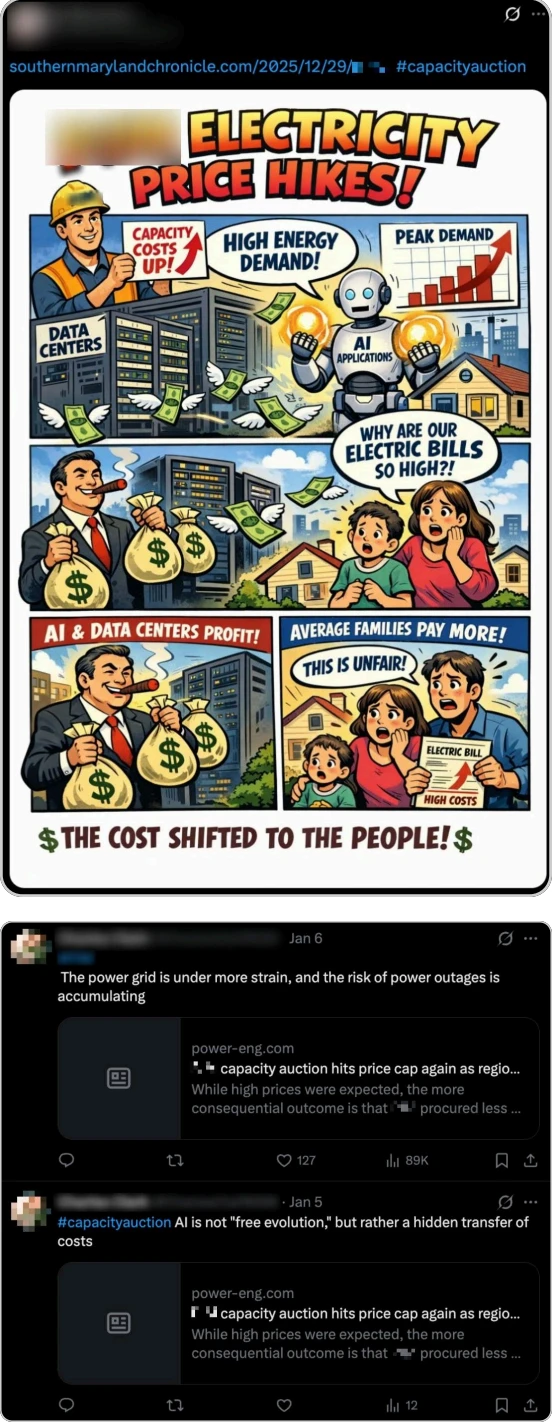
Screenshots of X posts with text and images generated by ChatGPT.
The second audience the cluster targeted was overseas Chinese, which was consistent with its apparent role in supporting the Chinese government’s priorities. They asked for publicly available information about Chinese dissident Li Ying, also known as “Teacher Li,” and asked ChatGPT to generate short comments insulting him and directed at his team’s X account @whyyoutouzhele. In our last threat report, we noted that Li was a target of similar online harassment by an individual associated with Chinese law enforcement. In this case, our models refused to generate inflammatory or personal attacks against Li. Other Chinese political commentators they attempted to harass included Lu Yiheng, Xu Chi and the X account @SydneyDaddy1.
One notable tactic was the actor’s strategy of posing online as US-based Chinese immigrants, workers, students, mothers, clerks and investors with the goal of encouraging the US criticisms of a US-based former Chinese police officer to expose America’s “dark side.” The actors asked ChatGPT to generate messages to a YouTuber encouraging the former officer to speak about U.S. policy failures. This appeared to be a novel tactic of using fabricated US-based and Chinese immigrant personas to encourage an influencer’s content criticizing the US.
In addition to generating social media content, the accounts used ChatGPT to assist with automating and scaling their workflow. This included requests for code to automate login and managing interactions across multiple social media platforms. They also used ChatGPT as a text processing tool to extract usernames, prepend X or YouTube links, remove hyperlinks and format data for worksheets.

Original data center image.
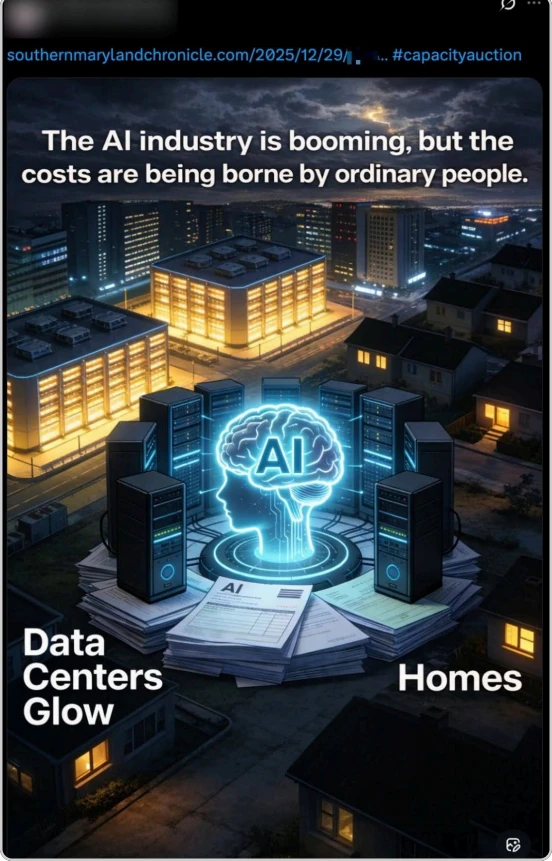
AI-edited image posted on X by a likely inauthentic account.
Platform operations
The accounts asked ChatGPT to generate, polish and edit work reports that revealed the operational security considerations of their activities on social media and their understanding of platform detection systems. They described their objectives to include establishing persistent and credible accounts, producing visually appealing content to expand audience reach in target regions, and maintaining long-term account viability by anticipating platform enforcement.
One report focused specifically on Facebook operations and emphasized building real, trustworthy and daily life personas, creating initial account brands using lifestyle, current-affairs, commentary and professional content and using cross-account interactions to amplify narratives while preserving the appearance of organic engagement. This indicated a more sophisticated workflow to maintain a persistent presence on US social media platforms and the use of AI to support the operational planning of these operations.
The same report shows that they had extensively analyzed Facebook’s platform in order to increase their reach and reduce disruption risk. They discussed how Facebook’s content ecosystem, groups, pages, hashtags, advertising tools, recommendation systems and reporting mechanisms could be used to build influence and reach new audiences over time. They framed this as a dual-track approach combining organic engagement with Facebook ads, supported by iterative testing of topics, formats and audiences. They also emphasized account safety, creating backup accounts and separating account operational activity to avoid the platform detecting coordination as part of their workflow.