Accelerating antibiotic discovery with ChatGPT
Dr. César de la Fuente and his team are using new tools in the fight against antimicrobial resistance.
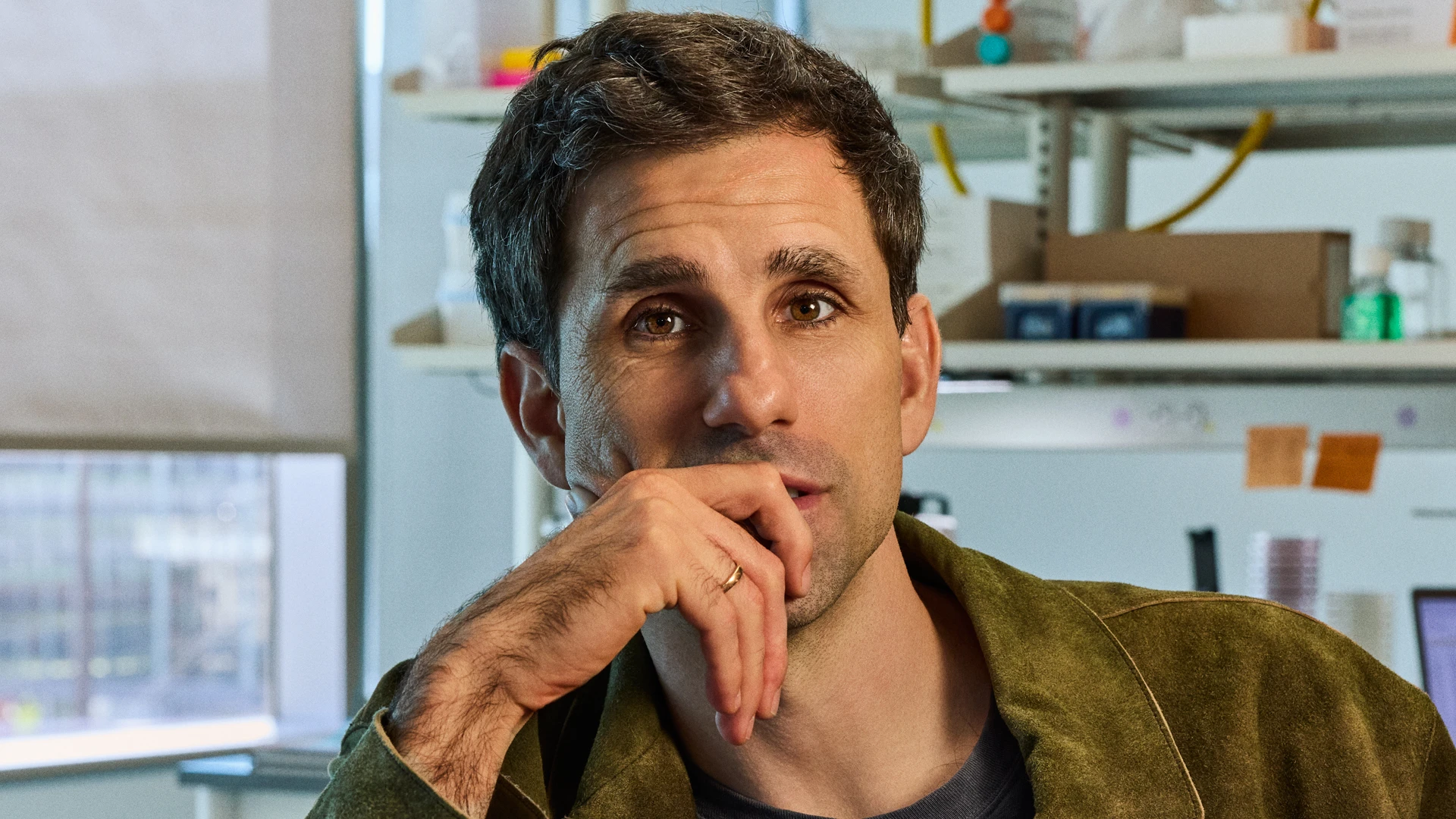
“It’s amazing to think about how little we know and how much there is to discover. I try to convey that to young people, to make them understand the future is theirs. We barely understand anything about the world—and that’s an exciting thing, because that’s where science can help.” —Dr. César de la Fuente
“Tools like ChatGPT are helping us accelerate scientific discovery. It’s really a playground for a scientist like myself.”
A growing problem
Modern medicine relies on effective antibiotics, which help us recover from routine illnesses, surgeries, childbirth, and more. However, there’s a growing problem: the bacteria that antibiotics fight are resilient, and the more we use antibiotics to fight them, the more opportunities there are for resistant strains to become dominant. This is known as antimicrobial resistance (AMR). Around 5 million deaths are associated with bacterial AMR every year, and that number is expected to double by 2050.
New antibiotics are essential in helping combat AMR, but the traditional method, which involves scientists heading into nature, digging into soil, plants, and other organic matter to find active molecules, is time-consuming and prone to trial and error. Tools like ChatGPT and Codex are enabling Dr. César de la Fuente and team to take a novel, and faster, approach to identifying new molecules in the fight against AMR. “We do everything at digital speed,” he says.
“Oftentimes I have a cup of coffee, and my team already has a ton of new molecules that they've discovered that could be the next antibiotic.”
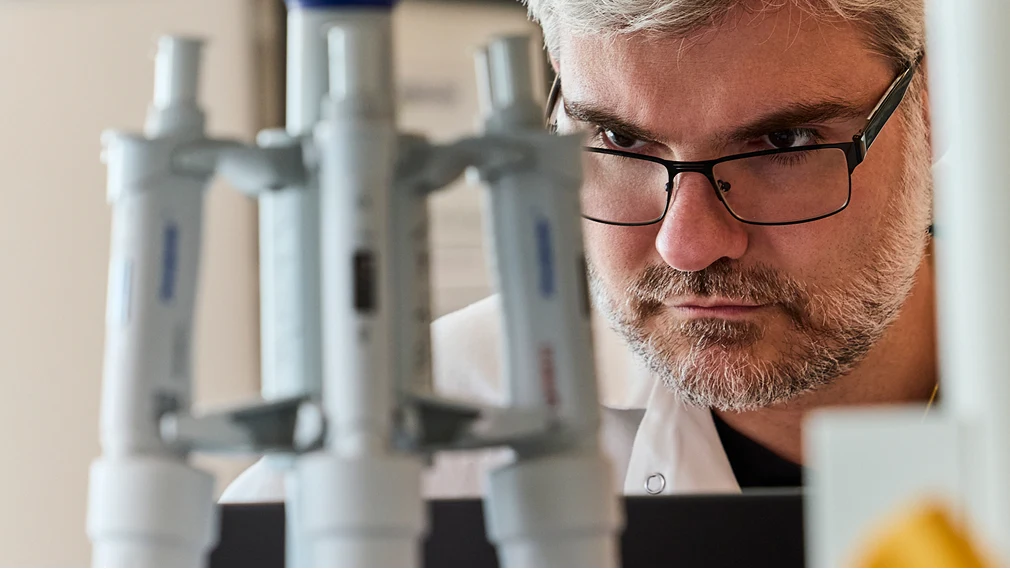
“Our lab takes on high-risk projects, but when we make it work, the results are amazing.”
—Marcelo Der Torossian Torres
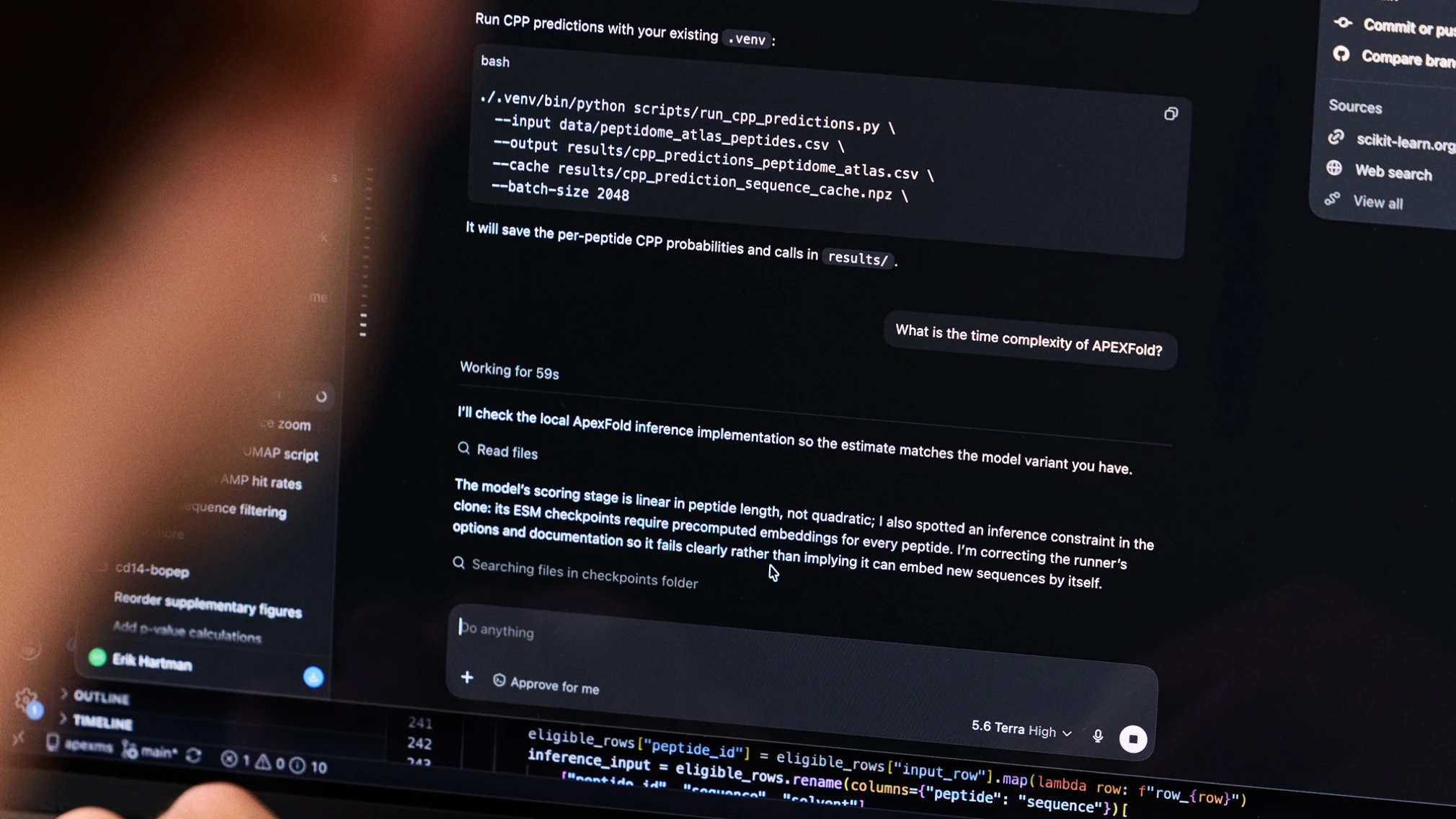
“Codex is a great co-pilot. I’ll want to implement something, and Codex can just pump it out in a second. It helps save me time and allows me to do other things.”
—Erik Hartman
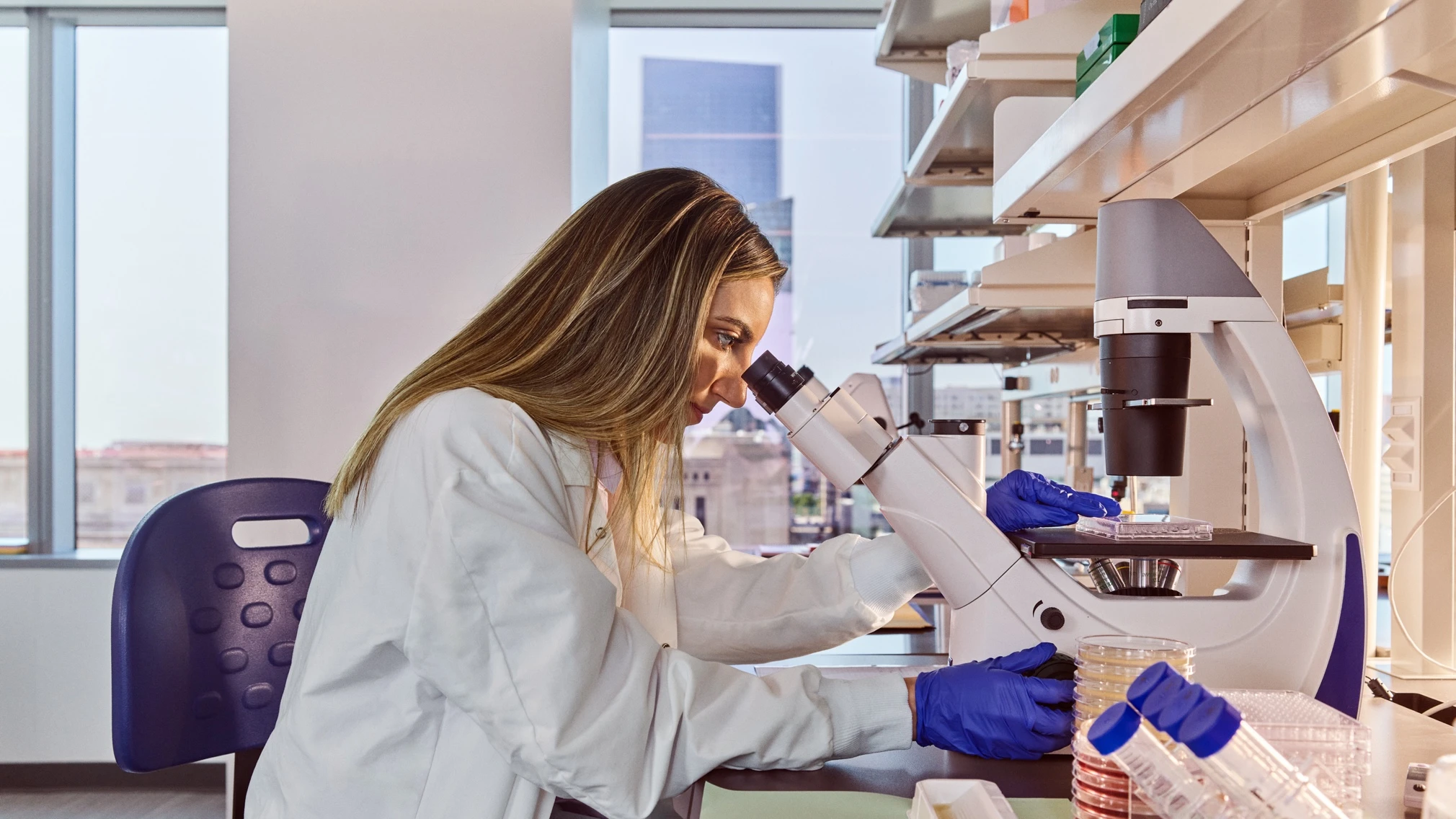
“As an experimental scientist, developing an algorithm is a huge step for me. I can use Codex to write a script and ensure that my data can be plotted in the same way over every experiment.”
—Angela Cesaro
Treating biology as code
One of the big breakthroughs the de la Fuente Lab has made is in treating this problem as an information problem: DNA, the building blocks of life, is just a code. Tools like ChatGPT help them come up with algorithms that can quickly sort through the complex systems that define our world and identify new antibiotic candidates in hours instead of years.
“We can now discover new antibiotic molecules in a few hours instead of in five or six years.”

“With Codex, someone who has never programmed before, who doesn't understand the language of computer science, can now do it.”
—Dr. César de la Fuente
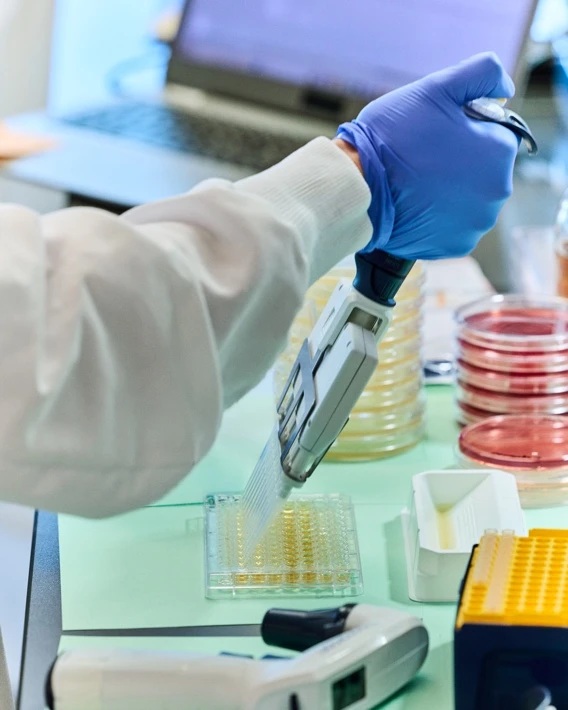
Angela works in the wet lab to create molecules to test.
ChatGPT has become an essential part of the de la Fuente Lab’s workflow. “It has become the lab’s communal brain. It knows how different members of the team think about science, because we pour a lot of our ideas in there,” says Dr. de la Fuente. “It really captures our thinking: our idea generation, our ingenuity, the things that we bring as humans.”
Codex has broken down barriers between team members, which range from traditional scientists to computational biologists and machine learning engineers. “People that five years ago would have never touched a computer other than to analyze data are now able to do computational biology. They’re able to write algorithms to identify patterns in their data, or visualize their results in ways that were impossible before.”
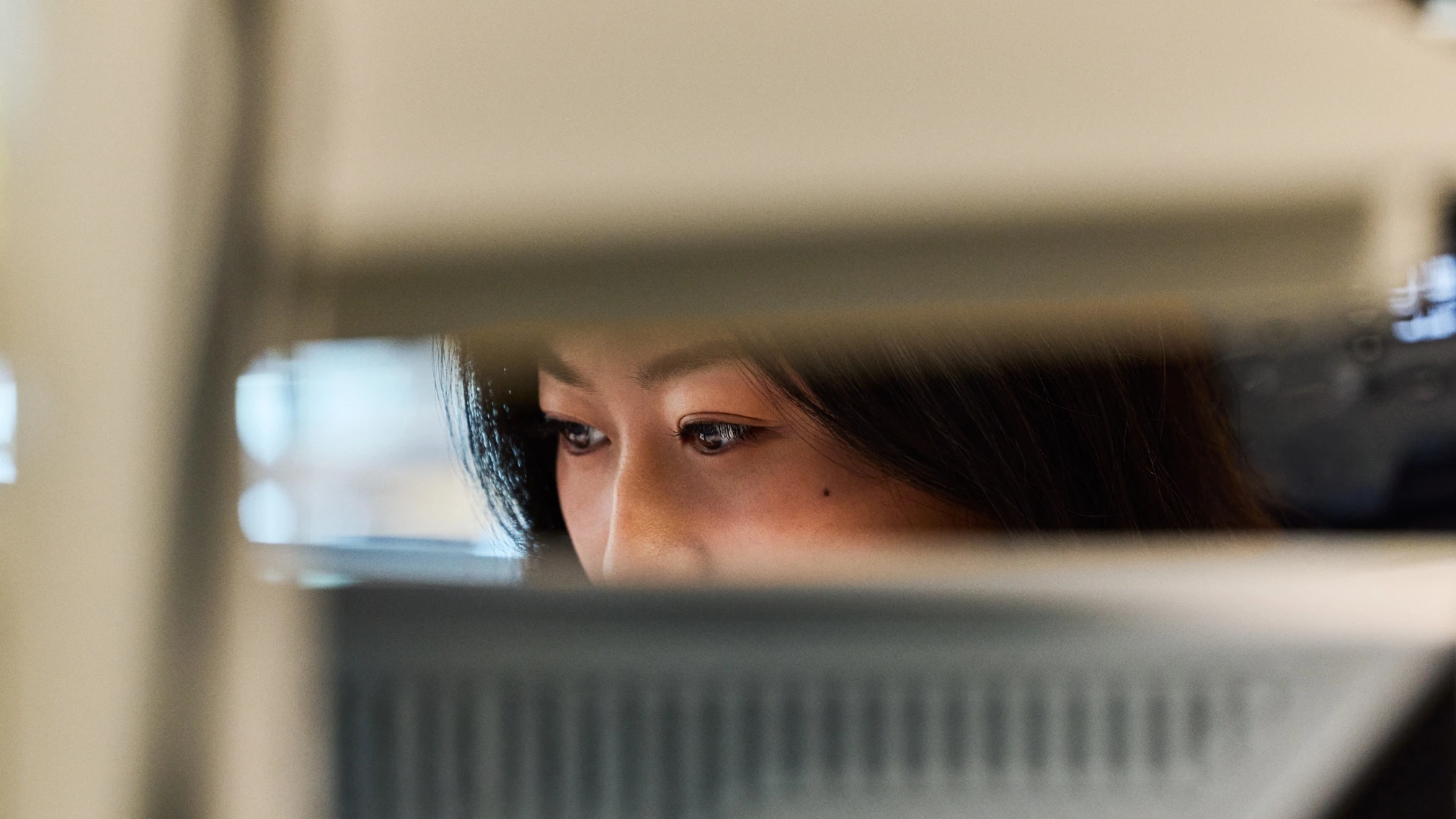
“We're a very diverse lab: we have chemists, biologists, computer scientists. We have so many talents that are working in different areas.”
—Jianing Bai
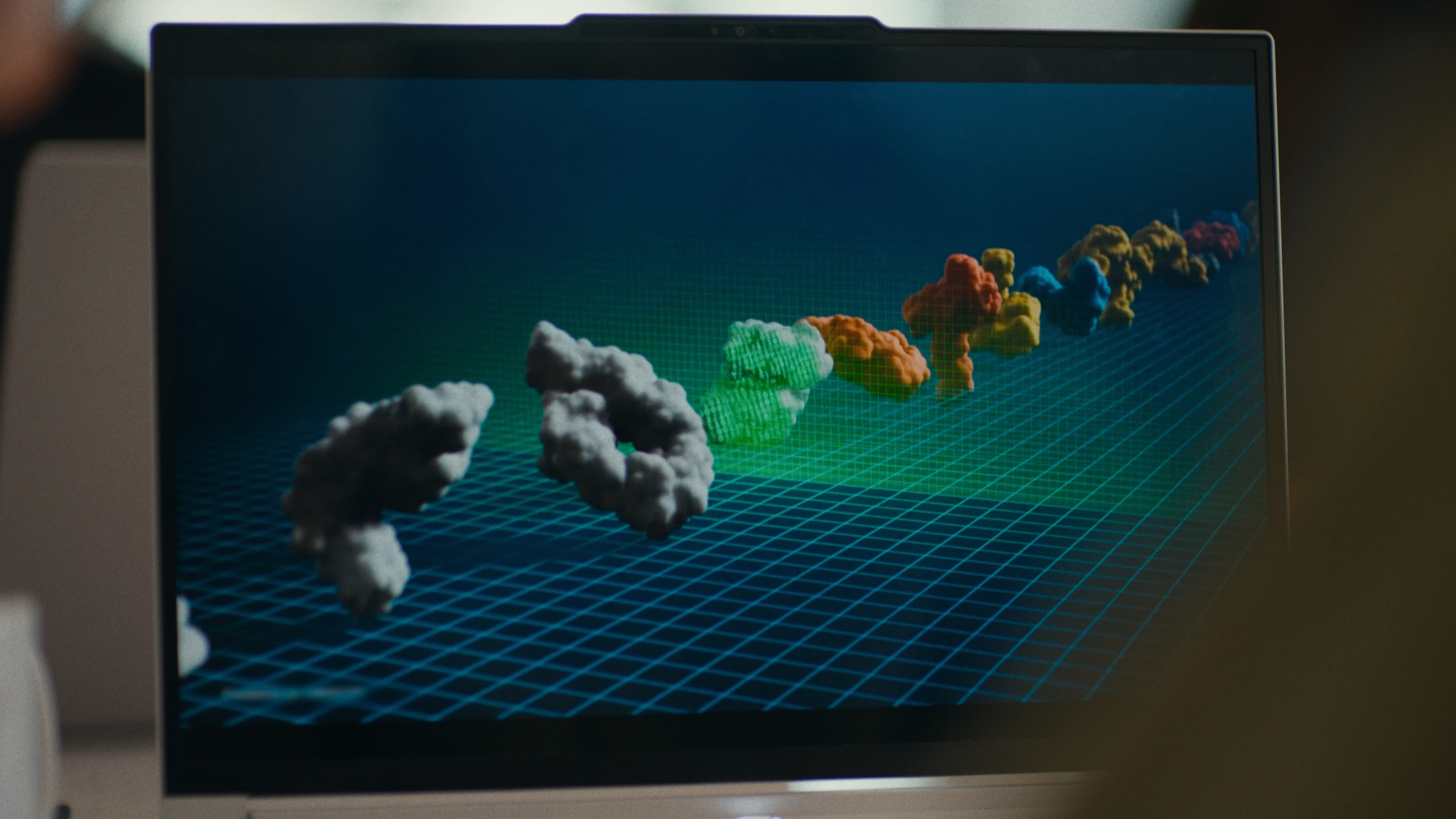
A visualization of the molecular structures the de la Fuente Lab searches at scale.
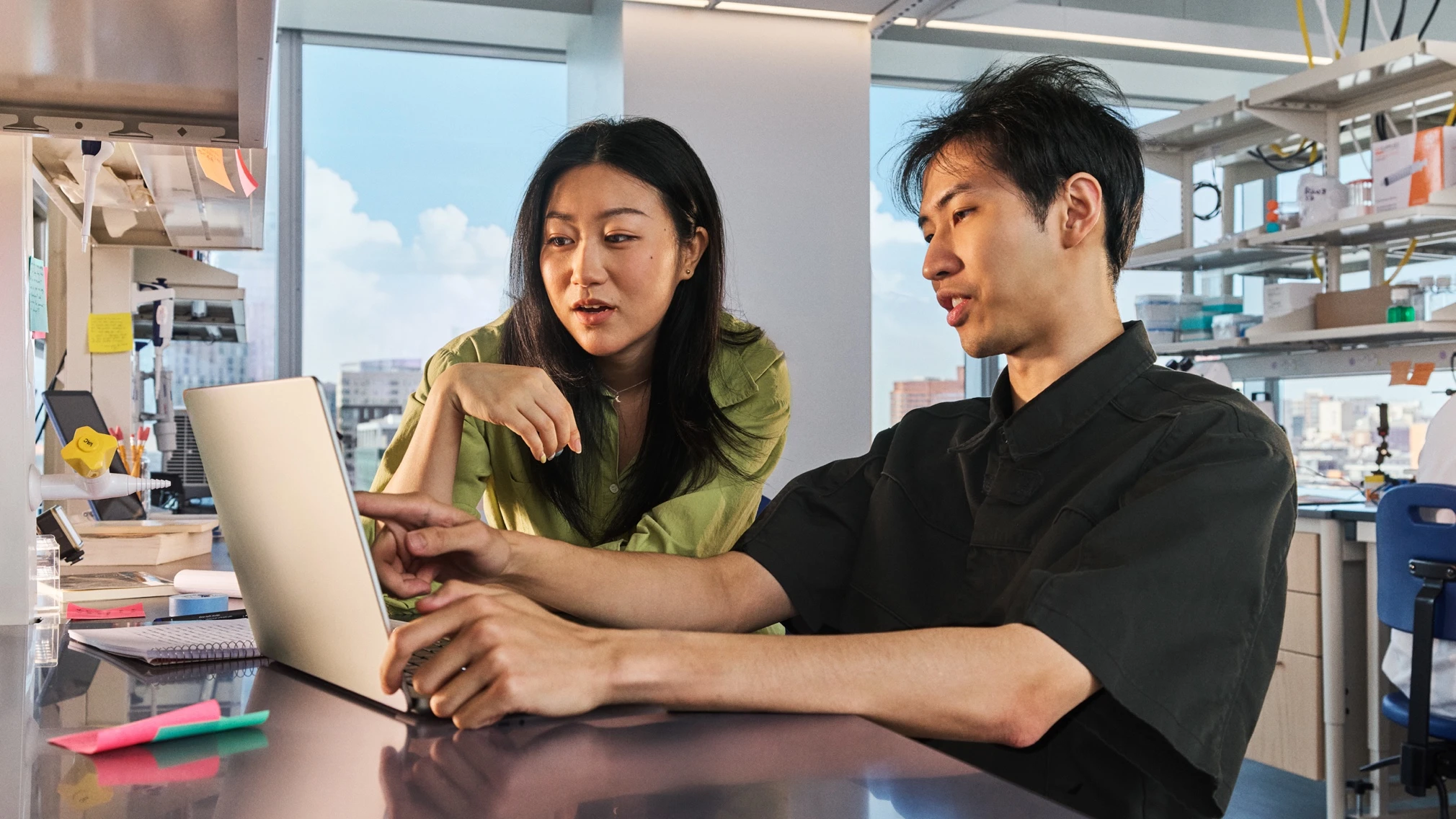
“AI can connect knowledge from different disciplines, helping us ask better questions and develop better methods to solve really hard problems.”
—Tianang Leng
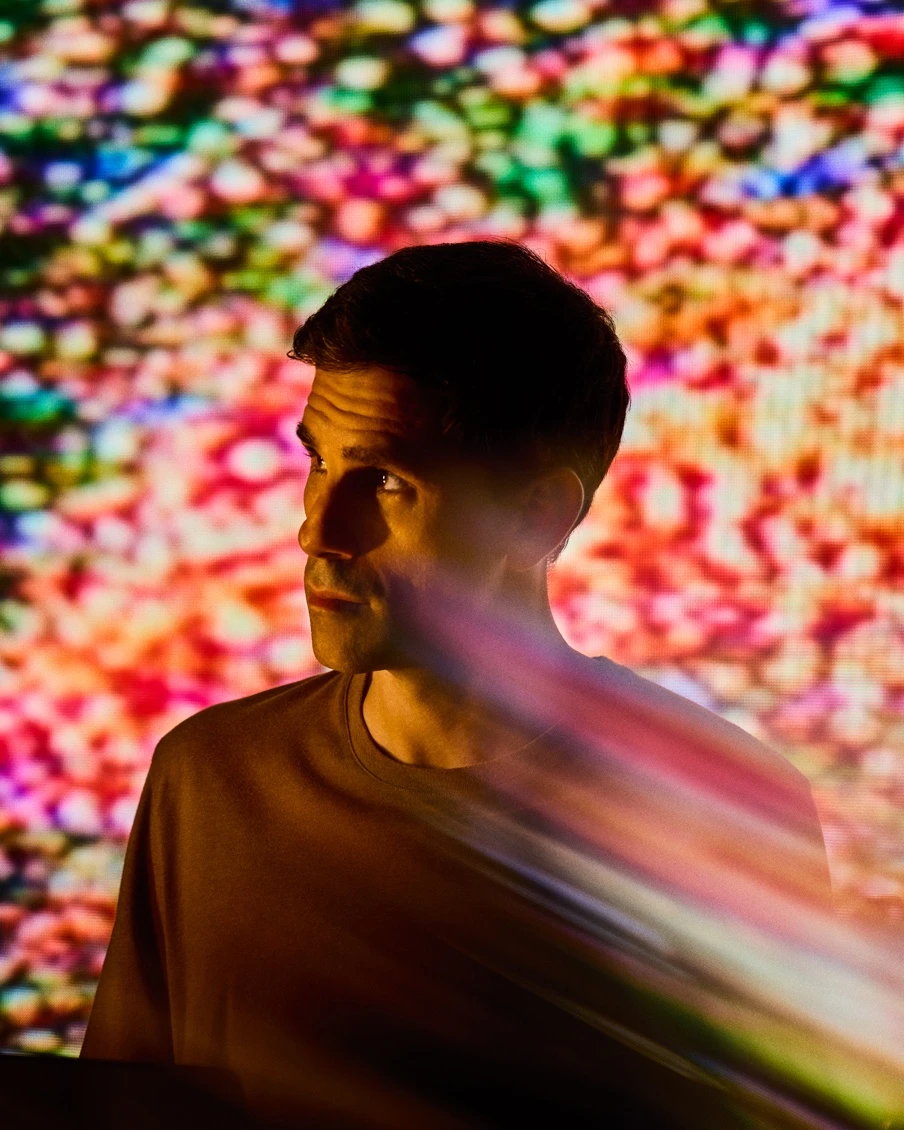
“I would not be doing my job if we weren't trying to tackle huge problems.”
The future of antibiotics
The combination of human ingenuity and machine intelligence is helping chart an exciting path forward in medicine. “Even just a couple years ago, I was pessimistic about our ability to keep up with the arms race between AMR and humanity's ability to come up with new molecules,” he says. “But now some of these systems that we've been developing recently with tools like ChatGPT give me a lot more hope than I anticipated.” For Dr. de la Fuente, everything he does is in service of a singular goal: to reduce suffering and save lives. “I've been waiting my whole life to have tools that allow us to do what we do today.”
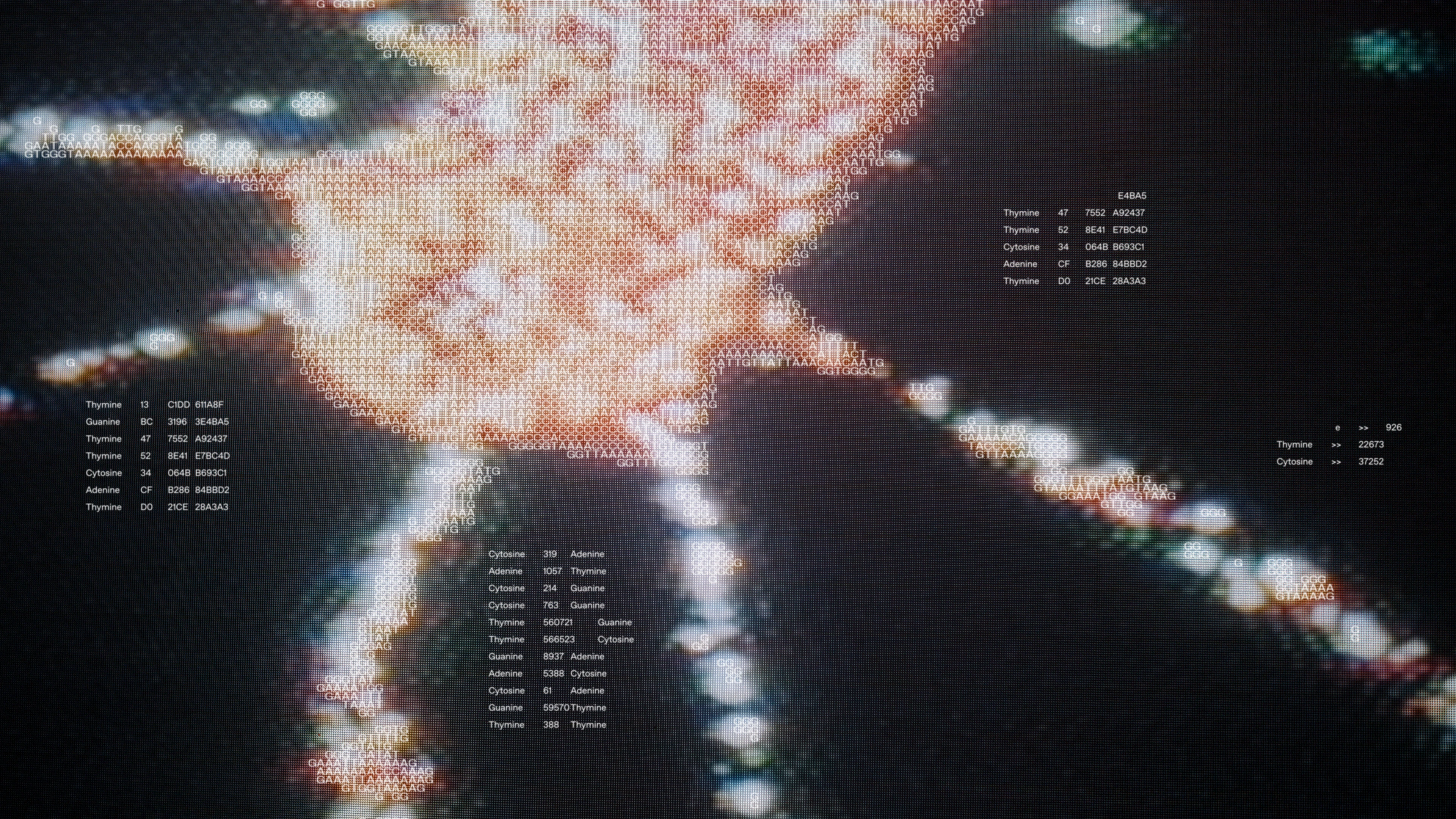
“We've seen that a lot of the molecules we’ve discovered are indeed capable of killing contemporary pathogens.”
—Dr. César de la Fuente
“Imagine a molecule that you created on a computer capable of saving lives. I think scientists live for those moments when you discover something that no one in the history of the world has discovered.”