Pagpapabilis ng siyentipikong pagtuklas gamit ang ChatGPT for Academic Researchers
Ibinibigay namin nang libre sa 100,000 siyentipiko, mathematician, at engineer ang aming mga frontier na modelo at tool.
Update noong Agosto 10, 2026: Ang mga bagong aplikante ay isasama na ngayon sa waitlist habang sinusuri namin ang mahigit 13,000 aplikasyon sa unang bugso—na kumakatawan sa hanggang 65,000 puwesto para sa mga mananaliksik—at pinipili ang paunang pangkat na may 10,000 puwesto sa pamamagitan ng bunutan mula sa mga kwalipikadong aplikante. Ang mga hindi mapipili sa pangkat na ito ay mananatiling kwalipikado para sa mga susunod na round ng pagpili kapag muling nagbukas ang mga aplikasyon sa huling bahagi ng taglagas na ito. Magbibigay-daan ito sa amin na magtuon sa pagsuporta sa unang grupo ng mga mananaliksik habang pinalalawak namin ang programa.
Naniniwala kaming hindi dapat mapunta lamang sa ilang kumpanya at mga laboratoryong maraming mapagkukunan ang mga pakinabang ng frontier AI. Nakasalalay ang pagsulong ng agham sa pagtatanong ng mga mananaliksik ng mga tamang tanong, pagsubok ng mga bagong ideya, at pagpapaunlad sa mga natuklasan ng iba. Ang tungkulin namin ay ibigay sa kanila ang mahuhusay na tool—at makipagtulungan sa kanila sa pagdisenyo ng mga modelong nagpapabilis sa kanilang pananaliksik habang nananatili sa kanila ang kontrol.
Ipinapakilala namin ang ChatGPT for Academic Researchers, isang programang magbibigay sa 100,000 mananaliksik sa mga piling institusyong akademiko ng libreng access sa aming mga frontier na modelo. Tutulungan ng programa ang mga mananaliksik sa agham, matematika, at engineering na lutasin ang mas mahihirap na problema, pabilisin ang pagtuklas, at pagbutihin ang pagiging produktibo, mula sa paghahanda ng mga aplikasyon para sa grant hanggang sa pagsubok ng mga hipotesis.
Magsisimula kami ngayong tag-init sa 10,000 mananaliksik, at available na ang access sa mga institusyon gaya ng Institute for Advanced Study (IAS) at École normale supérieure (ENS). Plano naming palawakin ito sa 100,000 mananaliksik hanggang 2027. Magkakaroon ang mga kalahok ng access sa aming mga frontier na modelo, kabilang ang GPT‑5.6 Sol Pro sa paglulunsad, at maaari silang mag-imbita ng hanggang apat na katuwang mula sa kanilang institusyon. May pamproteksiyong pampribasiya at panseguridad na pangnegosyo ang mga workspace, at bilang default, hindi ginagamit ang data upang sanayin ang aming mga modelo. Maaaring gumamit ang mga mananaliksik ng mga tool at kasanayan para suportahan ang iba’t ibang gawain, mula sa genomic analysis at protein modeling hanggang sa pagsusuri ng literatura, pagsusulat ng grant, at paglalathala.
Kasama rin sa programa ang pagsasanay, praktikal na suporta, at mga pagkakataong matuto mula sa ibang mananaliksik at magbahagi sa amin ng feedback.
Para sa mga institusyong may ChatGPT Edu, ang libreng access na ibibigay sa pamamagitan ng programang ito ay pangangasiwaan sa workspace ng institusyon. Alamin pa ang tungkol sa ChatGPT Edu at kung paano sinusuportahan ng OpenAI ang mas mataas na edukasyon.
Bahagi ang ChatGPT for Academic Researchers ng mahigit $250 milyong pangako hanggang 2027 upang suportahan ang panlabas na siyentipikong pananaliksik at pagtuklas. Kabilang dito ang NextGenAI, ang aming $50 milyong inisyatiba para suportahan ang mga institusyong pananaliksik, at ang pakikipagtulungan namin sa Genesis Mission ng Department of Energy upang maihatid ang frontier AI sa mga mananaliksik sa mga pambansang laboratoryo at unibersidad. Sa kabuuan, ipinapakita ng mga pagsisikap na ito ang paniniwala naming mas mabilis umuunlad ang agham kapag mas maraming mananaliksik ang may mga tool upang itaguyod ang sarili nilang mga ideya.
Mas mabilis kaysa sa inaasahan ng marami ang paghusay ng AI bilang tool sa pananaliksik. Bawat linggo, humigit-kumulang 1.3 milyong tao ang gumagamit ng ChatGPT para sa advanced na agham at matematika, na lumilikha ng humigit-kumulang 8.4 milyong mensahe.
Lalo itong kapansin-pansin sa matematika. Sa nakalipas na anim na buwan, mula sa paminsan-minsang paggamit sa magkakahiwalay na problema, naging mas regular na bahagi ng pananaliksik sa matematika ang AI. Dumarami ang mga papel na kumikilala sa ambag ng ChatGPT, na nagpapakita kung gaano kabilis ginagamit ng mga mananaliksik ang mga tool na ito sa kanilang gawain.
* Hindi kumpletong buwan; kasalukuyang hanggang Hulyo 21 ang full-text index.
Ginagamit ng mga mananaliksik ang ChatGPT at Codex sa halos bawat yugto ng gawaing siyentipiko. Tinutulungan ng ChatGPT ang mga mananaliksik na masusing suriin ang mga ideya, magtamo ng kaalaman, bumuo ng mga haypotesis, at ipahayag ang kanilang mga natuklasan. Sinusuportahan ng Codex ang pagsasagawa ng pananaliksik at pormal na pagsusuri, kabilang ang pagsusulat ng code at pagsusuri ng mga resulta.
Bahagdan ng mga kahilingan sa siyentipikong pananaliksik ayon sa kategorya ng workflow at produkto, Hunyo 21–Hulyo 20, 2026
Nakikita na sa pananaliksik ang mga padron na ito. Ginagamit ng physicist na si Rogerio Jorge at ng kaniyang pangkat ang AI upang bumuo ng open-source na software para sa fusion research na ginagamit ng industriya at mga pambansang laboratoryo sa pagdisenyo ng mga kagamitang pang-fusion energy. Sa theoretical computer science, ginamit nina Barna Saha, Yinzhan Xu, at Christopher Ye ang GPT‑5.5 Pro upang bumuo ng patunay na nagtatakda ng mga bagong limitasyon sa husay ng mga computer sa paglutas ng mga problema sa high-dimensional geometry, at pagkatapos ay sila mismo ang nagpatunay at nagpahusay sa mga resulta.
Mas ambisyoso rin ang mga gawaing hinaharap ng mga mananaliksik na pinakamasinsing gumagamit ng mga tool na ito. Ang mga kabilang sa nangungunang 20% sa paggamit ng AI sa kanilang larangan ay halos doble ang posibilidad kaysa sa kanilang mga kasamahan na hilingin sa AI na gawin ang mga gawaing tinatayang nangangailangan ng apat na oras o higit pa: halos 7% ng kanilang mga kahilingan, kumpara sa 3.5% ng ibang mananaliksik sa parehong larangan.
Bahagdan ng mga siyentipikong kahilingan ayon sa tinatayang oras ng aktibong paggawa ng tao at antas ng paggamit ng AI ng siyentipiko, Hunyo 21–Hulyo 20, 2026
Hindi layunin ng aming estratehiya na magpasya kung aling mga suliraning siyentipiko ang nararapat pagtuunan o subukang lutasin ang lahat ng ito nang kami lamang. Layunin naming ibigay sa komunidad ng pananaliksik ang mahuhusay na tool at hayaang tugunan ng mga mananaliksik ang mga tanong na pinakanauunawaan nila.
Makakatanggap ang mga kalahok ng libreng access sa aming mga frontier na modelo sa ChatGPT, ChatGPT Work, at Codex, kabilang ang pamilya ng mga modelong GPT‑5.6 sa paglulunsad. Magkakaroon din sila ng pinalawak na malalimang pananaliksik, mas matataas na limitasyon sa paggamit, at mas malalaking context window. Sama-sama, sinusuportahan ng mga kakayahang ito ang siyentipikong pangangatwiran, agentic na pagsasagawa, at mga workflow ng pananaliksik sa iba’t ibang disiplina.
Binabalanse ng GPT‑5.6 Terra ang kakayahan at kahusayan para sa pang-araw-araw na pananaliksik, nagbibigay ang GPT‑5.6 Luna ng mas mabilis na tugon para sa mas magagaang gawain, at nilulutas ng GPT‑5.6 Sol ang pinakamahihirap na suliraning siyentipiko at pangmatematika. Sa FrontierMath Tier 4, na sumusukat sa pangangatwirang pangmatematika sa antas ng pananaliksik, nakakuha ang GPT‑5.6 Sol ng 83%, kumpara sa 72.5% ng GPT‑5.5. Sa GeneBench Pro, na sumusuri sa komplikadong biological data analysis at siyentipikong pangangatwiran, nalulutas ng GPT‑5.6 Sol Pro ang 31.5% ng mga gawain.
Maaaring gumamit ang mga mananaliksik ng mahigit 75 kasanayan sa life science(magbubukas sa bagong window) na sumasaklaw sa genetics, genomics, sequencing, single-cell analysis, protein modeling, at drug discovery. Sinusuportahan ng mga connector ang pananaliksik sa iba’t ibang disiplina sa pamamagitan ng access sa siyentipikong literatura, mga pampublikong genomic at clinical database, satellite imagery, computational notebook, data platform, at reference manager.
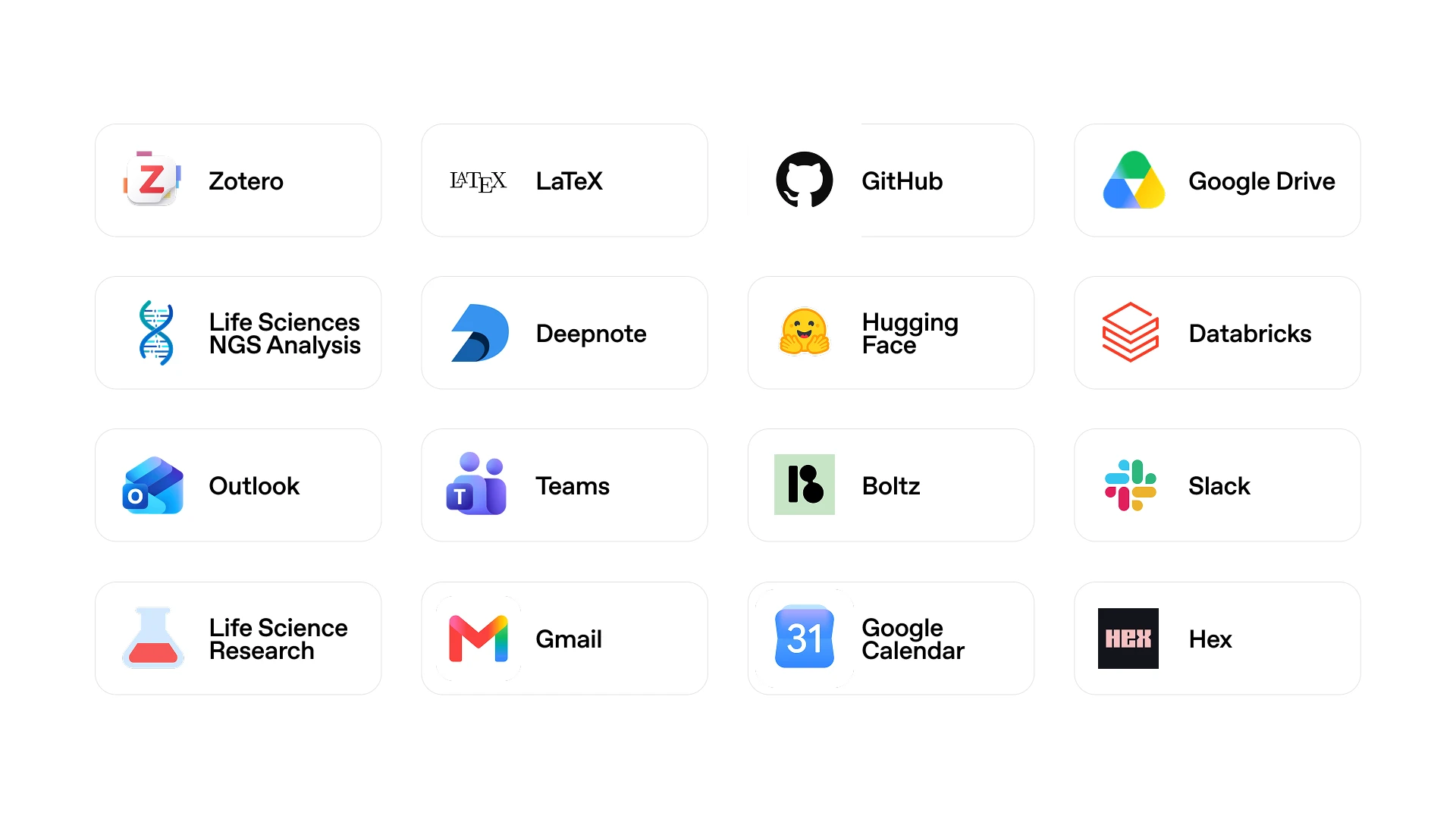
Mga halimbawang kumakatawan sa mga kasanayan, connector, at tool na available sa ChatGPT at Codex.
Makakatulong ang Codex sa pagsusulat at pag-debug ng code, pagsusuri ng mga dataset, at pagbuo ng mga workflow na maaaring ulitin. Masusuportahan ng ChatGPT Work ang mas mahahabang proyekto gaya ng paghahanap ng mga pagkakataon sa pagpopondo, paghahanda ng mga aplikasyon para sa grant, pagsusuri ng literatura, pagbuo ng mga manuskrito, at paggawa ng mga materyal upang maipahayag ang mga resulta.
Magkakaiba ang panimulang antas ng mga mananaliksik sa paggamit ng AI. Maaaring unang beses pa lamang gamitin ng ilan ang mga tool na ito; ang iba naman ay maaaring gumagawa na ng mga advanced na aplikasyon sa kanilang larangan.
Mag-aalok ang programa ng pagsasanay na iniangkop sa iba’t ibang antas ng karanasan, mula sa pagsisimula at pagpapahusay ng mga workflow hanggang sa mga advanced na aplikasyon sa pananaliksik. Magkakaroon ang mga kalahok ng access sa mga espesyalistang pamilyar sa mga workflow ng pananaliksik, kabilang ang tulong sa pagsasama ng mga tool na ito sa kanilang gawain.
Habang nakikita namin ang mga natutuklasan ng mga mananaliksik, plano naming lumikha ng mas maraming pagkakataon upang makapagbahagi sila ng mga praktikal na pamamaraan, matuto sa isa’t isa, at maitampok ang mga gamit sa iba’t ibang disiplina. Tutulungan kami ng kanilang feedback na maunawaan kung saan kapaki-pakinabang ang aming mga modelo, kung saan nagkukulang ang mga ito, at kung paano magiging mas mahalaga ang mga ito sa komunidad ng pananaliksik.
Bukas ang paunang programa sa mga kwalipikadong mananaliksik sa mga piling institusyong akademiko. Ang mga kwalipikadong institusyon(magbubukas sa bagong window) ay dapat kinikilalang kolehiyo o unibersidad na nagbibigay ng degree at may mataas na antas ng aktibidad sa pananaliksik.
Kailangang patunayan ng mga aplikante ang kanilang kaugnayan sa institusyon at magbigay ng impormasyon tungkol sa kanilang aktibong pananaliksik at nilalayong siyentipikong paggamit. Maaaring mag-imbita ang mga aprubadong mananaliksik ng hanggang apat na katuwang mula sa kanilang institusyon. Dapat ding patunayan ng bawat katuwang ang kaniyang kaugnayan sa institusyon, at mabibilang siya sa kabuuang bilang ng mga account sa programa.
Bukas na ngayon ang aplikasyon. Maaari mong suriin ang mga pamantayan sa pagiging kwalipikado at mag-apply dito(magbubukas sa bagong window).