Acelerar los descubrimientos científicos con ChatGPT para investigadores académicos
Ponemos nuestros modelos y herramientas de vanguardia en manos de 100 000 científicos, matemáticos e ingenieros, sin costo.
Actualización del 10 de agosto de 2026: Los nuevos solicitantes ahora se unirán a una lista de espera mientras revisamos las más de 13 000 solicitudes de la primera tanda, que representan hasta 65 000 cupos para investigadores, y seleccionamos la cohorte inicial de 10 000 cupos mediante un sorteo entre los solicitantes elegibles. Quienes no sean seleccionados en esta cohorte seguirán siendo elegibles para futuras rondas de selección cuando se reabra la recepción de solicitudes más adelante este otoño. Esto nos permitirá enfocarnos en apoyar al primer grupo de investigadores a medida que ampliamos el programa.
Creemos que los beneficios de la IA de vanguardia no deberían concentrarse en unas pocas empresas y laboratorios con abundantes recursos. El progreso científico depende de que los investigadores planteen las preguntas adecuadas, pongan a prueba nuevas ideas y aprovechen los descubrimientos de otros. Nuestra función es poner herramientas potentes en sus manos y trabajar a su lado para diseñar modelos que aceleren sus investigaciones sin quitarles el control.
Presentamos ChatGPT para investigadores académicos, un programa que dará a 100 000 investigadores de instituciones académicas seleccionadas acceso gratuito a nuestros modelos de vanguardia. El programa ayudará a investigadores de ciencias, matemáticas e ingeniería a abordar problemas avanzados, acelerar los descubrimientos y mejorar la productividad, desde preparar solicitudes de subvenciones hasta poner a prueba hipótesis.
Comenzaremos este verano con 10 000 investigadores, y el acceso ya está disponible en instituciones como el Institute for Advanced Study (IAS) y la École normale supérieure (ENS). Planeamos ampliar el programa a 100 000 investigadores hasta 2027. Los participantes tendrán acceso a nuestros modelos de vanguardia, incluido GPT‑5.6 Sol Pro en el lanzamiento, y podrán invitar hasta a cuatro colaboradores de su institución. Los espacios de trabajo incluyen protecciones de privacidad y seguridad de nivel empresarial, y los datos no se utilizan de forma predeterminada para entrenar nuestros modelos. Los investigadores pueden usar herramientas y habilidades para respaldar tareas que van desde el análisis genómico y el modelado de proteínas hasta la revisión bibliográfica, la redacción de solicitudes de subvenciones y la publicación.
El programa también incluye capacitación, asistencia práctica y oportunidades para aprender de otros investigadores y compartir comentarios con nosotros.
En las instituciones que cuentan con ChatGPT Edu, el acceso gratuito otorgado mediante este programa se coordinará a través del Espacio de trabajo de la institución. Obtén más información sobre ChatGPT Edu y cómo OpenAI apoya la educación superior.
ChatGPT para investigadores académicos forma parte de un compromiso de más de 250 millones de dólares hasta 2027 para apoyar la investigación científica externa y los descubrimientos. Esto incluye NextGenAI, nuestra iniciativa de 50 millones de dólares para apoyar a instituciones de investigación, y nuestro trabajo con la Misión Génesis del Departamento de Energía para acercar la IA de vanguardia a investigadores de laboratorios nacionales y universidades. En conjunto, estas iniciativas reflejan nuestra convicción de que el progreso científico se acelera cuando más investigadores disponen de las herramientas necesarias para desarrollar sus propias ideas.
La IA se está convirtiendo en una herramienta de investigación más capaz con mayor rapidez de la que muchos esperaban. Cada semana, alrededor de 1,3 millones de personas usan ChatGPT para ciencias y matemáticas avanzadas y generan unos 8,4 millones de mensajes.
El cambio es especialmente evidente en las matemáticas. En los últimos seis meses, la IA pasó de usarse ocasionalmente para problemas aislados a formar parte habitual de la investigación matemática. Cada vez más artículos reconocen la contribución de ChatGPT, lo que refleja la rapidez con la que los investigadores están incorporando estas herramientas a su trabajo.
* Mes incompleto; el índice de texto completo abarca actualmente hasta el 21 de julio.
Los investigadores usan ChatGPT y Codex en casi todas las etapas del trabajo científico. ChatGPT ayuda a los investigadores a examinar ideas, adquirir conocimientos, generar hipótesis y comunicar sus hallazgos. Codex facilita la ejecución de investigaciones y el análisis formal, incluida la escritura de código y el análisis de resultados.
Proporción de solicitudes de investigación científica por categoría del flujo de trabajo científico y producto, del 21 de junio al 20 de julio de 2026
Estos patrones ya se observan en la investigación. El físico Rogerio Jorge y su equipo usan IA para desarrollar software de código abierto destinado a la investigación de la fusión, que la industria y los laboratorios nacionales utilizan para diseñar dispositivos de energía de fusión. En informática teórica, los investigadores Barna Saha, Yinzhan Xu y Christopher Ye usaron GPT‑5.5 Pro para desarrollar una demostración que establece nuevos límites sobre la eficiencia con que las computadoras pueden resolver problemas de geometría de alta dimensión; luego validaron y perfeccionaron los resultados por su cuenta.
Los investigadores que usan estas herramientas con mayor intensidad también emprenden trabajos más ambiciosos. Quienes se encuentran en el 20 % con mayor uso de IA dentro de su campo tienen casi el doble de probabilidades que sus colegas de pedirle a la IA tareas que se estima requieren cuatro horas o más: casi el 7 % de sus solicitudes, frente al 3,5 % entre otros investigadores del mismo campo.
Proporción de solicitudes científicas según el tiempo estimado de trabajo humano activo y la intensidad de uso de IA del científico, del 21 de junio al 20 de julio de 2026
Nuestra estrategia no consiste en decidir qué problemas científicos merecen atención ni en intentar resolverlos todos por nuestra cuenta. Consiste en poner herramientas capaces en manos de la comunidad investigadora y permitir que los investigadores aborden las preguntas que mejor conocen.
Los participantes recibirán acceso gratuito a nuestros modelos de vanguardia en ChatGPT, ChatGPT Work y Codex, incluida la familia de modelos GPT‑5.6 en el lanzamiento. También dispondrán de más capacidad de investigación profunda, límites de uso más altos y ventanas de contexto más amplias. En conjunto, estas capacidades facilitan el razonamiento científico, la ejecución mediante agentes y los flujos de trabajo de investigación en distintas disciplinas.
GPT‑5.6 Terra equilibra capacidad y eficiencia para la investigación cotidiana, GPT‑5.6 Luna ofrece respuestas más rápidas para tareas sencillas y GPT‑5.6 Sol aborda los problemas científicos y matemáticos más difíciles. En FrontierMath Tier 4, que mide el razonamiento matemático a nivel de investigación, GPT‑5.6 Sol obtiene un 83 %, frente al 72,5 % de GPT‑5.5. En GeneBench Pro, que evalúa el análisis complejo de datos biológicos y el razonamiento científico, GPT‑5.6 Sol Pro resuelve el 31,5 % de las tareas.
Los investigadores pueden usar más de 75 habilidades para las ciencias biológicas(se abre en una nueva ventana) que abarcan genética, genómica, secuenciación, análisis unicelular, modelado de proteínas y descubrimiento de fármacos. Los conectores facilitan la investigación en distintas disciplinas al proporcionar acceso a publicaciones científicas, bases de datos genómicas y clínicas públicas, imágenes satelitales, cuadernos computacionales, plataformas de datos y gestores de referencias.
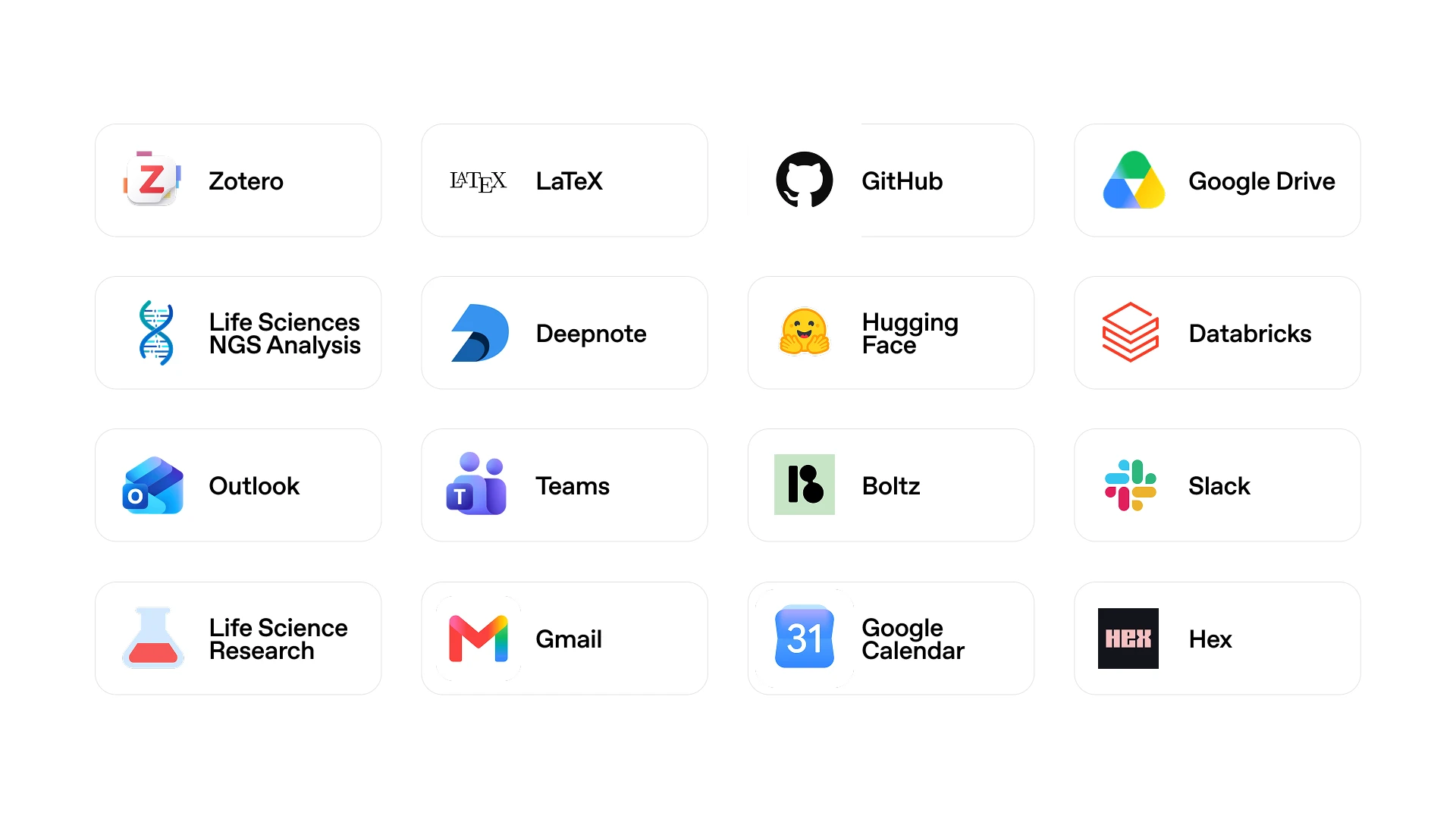
Ejemplos representativos de habilidades, conectores y herramientas disponibles en ChatGPT y Codex.
Codex puede ayudar a escribir y depurar código, analizar conjuntos de datos y crear flujos de trabajo reproducibles. ChatGPT Work puede facilitar proyectos más largos, como buscar oportunidades de financiamiento, preparar solicitudes de subvenciones, revisar publicaciones, redactar manuscritos y crear materiales para comunicar resultados.
Los investigadores tendrán distintos niveles de experiencia inicial con la IA. Algunos quizá usen estas herramientas por primera vez, mientras que otros podrían estar desarrollando aplicaciones avanzadas en sus campos.
El programa ofrecerá capacitación adaptada a distintos niveles de experiencia, desde primeros pasos y mejoras de los flujos de trabajo hasta aplicaciones avanzadas de investigación. Los participantes tendrán acceso a especialistas familiarizados con los flujos de trabajo de investigación, incluida ayuda para integrar estas herramientas en su trabajo.
A medida que conozcamos los descubrimientos de los investigadores, planeamos crear más oportunidades para que compartan enfoques prácticos, aprendan unos de otros y destaquen usos en distintas disciplinas. Sus comentarios nos ayudarán a entender dónde son útiles nuestros modelos, dónde presentan limitaciones y cómo hacerlos más valiosos para la comunidad investigadora.
El programa inicial está abierto a investigadores que cumplan los requisitos en instituciones académicas seleccionadas. Las instituciones elegibles(se abre en una nueva ventana) deben ser universidades o instituciones de educación superior reconocidas, con facultad para otorgar títulos y un alto nivel de actividad investigadora.
Los solicitantes deberán verificar su afiliación institucional y proporcionar información sobre su investigación activa y el uso científico previsto. Los investigadores aprobados podrán invitar hasta a cuatro colaboradores de su institución. Cada colaborador también deberá verificar su afiliación y contará para el número total de cuentas del programa.
Las postulaciones ya están abiertas. Puedes consultar los criterios de elegibilidad y postularte aquí(se abre en una nueva ventana).