Zrychlení vědeckých objevů s ChatGPT pro akademické výzkumníky
Zpřístupňujeme naše průkopnické modely a nástroje 100 000 vědců, matematiků a inženýrů – bezplatně.
Aktualizace k 10. srpnu 2026: Během posuzování více než 13 000 přihlášek z první vlny (což představuje až 65 000 míst pro výzkumníky), budou noví uchazeči budou nyní zařazeni na čekací listinu. My mezitím vybereme losováním mezi způsobilými uchazeči počáteční kohortu o 10 000 místech. Ti, kteří v této kohortě nebudou vybráni, zůstanou způsobilí pro budoucí kola výběru. Přihlášky se otevřou letos na podzim. To nám umožní soustředit se na podporu první skupiny výzkumníků při rozšiřování programu.
Věříme, že přínosy průkopnické AI by se neměly soustředit jen v několika firmách a dobře vybavených laboratořích. Vědecký pokrok závisí na tom, zda výzkumníci kladou správné otázky, ověřují nové myšlenky a navazují na objevy ostatních. Naším úkolem je dát jim do rukou výkonné nástroje a společně s nimi navrhovat modely, které urychlí jejich výzkum a zároveň jim ponechají kontrolu.
Představujeme program ChatGPT pro akademické výzkumníky, který 100 000 výzkumníků z vybraných akademických institucí zdarma zpřístupní naše průkopnické modely. Program pomůže výzkumníkům z přírodních věd, matematiky a technických oborů řešit pokročilé problémy, urychlovat objevy a zvyšovat produktivitu – od přípravy grantových žádostí po ověřování hypotéz.
Letos v létě začínáme s 10 000 výzkumníky. Přístup už je k dispozici například v Institute for Advanced Study (IAS) a École normale supérieure (ENS). Do roku 2027 plánujeme program rozšířit na 100 000 výzkumníků. Účastníci získají přístup k našim průkopnickým modelům, včetně GPT‑5.6 Sol Pro, od data jejich spuštění a budou moci pozvat až čtyři spolupracovníky ze své instituce. Pracovní prostory nabízejí ochranu soukromí a zabezpečení na firemní úrovni a data se ve výchozím nastavení nepoužívají k trénování našich modelů. Výzkumníci mohou využívat nástroje a dovednosti při práci od genomické analýzy a modelování proteinů až po rešerše literatury, psaní grantových žádostí a publikování.
Program zahrnuje také školení, praktickou podporu a příležitosti učit se od dalších výzkumníků a sdílet s námi zpětnou vazbu.
U institucí využívajících ChatGPT Edu bude bezplatný přístup poskytovaný v rámci tohoto programu koordinován prostřednictvím pracovního prostoru instituce. Více informací o ChatGPT Edu a o tom, jak OpenAI podporuje vysoké školství.
ChatGPT pro akademické výzkumníky je součástí závazku investovat do roku 2027 více než 250 milionů dolarů na podporu externího vědeckého výzkumu a objevů. Patří sem NextGenAI, naše iniciativa na podporu výzkumných institucí v hodnotě 50 milionů dolarů, i spolupráce s iniciativou Ministerstva energetiky Genesis Mission, která zpřístupňuje průkopnickou AI výzkumníkům v národních laboratořích a na univerzitách. Všechny tyto aktivity odrážejí naše přesvědčení, že vědecký pokrok se urychluje, když má více výzkumníků k dispozici nástroje k rozvíjení vlastních myšlenek.
AI se stává schopnějším výzkumným nástrojem rychleji, než mnozí očekávali. Každý týden používá ChatGPT pro pokročilou vědu a matematiku přibližně 1,3 milionu lidí, kteří vygenerují asi 8,4 milionu zpráv.
Tato změna je obzvlášť patrná v matematice. Za posledních šest měsíců se AI posunula od příležitostného využití u jednotlivých problémů k pravidelné součásti matematického výzkumu. Stále více odborných prací nyní zmiňuje přínos ChatGPT, což ukazuje, jak rychle výzkumníci tyto nástroje zapojují do své práce.
* Neúplný měsíc; fulltextový index nyní zahrnuje období do 21. července.
Výzkumníci používají ChatGPT a Codex téměř ve všech fázích vědecké práce. ChatGPT pomáhá výzkumníkům kriticky zkoumat myšlenky, získávat znalosti, vytvářet hypotézy a sdělovat výsledky. Codex podporuje realizaci výzkumu a formální analýzu, včetně psaní kódu a analýzy výsledků.
Podíl požadavků na vědecký výzkum podle kategorie pracovního postupu a produktu, 21. června – 20. července 2026
Tyto vzorce se už projevují ve výzkumu. Fyzik Rogerio Jorge se svým týmem využívá AI k vývoji open-source softwaru pro výzkum jaderné fúze, který průmysl a národní laboratoře používají při návrhu zařízení pro získávání energie z fúze. Výzkumníci Barna Saha, Yinzhan Xu a Christopher Ye využili v teoretické informatice GPT‑5.5 Pro k vytvoření důkazu, který stanovuje nové meze efektivity řešení problémů vysokodimenzionální geometrie počítači. Výsledky pak sami ověřili a zpřesnili.
Výzkumníci, kteří tyto nástroje používají nejintenzivněji, se zároveň pouštějí do ambicióznější práce. Výzkumníci patřící ve svém oboru k 20 % nejintenzivnějších uživatelů AI jí téměř dvakrát častěji než jejich kolegové zadávají úkoly odhadované na čtyři a více hodin práce: jde o téměř 7 % jejich požadavků oproti 3,5 % u ostatních výzkumníků ve stejném oboru.
Podíl vědeckých požadavků podle odhadované doby aktivní lidské práce a intenzity využití AI vědci, 21. června – 20. července 2026
Naší strategií není rozhodovat, které vědecké problémy si zaslouží pozornost, ani je nechceme všechny vyřešit sami. Chceme dát výzkumné komunitě do rukou schopné nástroje a umožnit výzkumníkům věnovat se otázkám, kterým rozumějí nejlépe.
Účastníci získají bezplatný přístup k našim průkopnickým modelům v ChatGPT, ChatGPT Work a Codexu, včetně rodiny modelů GPT‑5.6, od data jejich spuštění. Získají také širší možnosti hloubkového výzkumu, vyšší limity využití a větší kontextová okna. Tyto funkce společně podporují vědecké uvažování, autonomní plnění úkolů a mezioborové výzkumné pracovní postupy.
GPT‑5.6 Terra vyvažuje schopnosti a efektivitu při každodenním výzkumu, GPT‑5.6 Luna nabízí rychlejší odpovědi na jednodušší úkoly a GPT‑5.6 Sol řeší nejobtížnější vědecké a matematické problémy. V testu FrontierMath Tier 4, který měří matematické uvažování na výzkumné úrovni, dosahuje GPT‑5.6 Sol výsledku 83 % oproti 72,5 % u GPT‑5.5. V testu GeneBench Pro, který hodnotí komplexní analýzu biologických dat a vědecké uvažování, vyřeší GPT‑5.6 Sol Pro 31,5 % úloh.
Výzkumníci mohou využívat více než 75 dovedností pro biologické vědy(otevře se v novém okně), které pokrývají genetiku, genomiku, sekvenování, analýzu jednotlivých buněk, modelování proteinů a vývoj léčiv. Konektory podporují mezioborový výzkum a zpřístupňují vědeckou literaturu, veřejné genomické a klinické databáze, satelitní snímky, výpočetní notebooky, datové platformy a správce citací.
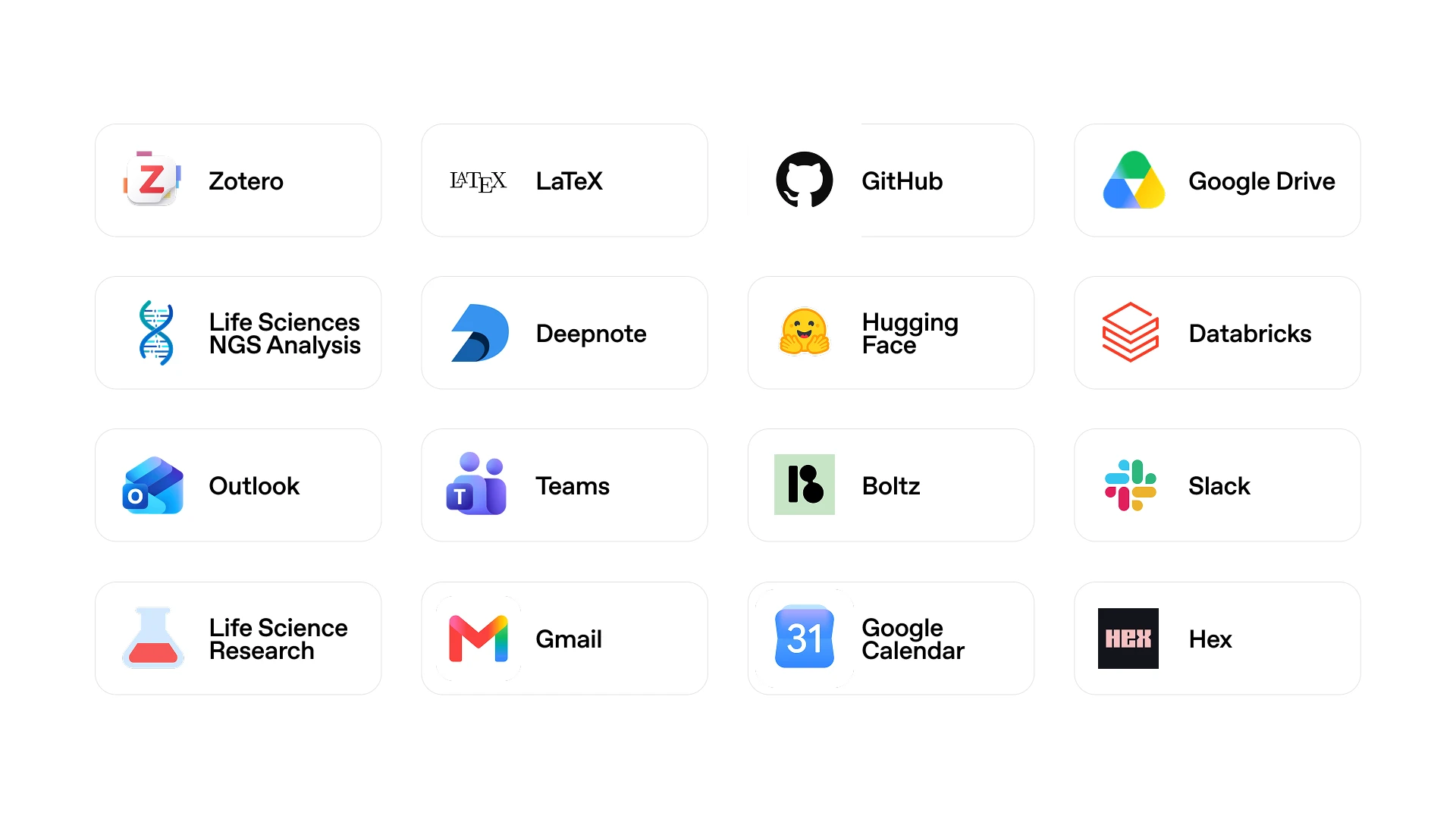
Reprezentativní příklady dovedností, konektorů a nástrojů dostupných v ChatGPT a Codexu.
Codex pomáhá psát a ladit kód, analyzovat datové sady a vytvářet reprodukovatelné pracovní postupy. ChatGPT Work dokáže podporovat delší projekty, například vyhledávání možností financování, přípravu grantových žádostí, rešerše literatury, tvorbu rukopisů a materiálů pro prezentaci výsledků.
Výzkumníci mívají různou výchozí míru zkušeností s AI. Někteří tyto nástroje budou používat poprvé, jiní už třeba vyvíjejí pokročilé aplikace ve svém oboru.
Program nabídne školení přizpůsobené různým úrovním zkušeností – od prvních kroků a zlepšování pracovních postupů až po pokročilé výzkumné aplikace. Účastníci získají přístup ke specialistům obeznámeným s pracovními postupy v oblasti výzkumu, včetně pomoci se začleněním těchto nástrojů do práce.
Jak se budeme postupně dozvídat, co výzkumníci objevili, chceme vytvářet další příležitosti ke sdílení praktických postupů a vzájemnému učení a poukazovat na možnosti využití napříč obory. Jejich zpětná vazba nám pomůže pochopit, kde jsou naše modely užitečné, kde mají nedostatky a jak mohou být pro výzkumnou komunitu přínosnější.
Úvodní program je otevřen výzkumníkům, kteří splňují podmínky a působí ve vybraných akademických institucích. Způsobilými institucemi(otevře se v novém okně) musí být uznávané vysoké školy nebo univerzity s právem udělovat akademické tituly a vysokou úrovní výzkumné činnosti.
Žadatelé budou muset ověřit svou příslušnost k instituci a uvést informace o svém aktivním výzkumu a zamýšleném vědeckém využití. Schválení výzkumníci mohou pozvat až čtyři spolupracovníky ze své instituce. I každý spolupracovník musí prokázat svou příslušnost k instituci a započítává se do celkového počtu účtů v programu.
Přihlášky lze podávat už dnes. Podmínky účasti si můžete prostudovat a přihlášku podat zde(otevře se v novém okně).