Snabbare vetenskapliga upptäckter med ChatGPT för akademiska forskare
Vi ger 100 000 forskare, matematiker och ingenjörer kostnadsfri tillgång till våra banbrytande modeller och verktyg.
Uppdatering den 10 augusti 2026: Nya sökande kommer nu att placeras på en väntelista medan vi granskar de mer än 13 000 ansökningarna från den första omgången (motsvarande upp till 65 000 forskarplatser) och väljer ut den första kohorten med 10 000 platser genom en utlottning bland behöriga sökande. De som inte väljs ut under denna kohort kommer att vara fortsatt behöriga för framtida urvalsomgångar när ansökningsperioden öppnar igen senare i höst. Detta gör det möjligt för oss att fokusera på att stödja den första gruppen forskare medan vi utökar programmet.
Vi anser att nyttan med banbrytande AI inte bör koncentreras till ett fåtal företag och resursstarka laboratorier. Vetenskapliga framsteg bygger på att forskare ställer rätt frågor, prövar nya idéer och bygger vidare på andras upptäckter. Vår roll är att ge dem kraftfulla verktyg och arbeta tillsammans med dem för att utforma modeller som påskyndar forskningen samtidigt som forskarna behåller kontrollen.
Vi lanserar ChatGPT för akademiska forskare, ett program som ger 100 000 forskare vid utvalda akademiska institutioner kostnadsfri tillgång till våra banbrytande modeller. Programmet ska hjälpa forskare inom naturvetenskap, matematik och teknik att ta sig an avancerade problem, påskynda upptäckter och öka produktiviteten – från att förbereda anslagsansökningar till att testa hypoteser.
Vi börjar med 10 000 forskare i sommar, och tillgång finns redan vid institutioner som Institute for Advanced Study (IAS) och École normale supérieure (ENS). Vi planerar att utöka programmet till 100 000 forskare fram till och med 2027. Deltagarna får tillgång till våra banbrytande modeller, däribland GPT‑5.6 Sol Pro vid lanseringen, och kan bjuda in upp till fyra samarbetspartner från sin institution. Arbetsytorna har integritets- och säkerhetsskydd på företagsnivå, och som standard används data inte för att träna våra modeller. Forskare kan använda verktyg och färdigheter för allt från genomanalys och proteinmodellering till litteraturöversikter, ansökningar om forskningsanslag och publicering.
Programmet omfattar även utbildning, praktiskt stöd och möjligheter att lära av andra forskare och dela återkoppling med oss.
För institutioner med ChatGPT Edu samordnas den kostnadsfria tillgången genom programmet via institutionens arbetsyta. Läs mer om ChatGPT Edu och hur OpenAI stöder högre utbildning.
ChatGPT för akademiska forskare ingår i ett åtagande på över 250 miljoner dollar fram till och med 2027 för att stödja extern vetenskaplig forskning och nya upptäckter. Det omfattar NextGenAI, vårt initiativ på 50 miljoner dollar för att stödja forskningsinstitutioner, samt vårt samarbete med USA:s energidepartements Genesis Mission för att ge forskare vid nationella laboratorier och universitet tillgång till banbrytande AI. Tillsammans speglar dessa satsningar vår övertygelse om att vetenskapliga framsteg går snabbare när fler forskare har verktygen att förverkliga sina egna idéer.
AI utvecklas till ett mer kraftfullt forskningsverktyg snabbare än många hade väntat sig. Varje vecka använder omkring 1,3 miljoner människor ChatGPT för avancerad naturvetenskap och matematik och genererar cirka 8,4 miljoner meddelanden.
Förändringen är särskilt tydlig inom matematiken. Under de senaste sex månaderna har AI gått från att användas sporadiskt för enstaka problem till att bli en mer regelbunden del av matematisk forskning. Allt fler forskningsartiklar uppmärksammar nu ChatGPT:s bidrag, vilket visar hur snabbt forskarna tar dessa verktyg i bruk.
* Ofullständig månad; fulltextindexet sträcker sig för närvarande till och med den 21 juli.
Forskare använder ChatGPT och Codex i nästan alla delar av det vetenskapliga arbetet. ChatGPT hjälper forskare att utforska idéer, inhämta kunskap, formulera hypoteser och kommunicera sina resultat. Codex stöder genomförandet av forskning och formell analys, bland annat genom att skriva kod och analysera resultat.
Andel vetenskapliga forskningsförfrågningar efter kategori i det vetenskapliga arbetsflödet och produkt, 21 juni–20 juli 2026
Dessa mönster syns nu i forskningen. Fysikern Rogerio Jorge och hans team använder AI för att utveckla forskningsprogramvara med öppen källkod som industrin och nationella laboratorier använder för att konstruera fusionsenergisystem. Inom teoretisk datavetenskap använde forskarna Barna Saha, Yinzhan Xu och Christopher Ye GPT‑5.5 Pro för att ta fram ett bevis som fastställer nya gränser för hur effektivt datorer kan lösa högdimensionella geometriproblem. Därefter validerade och förfinade de själva resultaten.
De forskare som använder verktygen mest intensivt tar sig också an mer ambitiösa uppgifter. Forskarna i den femtedel som använder AI mest inom sitt område är nästan dubbelt så benägna som sina kollegor att ge AI uppgifter som beräknas kräva minst fyra timmars arbete: nästan 7 % av deras förfrågningar, jämfört med 3,5 % bland övriga forskare inom samma område.
Andel vetenskapliga förfrågningar efter beräknad aktiv mänsklig arbetstid och forskarnas AI-användningsintensitet, 21 juni–20 juli 2026
Vår strategi är inte att avgöra vilka vetenskapliga problem som förtjänar uppmärksamhet eller att försöka lösa dem alla själva. Den är att ge forskarsamhället kraftfulla verktyg och låta forskarna arbeta vidare med de forskningsfrågor där de har störst expertis.
Deltagarna får kostnadsfri tillgång till våra banbrytande modeller i ChatGPT, ChatGPT Work och Codex, däribland modellfamiljen GPT‑5.6 vid lanseringen. De får även utökad tillgång till djup forskning, högre användningsgränser och större kontextfönster. Tillsammans stöder dessa funktioner vetenskapligt resonemang, självständigt utförande och forskningsflöden inom olika discipliner.
GPT‑5.6 Terra balanserar kapacitet och effektivitet för den dagliga forskningen, GPT‑5.6 Luna ger snabbare svar på enklare uppgifter och GPT‑5.6 Sol tar sig an de svåraste vetenskapliga och matematiska problemen. På FrontierMath Tier 4, som mäter matematiskt resonemang på forskningsnivå, får GPT‑5.6 Sol 83 %, jämfört med 72,5 % för GPT‑5.5. På GeneBench Pro, som utvärderar komplex analys av biologiska data och vetenskapligt resonemang, löser GPT‑5.6 Sol Pro 31,5 % av uppgifterna.
Forskare kan använda fler än 75 biovetenskapliga färdigheter(öppnas i ett nytt fönster) inom genetik, genomik, sekvensering, encellsanalys, proteinmodellering och läkemedelsutveckling. Kopplingar stöder forskning inom olika discipliner genom att ge tillgång till vetenskaplig litteratur, offentliga genomiska och kliniska databaser, satellitbilder, beräkningsanteckningsböcker, dataplattformar och referenshanterare.
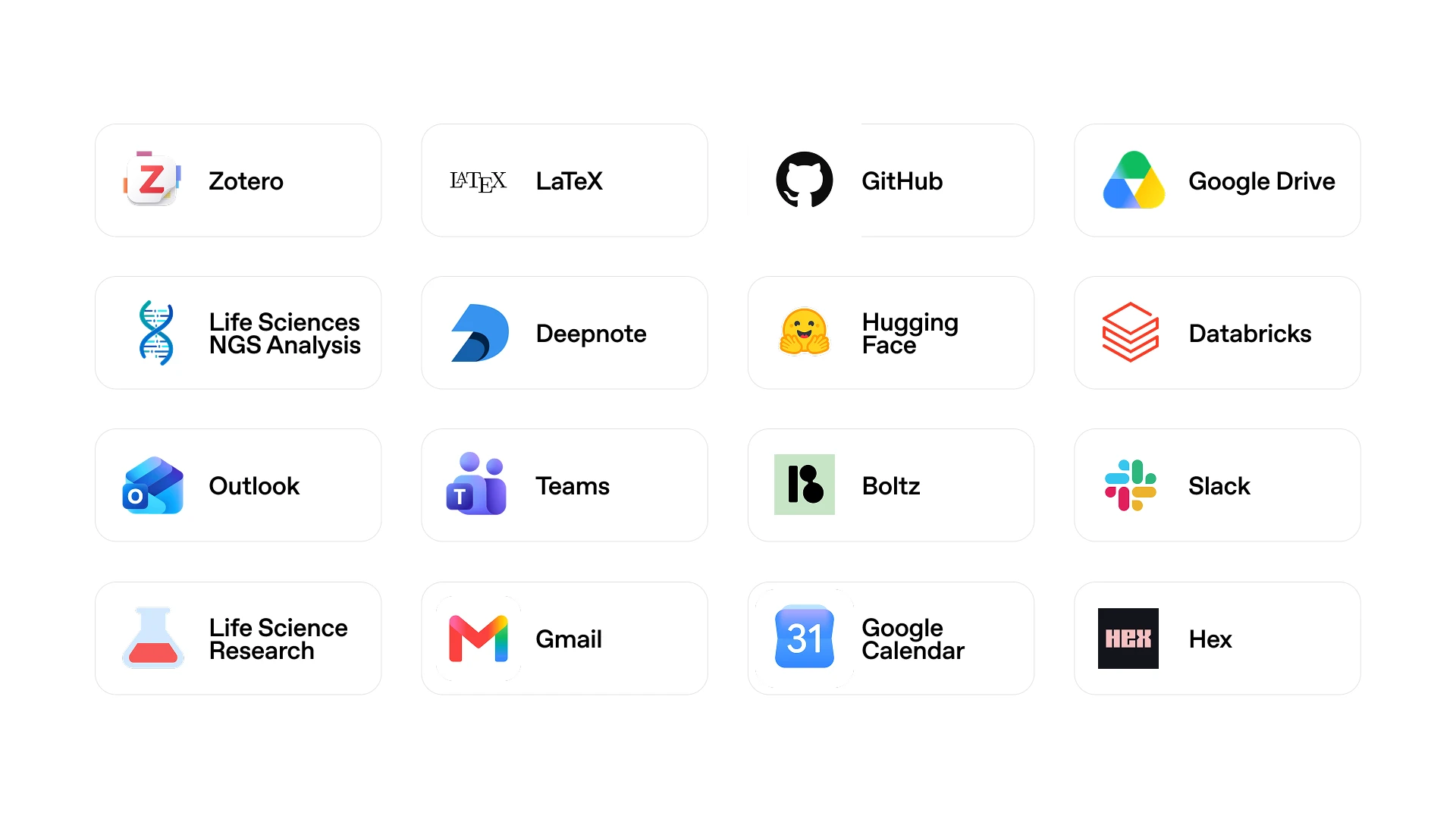
Representativa exempel på färdigheter, anslutningar och verktyg som är tillgängliga i ChatGPT och Codex.
Codex kan hjälpa till att skriva och felsöka kod, analysera datamängder och skapa reproducerbara arbetsflöden. ChatGPT Work kan stödja längre projekt, exempelvis att hitta finansieringsmöjligheter, förbereda ansökningar om forskningsanslag, granska litteratur, utarbeta manuskript och skapa material för att kommunicera resultat.
Forskarna kommer att ha olika erfarenhet av AI när de börjar. Vissa kanske använder verktygen för första gången, medan andra utvecklar avancerade tillämpningar inom sina områden.
Programmet erbjuder utbildning anpassad till olika erfarenhetsnivåer, från att komma i gång och förbättra arbetsflöden till avancerade forskningstillämpningar. Deltagarna får tillgång till specialister som är väl insatta i forskningsflöden och kan hjälpa dem att integrera verktygen i sitt arbete.
När vi ser vad forskarna upptäcker planerar vi att skapa fler möjligheter för dem att dela praktiska arbetssätt, lära av varandra och lyfta fram användningsområden inom olika discipliner. Deras återkoppling hjälper oss att förstå var våra modeller är användbara, var de brister och hur vi kan göra dem mer värdefulla för forskarsamhället.
Det inledande programmet är öppet för behöriga forskare vid utvalda akademiska institutioner. Behöriga institutioner(öppnas i ett nytt fönster) måste vara erkända högskolor eller universitet som utfärdar examina och har omfattande forskningsverksamhet.
Sökande måste verifiera sin anknytning till institutionen och lämna information om sin pågående forskning och planerade vetenskapliga användning. Godkända forskare får bjuda in upp till fyra samarbetspartner från sin institution. Varje samarbetspartner måste också verifiera sin anknytning och räknas in i programmets totala antal konton.
Ansökan är öppen från och med i dag. Du kan läsa behörighetskraven och ansöka här(öppnas i ett nytt fönster).