Nyepetake panemuan ilmiah nganggo ChatGPT kanggo Peneliti Akademis
Kita nyedhiyakake model tercanggih lan piranti kita kanggo 100.000 ilmuwan, matematikawan, lan insinyur—kanthi gratis.
Info paling anyar tanggal 10 Agustus 2026: Pelamar anyar saiki bakal mlebu ing daftar tunggu nalika kita mriksa luwih saka 13.000 aplikasi gelombang pisanan—sing makili nganti 65.000 kursi panaliti—lan milih kohort awal kanthi 10.000 kursi liwat undian ing antarane pelamar sing layak. Sing ora kapilih ing kohort iki bakal tetep layak kanggo puteran pilihan ing mangsa ngarep nalika aplikasi dibukak maneh ing pungkasan mangsa gugur iki. Iki bakal ngidini kita fokus kanggo ndhukung klompok panaliti pisanan nalika kita ngembangake program iki.
Kita percaya yen manfaat AI tercanggih ora kena mung dinikmati sawetara perusahaan lan laboratorium sing duwe sumber daya gedhe. Kemajuan ilmiah gumantung marang peneliti sing takon pitakonan sing tepat, nguji gagasan anyar, lan nerusake panemuan wong liya. Peran kita yaiku nyedhiyakake piranti sing ampuh kanggo dheweke—lan makarya bebarengan ngrancang model sing nyepetake risete, nanging tetep dikendhaleni dening dheweke.
Kita ngenalake ChatGPT kanggo Peneliti Akademis, program sing bakal menehi 100.000 peneliti ing institusi akademis pilihan akses gratis menyang model tercanggih kita. Program iki bakal mbantu peneliti ing bidang sains, matematika, lan teknik ngrampungake masalah tingkat lanjut, nyepetake panemuan, lan ningkatake produktivitas, wiwit saka nyiapake pengajuan dana riset nganti nguji hipotesis.
Kita miwiti kanthi 10.000 peneliti ing mangsa panas iki, lan akses wis kasedhiya ing institusi kayata Institute for Advanced Study (IAS) lan École normale supérieure (ENS). Kita ngrancang nggedhekake program iki nganti 100.000 peneliti sadurunge pungkasan 2027. Peserta bakal entuk akses menyang model tercanggih kita, kalebu GPT‑5.6 Sol Pro nalika diluncurake, lan bisa ngundang nganti patang kolaborator saka institusine. Papan kerja dilengkapi perlindungan privasi lan keamanan kelas bisnis, lan kanthi gawan data ora digunakake kanggo nglatih model kita. Peneliti bisa nggunakake piranti lan katrampilan kanggo ndhukung pakaryan, saka analisis genom lan pemodelan protein nganti tinjauan pustaka, panyusunan pengajuan dana riset, lan publikasi.
Program iki uga nyakup pelatihan, dhukungan langsung, lan kesempatan kanggo sinau saka peneliti liyane lan menehi tanggapan marang kita.
Kanggo institusi sing nggunakake ChatGPT Edu, akses gratis saka program iki bakal dikoordinasi liwat papan kerja institusi kasebut. Sinau luwih lengkap babagan ChatGPT Edu lan cara OpenAI ndhukung pendidikan tinggi.
ChatGPT kanggo Peneliti Akademis minangka bagean saka komitmen luwih saka $250 yuta nganti 2027 kanggo ndhukung riset ilmiah lan panemuan saka pihak njaba. Iki kalebu NextGenAI, prakarsa kita senilai $50 yuta kanggo ndhukung institusi riset, lan kerja sama kita karo Genesis Mission saka Department of Energy kanggo nyedhiyakake AI tercanggih marang peneliti ing laboratorium nasional lan universitas. Kabeh upaya iki nggambarake kapercayan kita yen kemajuan ilmiah bakal luwih cepet nalika luwih akeh peneliti duwe piranti kanggo ngrembakakake gagasane dhewe.
AI dadi piranti riset sing luwih mumpuni kanthi luwih cepet tinimbang sing dikira akeh wong. Saben minggu, watara 1,3 yuta wong nggunakake ChatGPT kanggo sains lan matematika tingkat lanjut, lan ngasilake udakara 8,4 yuta pesen.
Owah-owahan iki katon cetha banget ing bidang matematika. Sajrone nem sasi kepungkur, panggunaan AI wis owah saka mung sok-sok kanggo masalah tartamtu dadi bagean sing luwih rutin ing riset matematika. Saiki saya akeh makalah sing ngakoni kontribusi ChatGPT, nuduhake sepira cepete peneliti nggunakake piranti iki ing pakaryane.
* Sasi durung lengkap; indeks teks lengkap saiki nganti 21 Juli.
Peneliti nggunakake ChatGPT lan Codex ing meh saben tahap pakaryan ilmiah. ChatGPT mbantu peneliti nliti gagasan, ngolehake kawruh, ngasilake hipotesis, lan ngandharake temuane. Codex ndhukung pelaksanaan riset lan analisis formal, kalebu nulis kode lan nganalisis asil.
Proporsi panjaluk riset ilmiah miturut kategori alur kerja ilmiah lan produk, 21 Juni–20 Juli 2026
Pola-pola iki wiwit katon ing riset. Fisikawan Rogerio Jorge lan time nggunakake AI kanggo ngembangake piranti lunak riset fusi sumber terbuka sing digunakake industri lan laboratorium nasional kanggo ngrancang piranti energi fusi. Ing ilmu komputer teoretis, peneliti Barna Saha, Yinzhan Xu, lan Christopher Ye nggunakake GPT‑5.5 Pro kanggo ngembangake bukti sing nemtokake wates anyar babagan efisiensi komputer nalika ngrampungake masalah geometri dimensi dhuwur, banjur dheweke dhewe ngesahake lan nyempurnakake asile.
Peneliti sing nggunakake piranti kasebut kanthi paling intensif uga nggarap proyek sing luwih ambisius. Peneliti sing kalebu 20% pangguna AI paling aktif ing bidange meh kaping pindho luwih kerep tinimbang kolegane anggone njaluk AI nindakake tugas sing kira-kira mbutuhake patang jam utawa luwih: meh 7% saka panjaluke, dibandhingake 3,5% ing antarane peneliti liyane ing bidang sing padha.
Proporsi panjaluk ilmiah miturut prakiraan wektu kerja aktif manungsa lan intensitas panggunaan AI dening ilmuwan, 21 Juni–20 Juli 2026
Strategi kita dudu nemtokake masalah ilmiah endi sing pantes digatekake utawa nyoba ngrampungake kabeh masalah kasebut dhewe. Strategi kita yaiku nyedhiyakake piranti sing mumpuni kanggo komunitas riset lan ngidini peneliti ngrembakakake pitakonan sing paling dimangerteni.
Peserta bakal entuk akses gratis menyang model tercanggih kita ing ChatGPT, ChatGPT Work, lan Codex, kalebu kulawarga model GPT‑5.6 nalika diluncurake. Peserta uga bakal entuk panaliten jero sing luwih jembar, wates panggunaan luwih dhuwur, lan jendhela konteks luwih gedhe. Kapabilitas kasebut bebarengan ndhukung nalar ilmiah, pelaksanaan kanthi agen, lan alur kerja riset ing macem-macem disiplin.
GPT‑5.6 Terra ngimbangi kapabilitas lan efisiensi kanggo riset saben dina, GPT‑5.6 Luna menehi wangsulan luwih cepet kanggo tugas sing luwih entheng, lan GPT‑5.6 Sol ngrampungake masalah ilmiah lan matematika sing paling angel. Ing FrontierMath Tier 4, sing ngukur nalar matematika tingkat riset, GPT‑5.6 Sol ngolehake skor 83%, dibandhingake 72,5% kanggo GPT‑5.5. Ing GeneBench Pro, sing ngevaluasi analisis data biologi kompleks lan nalar ilmiah, GPT‑5.6 Sol Pro bisa ngrampungake 31,5% tugas.
Peneliti bisa nggunakake luwih saka 75 katrampilan ilmu hayati(mbukak ing jendhela anyar) sing nyakup genetika, genomika, sekuensing, analisis sel tunggal, pemodelan protein, lan panemuan obat. Konektor ndhukung riset ing macem-macem disiplin kanthi menehi akses menyang pustaka ilmiah, basis data genom lan klinis umum, citra satelit, notebook komputasional, platform data, lan pangelola referensi.
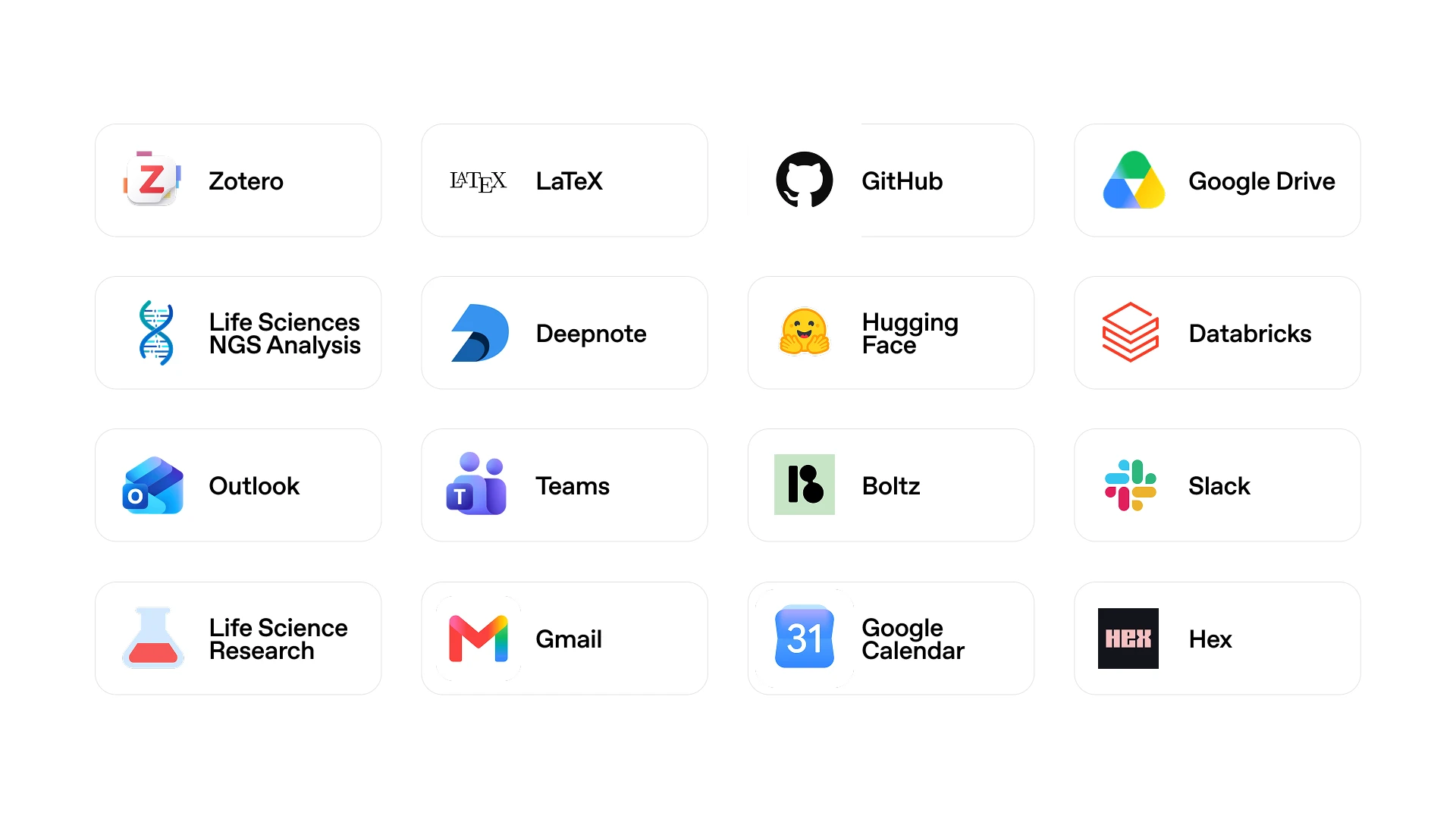
Conto katrampilan, konektor, lan piranti sing kasedhiya ing ChatGPT lan Codex.
Codex bisa mbantu nulis lan ndandani kode, nganalisis set data, lan nggawe alur kerja sing bisa diprodhuksi maneh. ChatGPT Work bisa ndhukung proyek jangka luwih dawa, kayata nggoleki kesempatan pendanaan, nyiapake pengajuan dana riset, nliti pustaka, nyusun naskah, lan nggawe materi kanggo ngandharake asil.
Saben peneliti bakal duwe tingkat pengalaman awal sing beda-beda babagan AI. Sawetara bisa uga sepisanan nggunakake piranti iki; liyane bisa uga wis ngembangake aplikasi tingkat lanjut ing bidange.
Program iki bakal nawakake pelatihan sing dicocogake karo tingkat pengalaman, wiwit saka cara miwiti lan ningkatake alur kerja nganti aplikasi riset tingkat lanjut. Peserta bakal entuk akses menyang spesialis sing ngerti alur kerja riset, kalebu bantuan kanggo nggabungake piranti kasebut menyang pakaryane.
Nalika ndeleng panemuan para peneliti, kita ngrancang nggawe luwih akeh kesempatan supaya peneliti bisa nuduhake cara praktis, sinau saka siji lan sijine, lan nyorot panggunaan ing macem-macem disiplin. Tanggapan kasebut bakal mbantu kita mangerteni ing ngendi model kita migunani, ing ngendi isih kurang, lan carane nggawe model kasebut luwih migunani kanggo komunitas riset.
Program awal iki kabuka kanggo peneliti sing nyukupi syarat ing institusi akademis pilihan. Institusi sing layak(mbukak ing jendhela anyar) kudu arupa perguruan tinggi utawa universitas sing diakoni, menehi gelar, lan nduweni tingkat aktivitas riset sing dhuwur.
Pelamar kudu verifikasi afiliasi institusine lan menehi informasi babagan riset aktif sarta rencana panggunaan kanggo tujuan ilmiah. Peneliti sing disetujoni bisa ngundang nganti patang kolaborator saka institusine. Saben kolaborator uga kudu verifikasi afiliasine lan bakal dietung ing jumlah total akun program.
Pendaftaran dibukak wiwit dina iki. Sampeyan bisa mriksa kritéria kelayakan lan ndhaptar ing kene(mbukak ing jendhela anyar).