Langsung ke konten utama
OpenAI

4 Juni 2026

RisetProdukRilis

Fondasi yang lebih kuat untuk memori ChatGPT

Meningkatkan sintesis memori di ChatGPT untuk mengoptimalkan kekinian, kesinambungan, dan relevansi.

Memuat…

Hari ini kami mulai meluncurkan sistem yang lebih mumpuni dan skalabel untuk menyintesis memori, yang dikembangkan untuk mengatasi tantangan kekinian, ketepatan, dan skalabilitas yang kami amati saat memori diterapkan kepada ratusan juta pengguna dan rentang waktu bertahun-tahun di ChatGPT.

Memori adalah hal yang membantu ChatGPT mempelajari preferensi, proyek, dan batasan Anda, sehingga percakapan di masa depan dapat dimulai dari konteks bersama, bukan dari awal.

Selama dua tahun terakhir, memori telah berkembang menjadi bagian penting dari pengalaman ChatGPT, membantu ChatGPT lebih memahami konteks Anda agar dapat membantu Anda mencapai tujuan bermakna dari waktu ke waktu. Hal ini penting untuk membuat ChatGPT lebih berguna: mengenal Anda, membantu Anda, dan melakukan lebih banyak hal untuk Anda.

Pembaruan ini tersedia untuk pengguna Plus dan Pro di AS mulai hari ini, dan akan diluncurkan ke negara-negara tambahan serta pengguna Free dan Go dalam beberapa minggu mendatang.

Bagaimana memori telah berevolusi

Memori pertama kali diluncurkan pada April 2024 (juga dikenal sebagai memori tersimpan). Fitur ini memungkinkan Anda meminta ChatGPT untuk mengingat informasi dan membawanya ke chat mendatang.
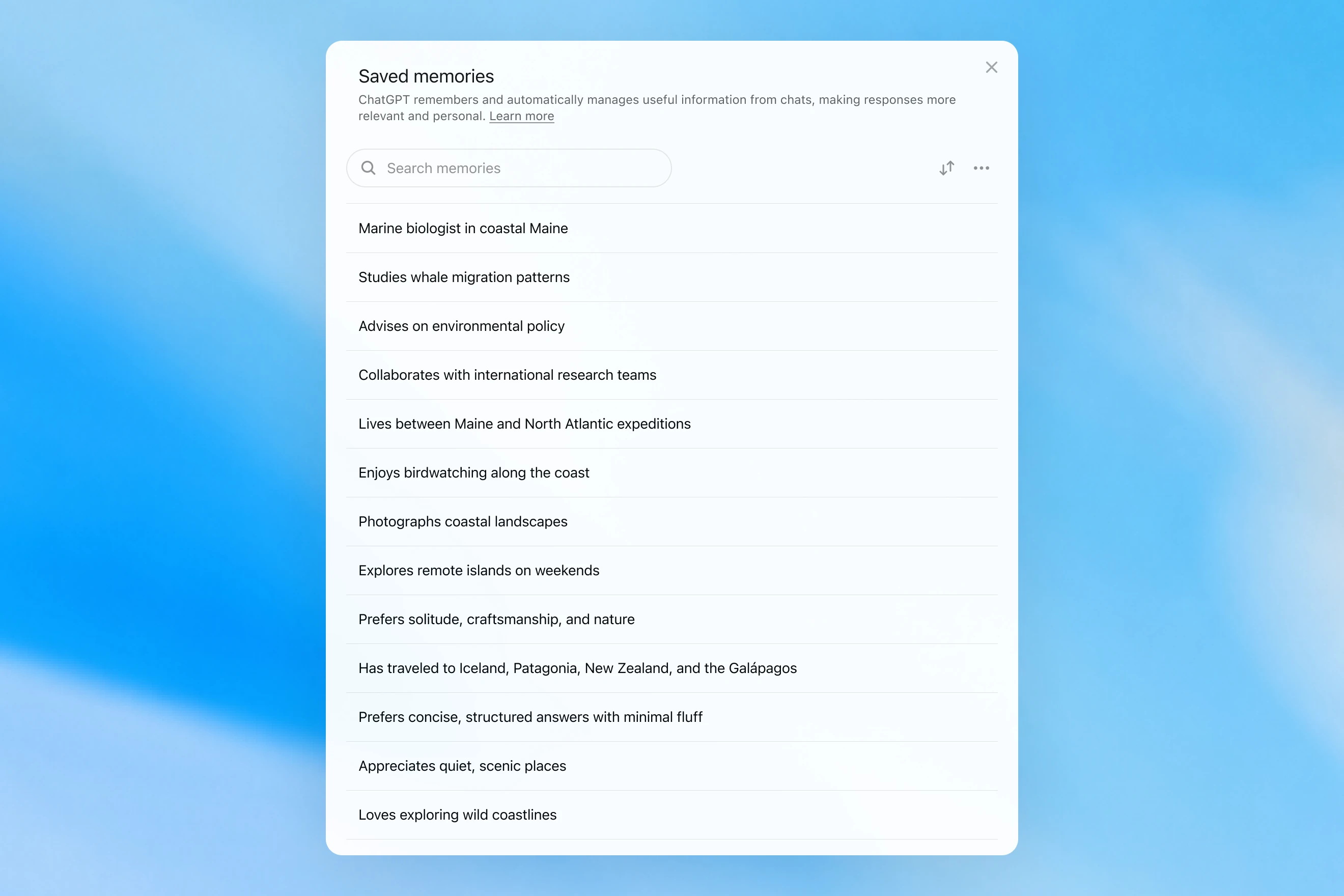
Saved memories modal showing a searchable list of personal details, including work, interests, travel, and response preferences.

Memori tersimpan hanya ditulis selama percakapan dan mengandalkan isyarat kuat untuk memutuskan kapan harus memicu memori, seperti instruksi untuk “ingat bahwa saya bepergian ke Singapura pada bulan Juli.” Dalam praktiknya, berinteraksi dengan sistem ini bisa terasa seperti berbicara dengan seseorang yang membuat beberapa catatan, tetapi tetap melupakan semua hal yang tidak ditulis. Memori tersimpan juga cenderung menjadi usang seiring waktu dan pada akhirnya menjadi salah atau tidak relevan.

Pada April 2025, kami memperbarui memori ChatGPT dengan memberi model kemampuan untuk merujuk konteks chat di luar daftar memori tersimpan; ini dilakukan dengan memperkenalkan versi pertama dreaming—metode bagi ChatGPT untuk secara otomatis mengelola memori di latar belakang dengan merujuk riwayat chat.
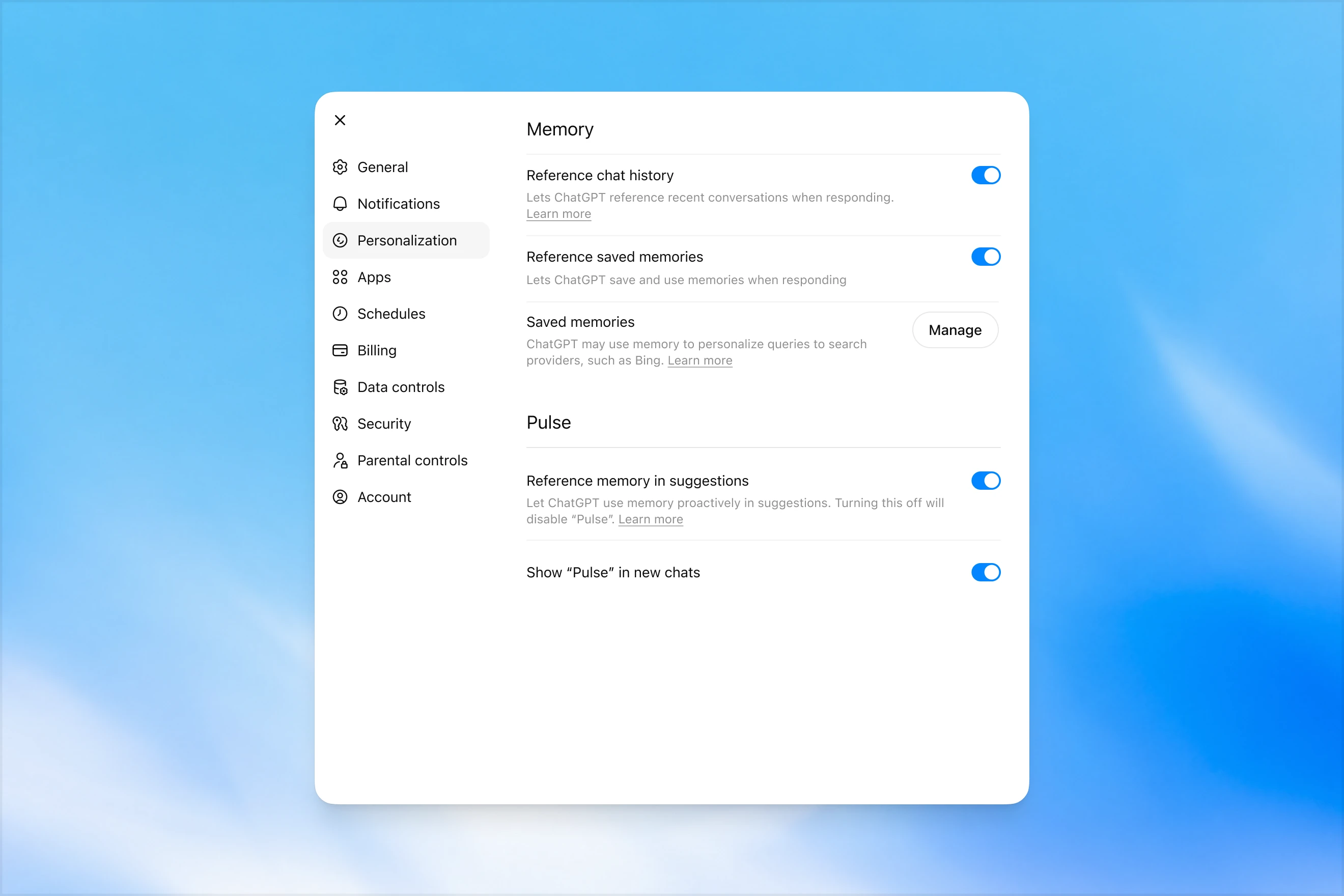
Memory settings page in ChatGPT showing options to reference chat history, use saved memories, manage saved memories, and enable Pulse memory suggestions.

Berbeda dengan memori tersimpan, dreaming memanfaatkan proses latar belakang yang memungkinkan ChatGPT belajar dari banyak percakapan dan menyintesis status memori ChatGPT agar selalu menyediakan konteks terbaru dan paling relevan untuk percakapan Anda. Dreaming juga memudahkan memori untuk menyertakan konteks yang muncul secara alami dalam percakapan, tanpa bergantung pada permintaan eksplisit untuk mengingat sesuatu.

Selama setahun terakhir, dreaming melengkapi memori tersimpan untuk menciptakan peningkatan besar dalam kemampuan ChatGPT mempersonalisasi respons dan mengimbangi keusangan memori tersimpan. Namun, secara historis, hal itu tidak pernah cukup sebagai sistem memori mandiri.

Hari ini, kami meluncurkan arsitektur memori yang jauh lebih mumpuni dan efisien secara komputasi, dibangun di atas dreaming.

Memori yang disintesis oleh dreaming dapat ditinjau melalui ringkasannya yang ditampilkan di halaman ringkasan memori. Dari ringkasan memori, Anda dapat dengan cepat melihat hal-hal utama yang diketahui ChatGPT tentang Anda, menambahkan atau memperbarui informasi tentang diri Anda, serta memberikan instruksi tentang topik apa yang sebaiknya diangkat ChatGPT dan kapan. Jika Anda ingin menggali area tertentu untuk mempelajari lebih lanjut, cukup chat dengan model.
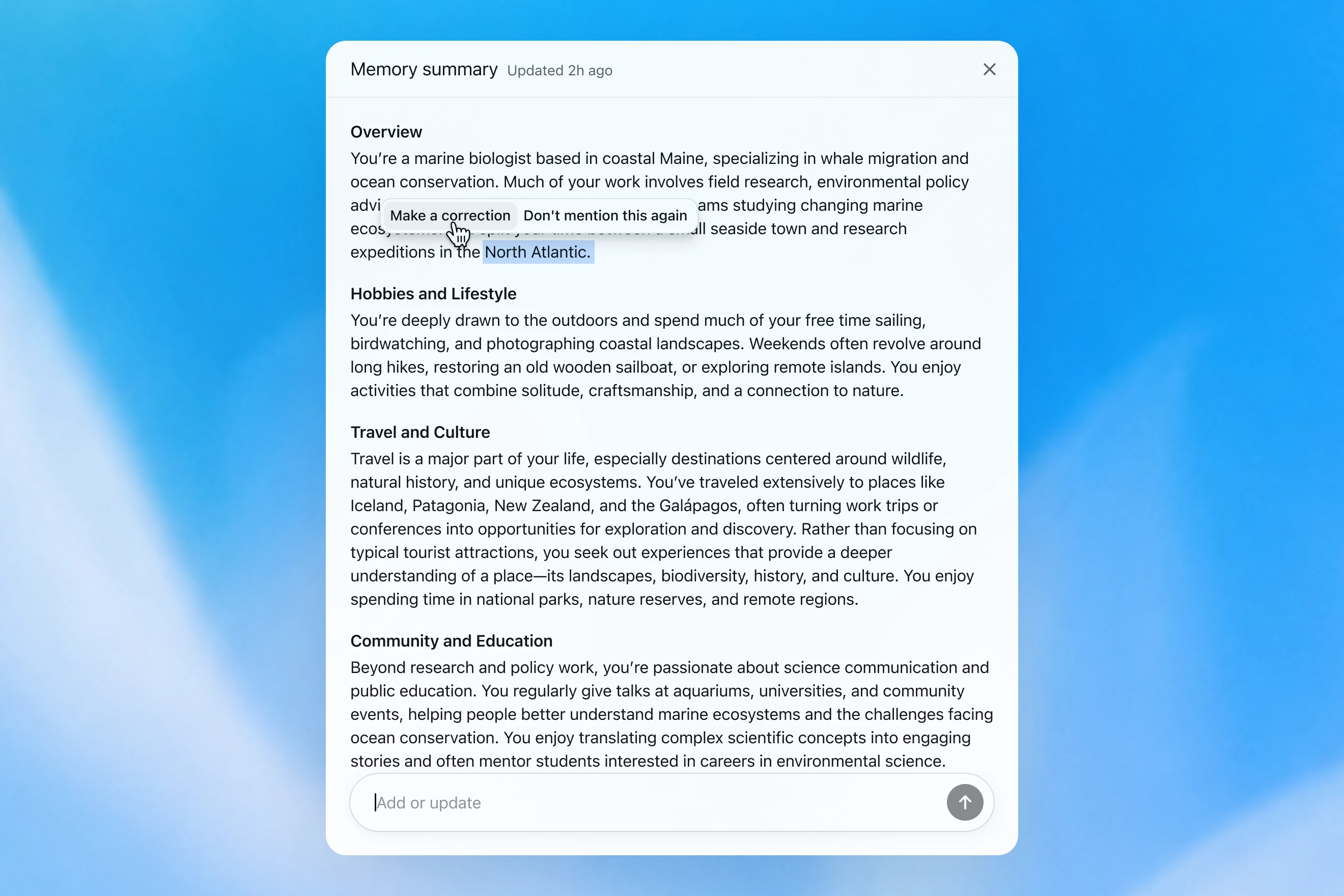
Memory summary modal showing a personalized overview of a user’s work, hobbies, travel interests, and community involvement, with options to correct or dismiss specific details.

Bagaimana kami mengevaluasi memori

Saat kami memikirkan seperti apa “memori yang baik” di ChatGPT, ada beberapa hal yang terlintas:

  1. Membawa konteks yang berguna ke depan: Anda memberi tahu ChatGPT sesuatu satu kali, dan ChatGPT mengingat informasi itu dalam chat Anda berikutnya.
  2. Mengikuti preferensi dan batasan: Jika Anda menjelaskan suatu preferensi (misalnya, Anda vegetarian), maka ChatGPT seharusnya mengambil tindakan yang konsisten dengan preferensi tersebut ke depannya.
  3. Tetap mutakhir dari waktu ke waktu: Memori harus memperhitungkan berlalunya waktu. Bayangkan “Pengguna sedang merencanakan pesta ulang tahunnya untuk Sabtu depan”; pada akhirnya, hari Minggu tiba.

Kami dapat mengevaluasi bagaimana memori ChatGPT Plus dan Pro telah meningkat dari waktu ke waktu terhadap masing-masing dari tiga tujuan memori di atas. Kami melakukan ini untuk masing-masing:

  1. 2024: Memori tersimpan
  2. 2025: Memori tersimpan + Dreaming V0
  3. 2026: Dreaming V3

Membawa konteks ke depan

Saat Anda memulai chat baru dengan ChatGPT, Anda tidak perlu memperkenalkan diri dari awal. ChatGPT dapat menghemat waktu Anda dan membangun dari konteks sebelumnya, terutama untuk proyek kompleks yang berlangsung lama.

Misalnya, bayangkan Anda menggunakan ChatGPT untuk berbelanja perlengkapan kamera baru yang kompatibel dengan kamera Anda saat ini. Jika Anda pernah membahas pengaturan kamera Anda dengan ChatGPT sebelumnya, Anda dapat meminta produk yang kompatibel dengan “pengaturan fotografi saya” dan mendapatkan rekomendasi yang disesuaikan dengan kebutuhan Anda.

GPT-5.2 Instant

What would I need to buy to use TTL for my underwater photography setup?

To use TTL flash underwater, you need a compatible chain from camera → housing/trigger → cable → strobe. What you buy depends mostly on whether your setup uses fiber-optic TTL or electrical TTL.

Basic shopping checklist

  • TTL-capable underwater strobe
    Look for strobes that support your TTL type, such as Inon S-TTL, Sea & Sea DS-TTL, Ikelite DS TTL, or compatible Backscatter/Nauticam systems. TTL has to be supported by the strobe, not just the camera.
  • TTL trigger or TTL converter
    This is the key piece. It translates your camera’s flash metering into something the underwater strobe can understand. Examples include Nauticam optical TTL converters, Sea & Sea TTL converters, Backscatter Smart Control optical TTL triggers, or Ikelite DS Link TTL converters, depending on housing and camera brand. Backscatter notes that Nauticam optical TTL converters can work with fiber-optic-connected Inon and Sea & Sea TTL strobes, while Ikelite’s DS Link converters are made around Ikelite DS strobes and electrical sync setups. (Backscatter.com(terbuka di jendela baru))
  • Connection cable
    For fiber optic TTL, buy one fiber optic cable per strobe. Ikelite’s fiber-optic guide says each strobe needs its own light path, converter/adapter, and cord. (Ikelite(terbuka di jendela baru))
    For
    electrical TTL, buy the correct sync cord, such as Ikelite-style, Nikonos 5-pin, or housing-specific bulkhead cable.
  • Housing compatibility parts
    You may need a hot-shoe adapter, bulkhead, fiber optic window/adapter, or housing-specific TTL board. Many TTL triggers mount inside the housing on the camera hot shoe.
  • Strobe arms, clamps, tray, and mounting hardware
    TTL controls exposure, but you still need to physically mount and aim the strobes.
  • Batteries and spares
    Bring strobe batteries, trigger batteries if required, spare fiber optic cables or sync cord O-rings, and silicone grease for serviceable O-rings.

Which route should you choose?

Fiber optic TTL is usually easiest if your housing has optical ports or can use the camera’s pop-up flash/LED trigger. It is common with compact, mirrorless, Nauticam, Sea & Sea, AOI, and Olympus/OM TG-style setups.

Electrical TTL is often best if you use Ikelite DS strobes or an Ikelite-style housing/bulkhead. Ikelite says its DS Link TTL converters are faster and more reliable than fiber-optic TTL triggers, and they do not require batteries. (Backscatter.com(terbuka di jendela baru))

The compatibility rule

You need all three to match:

camera brand/protocol + housing/trigger type + strobe TTL system

For example:

  • Sony camera + Nauticam housing + optical TTL trigger + Inon/Sea & Sea-compatible fiber optic strobe
  • Nikon/Canon/Sony camera + Ikelite housing/bulkhead + Ikelite DS Link TTL converter + Ikelite DS strobe
  • Compact camera with built-in flash + fiber optic cable + S-TTL/DS-TTL-capable strobe

So the practical answer is: buy a TTL-compatible strobe, the correct TTL trigger/converter for your camera and housing, and the right fiber optic or electrical sync cable. The exact part numbers depend on your camera, housing, and strobe model.

Model menghasilkan respons umum yang membuat pengguna harus melakukan sendiri pemeriksaan kompatibilitas yang rumit.

GPT-5.3 Instant

What would I need to buy to use TTL for my underwater photography setup?

I’ll verify this against your actual setup: Sony A1 II in Nauticam NA-A1II, with Backscatter Mini Flash 3 and Inon Z-330 strobes. The key question is whether you want TTL with the Mini Flash 3, the Z-330s, or both.

For your setupSony A1 II + Nauticam NA-A1II + Backscatter Mini Flash 3 + Inon Z-330 — there are two different TTL paths:

Best buy for Mini Flash 3 TTL

Buy:

Backscatter Smart Control TTL LED Nauticam Flash Trigger for Sony
SKU: BS-TR-SN2

Backscatter lists it as custom-designed for Nauticam full-frame Sony housings, TTL-compatible with Mini Flash 3, and the NA-A1II housing page offers it as the “Backscatter Smart Control TTL Flash Trigger” option. (Backscatter.com(terbuka di jendela baru))

You’d use normal optical fiber cables from the housing to the Mini Flash 3. On the MF-3, you’d use SC or SC Macro mode; Backscatter says SC / SC Macro are the TTL modes for Mini Flash 3, with SC Macro specifically tuned for close macro work. (Backscatter.com(terbuka di jendela baru))

For Inon Z-330 TTL

For the Inon Z-330, the relevant unit is:

UW Technics 11075-HSS TTL Converter for Sony / Nauticam

UW Technics explicitly lists Inon Z-330 as a compatible TTL strobe and supports optical TTL output. (UWTechnics(terbuka di jendela baru))

But I would not buy this for Mini Flash 3 TTL. Backscatter’s own UW Technics listing says Backscatter strobes are manual / HSS only on that converter, while the Backscatter Smart Control trigger is the one listed for Sony TTL with the Mini Flash 3. (Backscatter.com(terbuka di jendela baru))

Practical recommendation

Since you shoot macro and have the Mini Flash 3, I’d buy the Backscatter Smart Control TTL LED Nauticam Flash Trigger for Sony — BS-TR-SN2.

The catch: there probably is no single trigger that gives true TTL for both the Mini Flash 3 and Inon Z-330 at the same time. The Backscatter trigger is the right TTL solution for the MF-3; the UW Technics converter is the right TTL solution for the Z-330. So choose based on which strobe you actually want TTL for.

For your use case, I’d prioritize Mini Flash 3 TTL / SC Macro and treat the Z-330s as manual when needed.

Model mengingat pengaturan kamera pengguna dan merekomendasikan produk yang kompatibel.

GPT‑5.2 Instant pada akhirnya menjawab pertanyaan, tetapi dalam upaya menjelaskan batasan keamanannya, mengawali dengan pengantar panjang tentang apa yang tidak dapat dibantunya. GPT‑5.3 Instant, di sisi lain, langsung masuk ke inti jawaban.

Kami dapat menyusun evaluasi dari contoh yang mirip dengan ini, di mana model diminta merespons prompt yang mengharuskannya mengingat informasi faktual tentang pengguna. Model kemudian diberi imbalan jika merespons dengan cara yang menggunakan konteks relevan secara benar. Dalam evaluasi ini, sistem baru berbasis dreaming meningkatkan kemampuan model untuk mengingat fakta yang relevan.

Mengikuti preferensi

Memori juga membantu ChatGPT merespons dengan cara yang lebih sesuai dengan preferensi dan batasan Anda.

Bayangkan Anda sedang merencanakan perjalanan ke Singapura. Dua bulan sebelum perjalanan, Anda meminta ChatGPT membantu membuat rencana perjalanan. ChatGPT sudah tahu dari perencanaan perjalanan sebelumnya bahwa Anda menyukai fotografi satwa liar, lebih memilih hotel dengan AC yang kuat, dan lebih menikmati makan malam yang tenang daripada bar yang ramai.

GPT-5.2 Instant
Help me plan a trip to Singapore. I'm going to be there for a work trip in July and will have a few days free at the end.

Great add-on city for a work trip: Singapore is compact, safe, excellent for solo exploring, and easy to do in 2–4 free days. July is hot and humid; expect daytime highs around 31–33°C / 88–91°F, warm nights, and sudden rain, so plan outdoor time early morning or after 5 p.m. and keep midday for museums, malls, cafés, or hotel downtime. Singapore’s official weather service notes typical daily highs of 31–33°C and lows of 23–25°C. (Singapore Weather Service(terbuka di jendela baru))

memory-preferences-without

A strong 3-day plan

Day 1: Marina Bay, Gardens, and skyline

Start late afternoon at Marina Bay and walk the waterfront: Merlion Park, Helix Bridge, ArtScience Museum exterior, then into Gardens by the Bay. Book Cloud Forest, Flower Dome, and either the OCBC Skyway or Supertree Observatory if views matter to you. Gardens by the Bay lists Cloud Forest and Flower Dome as open daily 9 a.m.–9 p.m.; Supertree Observatory is also listed as 9 a.m.–9 p.m. with last admission at 8:30 p.m., but check maintenance closures before booking. (Gardens by the Bay(terbuka di jendela baru))

Evening: stay for the Supertree light show area, then dinner at Lau Pa Sat for an easy first-night hawker experience near the CBD. It has 80+ stalls and local staples like satay, laksa, nasi lemak, bak kut teh, kaya toast, and char kway teow. (Laupasat(terbuka di jendela baru))

Day 2: Culture neighborhoods and food

Morning: Chinatown. Visit Buddha Tooth Relic Temple, walk the shophouse streets, and eat at Maxwell Food Centre or Chinatown Complex Food Centre. Visit Singapore lists Maxwell, Chinatown Complex, Old Airport Road, Tiong Bahru Market, Newton, and others among popular hawker centres. (Visit Singapore(terbuka di jendela baru))

Afternoon: Kampong Glam and Haji Lane for Sultan Mosque, murals, boutiques, and cafés. Then head to Little India around golden hour for temples, flower garlands, Tekka Centre, and dinner.

Evening: either cocktails around Ann Siang / Club Street, or keep it low-key with a night walk along the Singapore River: Boat Quay to Clarke Quay to Robertson Quay.

Day 3: Nature or beach day

Pick one based on your energy.

For nature: do Singapore Botanic Gardens early, then the National Orchid Garden, followed by lunch in Dempsey Hill or Tiong Bahru. This is the best “green Singapore” day without leaving the city.

For beach/resort mode: go to Sentosa. Choose the southern beaches, Fort Siloso Skywalk, or a beach club. I would skip trying to do every Sentosa attraction unless you love theme parks.

For local food focus: do Tiong Bahru Market for breakfast, National Gallery Singapore midday, then Old Airport Road Food Centre for dinner. The official events page also shows exhibitions and cultural events, so it is worth checking once your exact July dates are fixed. (Visit Singapore(terbuka di jendela baru))

Best places to stay after the work part

Marina Bay / CBD is easiest if you want polished, walkable, skyline-heavy Singapore and minimal transit.

Chinatown / Telok Ayer / Tanjong Pagar is my top pick for a few free days: great food, MRT access, heritage streets, cocktail bars, and close to work districts.

Bugis / Kampong Glam is better if you want boutique hotels, cafés, street art, and a slightly more relaxed neighborhood feel.

Orchard is convenient for shopping and rainy-day malls, but less atmospheric.

What to book ahead

Book Gardens by the Bay conservatories/Skyway, any special restaurants, and possibly a cocktail bar. For hawker centres, do not over-plan; just go hungry, carry tissues or wet wipes, and be ready to share tables.

July packing notes

Bring breathable work clothes, comfortable walking shoes, a small umbrella, and a light layer for aggressive air-conditioning. I would also plan one “rain-flexible” indoor block each day, because showers can arrive suddenly even when the forecast looks fine.

My suggested balance: Day 1 Marina Bay/Gardens, Day 2 Chinatown–Kampong Glam–Little India, Day 3 Botanic Gardens or Sentosa. That gives you the Singapore highlights without turning your post-work break into another work project.

Model menghasilkan respons umum yang lebih bernuansa turis, tidak membantu pemesanan hotel, dan sebagian besar mengabaikan minat pengguna.

GPT-5.3 Instant
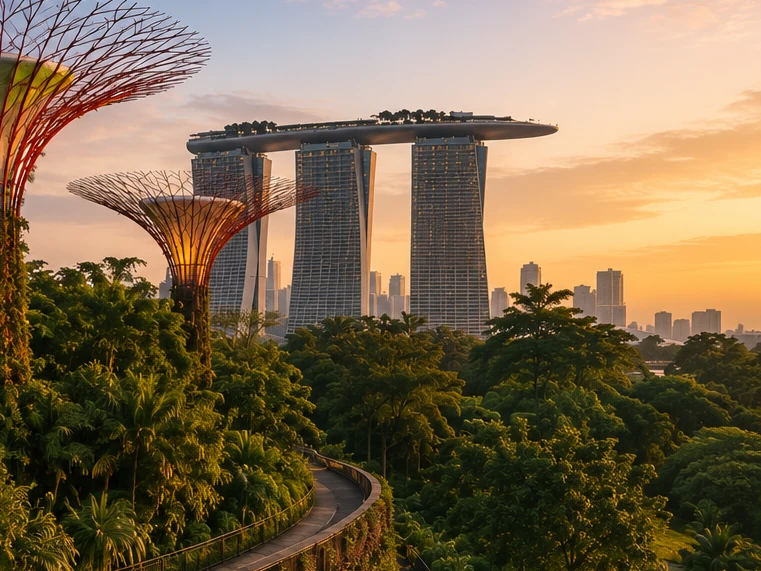
Help me plan a trip to Singapore. I'm going to be there for a work trip in July and will have a few days free at the end.

I’ll build this around your known constraints: a few free days after work, hot/humid July weather, wildlife/photography/nature bias, strong AC needs for sleep, and good but not overly social dining. I’ll verify current July logistics and then give a practical short itinerary rather than a generic Singapore list.

memory-preferences-with

Here’s how I’d structure it: 2–3 free days, mostly nature / wildlife / photography, with heat-managed mornings and AC breaks. July is hot and humid: Singapore’s July long-term stats are about 31.4°C / 88.5°F average daily max, 25.4°C / 77.7°F min, 146.6 mm rain, and 14 rain days, so outdoor plans should be early morning or evening, not midday. (National Environment Agency(terbuka di jendela baru))

Best plan for 3 free days

Day 1 — Gardens by the Bay + Marina Bay, low-friction

Morning: Cloud Forest + Flower Dome. This is the obvious “touristy” pick, but it fits you well because it’s visually interesting, good for photography, and climate-controlled. Gardens by the Bay lists Cloud Forest and Flower Dome-type attractions running 9:00am–9:00pm, and Cloud Forest currently has the Jurassic World experience listed as ongoing. (Gardens by the Bay(terbuka di jendela baru))

Late afternoon / evening: Supertree Grove + Borealis / light show. Gardens currently lists Borealis every Sat, Sun & Mon, 8:00–8:30pm at Supertree Grove, so try to align this with one of those nights. (Gardens by the Bay(terbuka di jendela baru))

Dinner: do something easy nearby: Marina Bay / Tanjong Pagar / Telok Ayer. For you, I’d prioritize reservation-based restaurants with real tables over hawker centers on the first night, because you dislike cramped solo seating.

Day 2 — Mandai wildlife day

Morning to afternoon: Bird Paradise + River Wonders. Bird Paradise is probably the best fit photographically; River Wonders is less “wildlife photography” and more controlled exhibits, but it pairs well logistically. River Wonders is listed as daily 9:00am–6:00pm, last entry 5:00pm. (Mandai Wildlife Reserve(terbuka di jendela baru))

Evening: Night Safari. This is the rare Singapore attraction that is genuinely better at night and avoids the worst heat. Night Safari is listed as daily 6:00pm–12:00am, last entry 11:15pm, with tram plus walking trails and over 900 nocturnal animals. (Mandai Wildlife Reserve(terbuka di jendela baru))

This is a full day. I would not add Singapore Zoo unless you have 4 free days; Mandai can become exhausting fast.

Day 3 — Nature reserve / macro-ish walking + food

Early morning: Singapore Botanic Gardens or MacRitchie / Windsor Nature Park. For a few free days, Botanic Gardens is the safer pick: easier transport, less sweaty, better bailout options, and more consistent casual photography. MacRitchie / Windsor is better if you want more actual forest, but it is hotter, sweatier, and less predictable.

Midday: AC break.

Late afternoon: Joo Chiat / Katong or Chinatown / Telok Ayer for walking, architecture, coffee, and dinner. This gives you a different texture from Marina Bay without turning the day into a logistics project.

My ranking for you

  1. Cloud Forest / Gardens by the Bay — best combination of photogenic, iconic, heat-managed.
  2. Bird Paradise + Night Safari — best wildlife-focused day.
  3. Botanic Gardens early morning — best low-stress outdoor nature.
  4. Joo Chiat / Katong — best neighborhood walk.
  5. Hawker centers — worth doing, but not ideal for your seating preferences unless timed off-peak.

What I’d avoid or deprioritize

I would skip Sentosa unless you specifically want beach/resort stuff. I would also skip a packed “greatest hits” day of Merlion / Orchard / Little India / Chinatown / Clarke Quay; it’s inefficient and hot. For you, the trip will be better if each day has one strong anchor plus one easy evening plan.

Hotel / sleep note

Since this is a work trip, your hotel may be fixed. If you can choose or extend at the same hotel, the hard gate is still AC. Singapore hotels are generally AC-heavy, but your requirement is unusually strict.

One thing I need to make this concrete

Send the exact free dates and whether your work hotel is fixed. Then I’d turn this into a day-by-day plan with restaurant targets and a hotel/AC callout.

Model menghasilkan respons yang dipersonalisasi sesuai minat pengguna pada fotografi satwa liar, makan malam yang tenang, dan prioritas mereka saat memesan hotel.

GPT‑5.2 Instant pada akhirnya menjawab pertanyaan, tetapi dalam upaya menjelaskan batasan keamanannya, mengawali dengan pengantar panjang tentang apa yang tidak dapat dibantunya. GPT‑5.3 Instant, di sisi lain, langsung masuk ke inti jawaban.

Preferensi dapat mengambil beberapa bentuk:

  1. Instruksi tentang bagaimana ChatGPT harus merespons (“jangan bahas Stan lagi”).
  2. Preferensi atau batasan pribadi Anda (“Saya vegetarian”)
  3. Preferensi implisit yang membentuk apa yang relevan bagi Anda (“Saya tinggal dekat San Francisco” → opsi lokal harus disesuaikan dengan area ini)

Dalam mengembangkan sistem memori baru, kami meningkatkan kemampuan ChatGPT untuk menerapkan preferensi relevan dari percakapan sebelumnya. Mengikuti contoh “Saya vegetarian” di atas, kami dapat mengevaluasi apakah model memanfaatkan memori dengan benar untuk menghasilkan opsi bersantap ramah vegetarian ketika pengguna vegetarian meminta saran persiapan makanan.

Tetap mutakhir dari waktu ke waktu

Waktu tidak berhenti saat chat Anda berakhir.

Sistem memori tradisional dapat menjadi usang. Misalnya, Anda memberi tahu ChatGPT “Saya berada di Singapura dan butuh rekomendasi makan malam untuk malam ini.” Lalu, waktu berlalu, perjalanan Anda berakhir, dan Anda bertanya-tanya mengapa ChatGPT masih mengira Anda berada di Singapura.

Dengan dreaming, memori diperbarui secara otomatis seiring berjalannya waktu, sehingga ChatGPT dapat merevisi memorinya dari “Anda akan pergi ke Singapura pada Juli” menjadi “Anda pergi ke Singapura pada Juli 2026” saat perjalanan berakhir. Lalu, saat Anda kembali ke rumah, ChatGPT dapat kembali memberikan rekomendasi yang disesuaikan dengan lokasi rumah dan zona waktu Anda.

GPT-5.2 Instant

Help me find something for take-out tonight that's still open.

It’s about 5:19 AM Sunday in Singapore, so your safest take-out/delivery bets are 24-hour places.

Best bets right now:

  1. McDelivery / McDonald’s Singapore — easiest islandwide option; McDonald’s says McDelivery is available 24 hours, 7 days a week. Breakfast menu should be on now. (McDonald's Singapore(terbuka di jendela baru))
  2. Srisun Express — good for prata, Indian Muslim food, local comfort food; their site says they’re halal-certified and open 24/7. (Sri Sun Express(terbuka di jendela baru))
  3. 89.7 Supper Club — good if you’re near Changi Village or Geylang East; their outlets page says both locations are open 24 hours, 7 days a week. (89.7 Supper Club(terbuka di jendela baru))
  4. 126 Dim Sum Wen Dao Shi — worth checking on GrabFood/foodpanda if you’re in the East; a 2025 guide says it runs till 5:30 AM on weekdays and round-the-clock on weekends. Since it’s Sunday morning, it may still be available. (Eatbook(terbuka di jendela baru))
  5. Prata around Geylang / Serangoon / Bedok / Jalan Kayu — look in GrabFood or Google Maps for “prata open now”; guides list multiple 24-hour prata/supper spots, including Mufiz Prata Corner and RK Eating House. (Eatbook(terbuka di jendela baru))

For the fastest path: open GrabFood / foodpanda / Deliveroo, set filter to Open now, then search “prata,” “McDonald’s,” “Srisun,” “89.7,” “dim sum,” or “nasi lemak.” If you tell me your neighborhood or nearest MRT, I’ll narrow it to specific nearby places.

Model mengira pengguna masih berada di Singapura.

GPT-5.3 Instant

Help me find something for take-out tonight that's still open.

I’ll use Portola Valley / Ladera as the starting point and prioritize places that are plausibly open for takeout tonight, then narrow to low-friction options rather than a huge list.

For tonight, Saturday May 30, near Ladera / Portola Valley, I’d start here:

  1. Alpine Inn — safest casual pickup option. Open Saturday until 9:30 pm and has Order Takeout on its site. Good for burgers / tavern food. (Rossotti's Alpine Inn(terbuka di jendela baru))
  2. Taverna Portola Valley — nearby at Ladera Country Shopper; open daily, Saturday dinner until 9:00 pm. Better if you want Greek / Mediterranean. (TAVERNA Portola Valley(terbuka di jendela baru))
  3. Portola Bistro — also nearby; Saturday dinner until 9:30 pm. Good option for Italian / Mediterranean / pizza-ish dinner. (Portola Bistro -(terbuka di jendela baru))
  4. Amigos Grill — Mexican, very close in Ladera Country Shopper. Official site says call to order at 650-851-3997; DoorDash / order.online lists pickup/delivery ordering until 8:40 pm. (Amigos Grill(terbuka di jendela baru))
  5. State of Mind Slice House, Palo Alto — best fallback if you want pizza and can drive farther; Friday–Saturday hours are 11 am–10 pm. (State of Mind Slice House(terbuka di jendela baru))

My pick: Alpine Inn for easiest local takeout, Taverna if you want something less heavy, State of Mind if it’s later and you want the most reliable post-9 pm option.

Model memberikan respons yang relevan dengan lokasi rumah pengguna.

GPT‑5.2 Instant pada akhirnya menjawab pertanyaan, tetapi dalam upaya menjelaskan batasan keamanannya, mengawali dengan pengantar panjang tentang apa yang tidak dapat dibantunya. GPT‑5.3 Instant, di sisi lain, langsung masuk ke inti jawaban.

Dalam evaluasi memori kami, kami mengukur apakah ChatGPT dapat merespons prompt dengan benar ketika berlalunya waktu secara material memengaruhi jawaban atau rekomendasi yang benar. Dreaming memberikan peningkatan substansial di area ini:

Fondasi yang lebih skalabel untuk masa depan

Di OpenAI, misi kami adalah memastikan bahwa kecerdasan umum buatan bermanfaat bagi seluruh umat manusia.

Meskipun memori berbasis dreaming telah tersedia bagi pengguna Plus dan Pro selama beberapa waktu, baru sekarang kami dapat menawarkan kepada pengguna Free versi yang memenuhi standar kualitas kami dan praktis untuk disajikan dalam skala besar. Peningkatan terbaru mengurangi komputasi yang diperlukan untuk menyajikan dreaming kepada pengguna Free sekitar 5x, sehingga memungkinkan kami mulai meluncurkan dreaming kepada pengguna Free dalam beberapa minggu mendatang dan meningkatkan kapasitas memori bagi pengguna Plus dan Pro.

Ke depan, dreaming kini memberi kami fondasi memori bersama untuk semua pengguna. Pembaruan ini merupakan sistem memori kami yang paling mumpuni sejauh ini, dan kami akan terus meningkatkannya.

Untuk mempelajari lebih lanjut tentang rilis ini dan kontrol pengguna memori, kunjungi FAQ Memori(terbuka di jendela baru) kami.


Penulis

OpenAI