ChatGPT for akademiske forskere fremskynder videnskabelige opdagelser
Vi giver 100.000 forskere, matematikere og ingeniører gratis adgang til vores banebrydende modeller og værktøjer.
Opdatering den 10. august 2026: Nye ansøgere kommer nu på en venteliste, mens vi gennemgår de mere end 13.000 ansøgninger fra første bølge—som repræsenterer op til 65.000 forskerpladser—og udvælger den første kohorte på 10.000 pladser gennem en lodtrækning blandt kvalificerede ansøgere. De, der ikke bliver udvalgt til denne kohorte, vil fortsat være kvalificerede til fremtidige udvælgelsesrunder, når der åbnes for ansøgninger igen senere på efteråret. Dette vil gøre det muligt for os at fokusere på at støtte den første gruppe forskere, mens vi udvider programmet.
Vi mener ikke, at fordelene ved banebrydende AI bør være koncentreret hos nogle få virksomheder og laboratorier med omfattende ressourcer. Videnskabelige fremskridt afhænger af, at forskere stiller de rigtige spørgsmål, afprøver nye idéer og bygger videre på andres opdagelser. Vores rolle er at give dem effektive værktøjer – og samarbejde med dem om at udvikle modeller, der fremskynder deres forskning, samtidig med at de bevarer kontrollen.
Vi lancerer ChatGPT for akademiske forskere, et program, der giver 100.000 forskere ved udvalgte akademiske institutioner gratis adgang til vores banebrydende modeller. Programmet skal hjælpe forskere inden for naturvidenskab, matematik og ingeniørvidenskab med at løse avancerede problemer, fremskynde opdagelser og øge produktiviteten: fra udarbejdelse af fondsansøgninger til afprøvning af hypoteser.
Vi begynder med 10.000 forskere denne sommer, og adgangen er allerede tilgængelig ved institutioner som Institute for Advanced Study (IAS) og École normale supérieure (ENS). Vi planlægger at udvide til 100.000 forskere frem mod 2027. Deltagerne får adgang til vores banebrydende modeller, herunder GPT‑5.6 Sol Pro ved lanceringen, og kan invitere op til fire samarbejdspartnere fra deres institution. Arbejdsområderne omfatter beskyttelse af privatliv og sikkerhed på virksomhedsniveau, og data bruges som standard ikke til at træne vores modeller. Forskere kan bruge værktøjer og færdigheder til opgaver lige fra genomanalyse og proteinmodellering til litteraturgennemgang, fondsansøgninger og publicering.
Programmet omfatter også undervisning, praktisk støtte og muligheder for at lære af andre forskere og dele feedback med os.
På institutioner med ChatGPT Edu koordineres den gratis adgang, som programmet giver, via institutionens arbejdsområde. Læs mere om ChatGPT Edu, og hvordan OpenAI støtter videregående uddannelser.
ChatGPT for akademiske forskere er en del af en investering på mere end 250 millioner USD frem mod 2027 til støtte for ekstern videnskabelig forskning og nye opdagelser. Det omfatter NextGenAI, vores initiativ på 50 millioner USD til støtte for forskningsinstitutioner, samt vores samarbejde med det amerikanske energiministeriums Genesis Mission om at give forskere på nationale laboratorier og universiteter adgang til banebrydende AI. Tilsammen afspejler disse initiativer vores overbevisning om, at videnskabelige fremskridt går hurtigere, når flere forskere har værktøjerne til at forfølge deres egne idéer.
AI udvikler sig hurtigere end mange forventede til et stadig mere kompetent forskningsværktøj. Hver uge bruger omkring 1,3 millioner mennesker ChatGPT til avanceret naturvidenskab og matematik og genererer cirka 8,4 millioner beskeder.
Udviklingen er særligt tydelig inden for matematik. I løbet af de seneste seks måneder er AI gået fra lejlighedsvis brug til enkeltstående problemer til at være en mere fast del af matematisk forskning. Et stigende antal artikler anerkender nu ChatGPTs bidrag, hvilket viser, hvor hurtigt forskere tager disse værktøjer i brug.
* Ufuldstændig måned; fuldtekstindekset dækker i øjeblikket til og med 21. juli.
Forskere bruger ChatGPT og Codex på næsten alle trin i det videnskabelige arbejde. ChatGPT hjælper forskere med at undersøge idéer, tilegne sig viden, formulere hypoteser og formidle deres resultater. Codex understøtter forskningens udførelse og formelle analyse, herunder kodning og analyse af resultater.
Andel af videnskabelige forskningsforespørgsler efter kategori i den videnskabelige arbejdsgang og produkt, 21. juni–20. juli 2026
Disse mønstre viser sig nu i forskningen. Fysikeren Rogerio Jorge og hans team bruger AI til at udvikle open source-software til fusionsforskning, som industrien og nationale laboratorier bruger til at konstruere anlæg til fusionsenergi. Inden for teoretisk datalogi brugte forskerne Barna Saha, Yinzhan Xu og Christopher Ye GPT‑5.5 Pro til at udvikle et bevis, der fastlægger nye grænser for, hvor effektivt computere kan løse højdimensionelle geometriproblemer. Derefter validerede og finpudsede de selv resultaterne.
De forskere, der bruger værktøjerne mest intensivt, påtager sig også mere ambitiøse opgaver. Forskerne blandt de 20 % med den højeste AI-brug inden for deres felt er næsten dobbelt så tilbøjelige som deres kolleger til at bede AI udføre opgaver, der anslås at kræve mindst fire timer: næsten 7 % af deres forespørgsler mod 3,5 % blandt andre forskere inden for samme felt.
Andel af videnskabelige forespørgsler efter anslået aktiv menneskelig arbejdstid og forskernes AI-intensitet, 21. juni–20. juli 2026
Vores strategi er ikke at afgøre, hvilke videnskabelige problemer der fortjener opmærksomhed, eller selv at forsøge at løse dem alle. Den er at give forskningsmiljøet effektive værktøjer og lade forskerne forfølge de spørgsmål, de kender bedst.
Deltagerne får gratis adgang til vores banebrydende modeller i ChatGPT, ChatGPT Work og Codex, herunder modelfamilien GPT‑5.6 ved lanceringen. De får også udvidet adgang til dybdegående research, højere brugsgrænser og større kontekstvinduer. Tilsammen understøtter disse funktioner videnskabelig ræsonnering, selvstændig opgaveudførelse og forskningsarbejdsgange på tværs af fagområder.
GPT‑5.6 Terra afvejer kapacitet og effektivitet til daglig forskning, GPT‑5.6 Luna giver hurtigere svar på lettere opgaver, og GPT‑5.6 Sol håndterer de vanskeligste videnskabelige og matematiske problemer. På FrontierMath Tier 4, der måler matematisk ræsonnering på forskningsniveau, opnår GPT‑5.6 Sol 83 % mod 72,5 % for GPT‑5.5. På GeneBench Pro, der evaluerer kompleks analyse af biologiske data og videnskabelig ræsonnering, løser GPT‑5.6 Sol Pro 31,5 % af opgaverne.
Forskere kan bruge mere end 75 færdigheder inden for biovidenskab(åbner i et nyt vindue), som dækker genetik, genomforskning, sekventering, enkeltcelleanalyse, proteinmodellering og udvikling af lægemidler. Forbindelser understøtter forskning på tværs af fagområder ved at give adgang til videnskabelig litteratur, offentlige genomiske og kliniske databaser, satellitbilleder, beregningsnotesbøger, dataplatforme og referenceværktøjer.
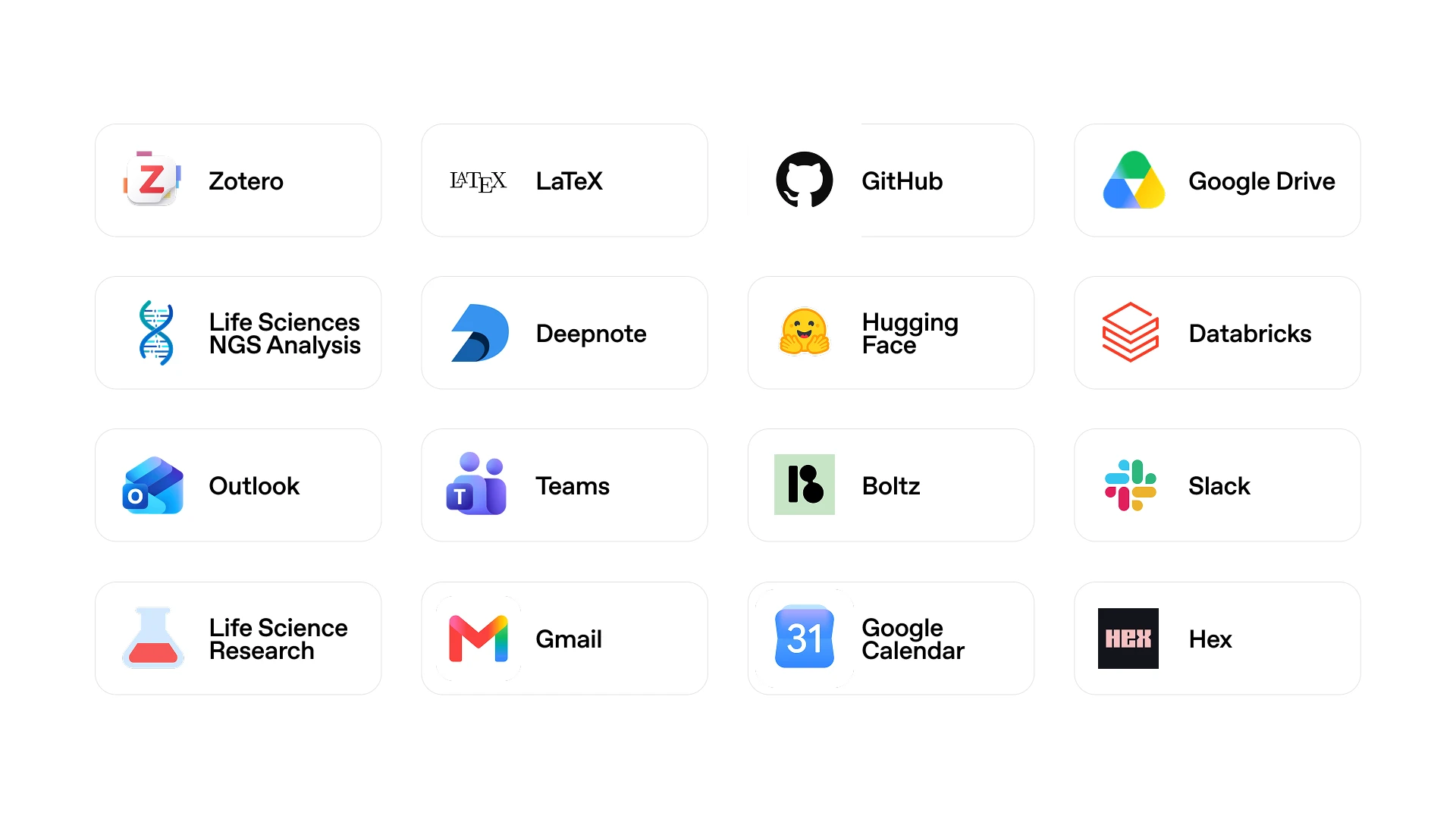
Repræsentative eksempler på færdigheder, forbindelser og værktøjer i ChatGPT og Codex.
Codex kan hjælpe med at skrive og fejlrette kode, analysere datasæt og opbygge reproducerbare arbejdsgange. ChatGPT Work kan understøtte længere projekter såsom at finde finansieringsmuligheder, udarbejde fondsansøgninger, gennemgå litteratur, skrive udkast til manuskripter og udarbejde materiale til formidling af resultater.
Forskernes erfaring med AI vil variere. Nogle bruger måske værktøjerne for første gang, mens andre udvikler avancerede anvendelser inden for deres fagområder.
Programmet tilbyder undervisning tilpasset forskellige erfaringsniveauer – fra at komme i gang og forbedre arbejdsgange til avancerede forskningsanvendelser. Deltagerne får adgang til specialister med kendskab til forskningsarbejdsgange, herunder hjælp til at integrere værktøjerne i deres arbejde.
Efterhånden som vi ser, hvad forskerne opdager, vil vi skabe flere muligheder for, at de kan dele praktiske metoder, lære af hinanden og fremhæve anvendelser på tværs af fagområder. Deres feedback vil hjælpe os med at forstå, hvor vores modeller er nyttige, hvor de kommer til kort, og hvordan vi kan gøre dem mere værdifulde for forskningsmiljøet.
Det indledende program er åbent for kvalificerede forskere ved udvalgte akademiske institutioner. Kvalificerede institutioner(åbner i et nyt vindue) skal være anerkendte universiteter eller videregående uddannelsesinstitutioner med ret til at udstede eksamensbeviser og et højt forskningsaktivitetsniveau.
Ansøgere skal bekræfte deres tilknytning til institutionen og oplyse om deres aktive forskning og planlagte videnskabelige anvendelse. Godkendte forskere kan invitere op til fire samarbejdspartnere fra deres institution. Hver samarbejdspartner skal også bekræfte sin tilknytning og tæller med i programmets samlede antal konti.
Der er åbent for ansøgninger fra i dag. Du kan gennemgå kriterierne og ansøge her(åbner i et nyt vindue).